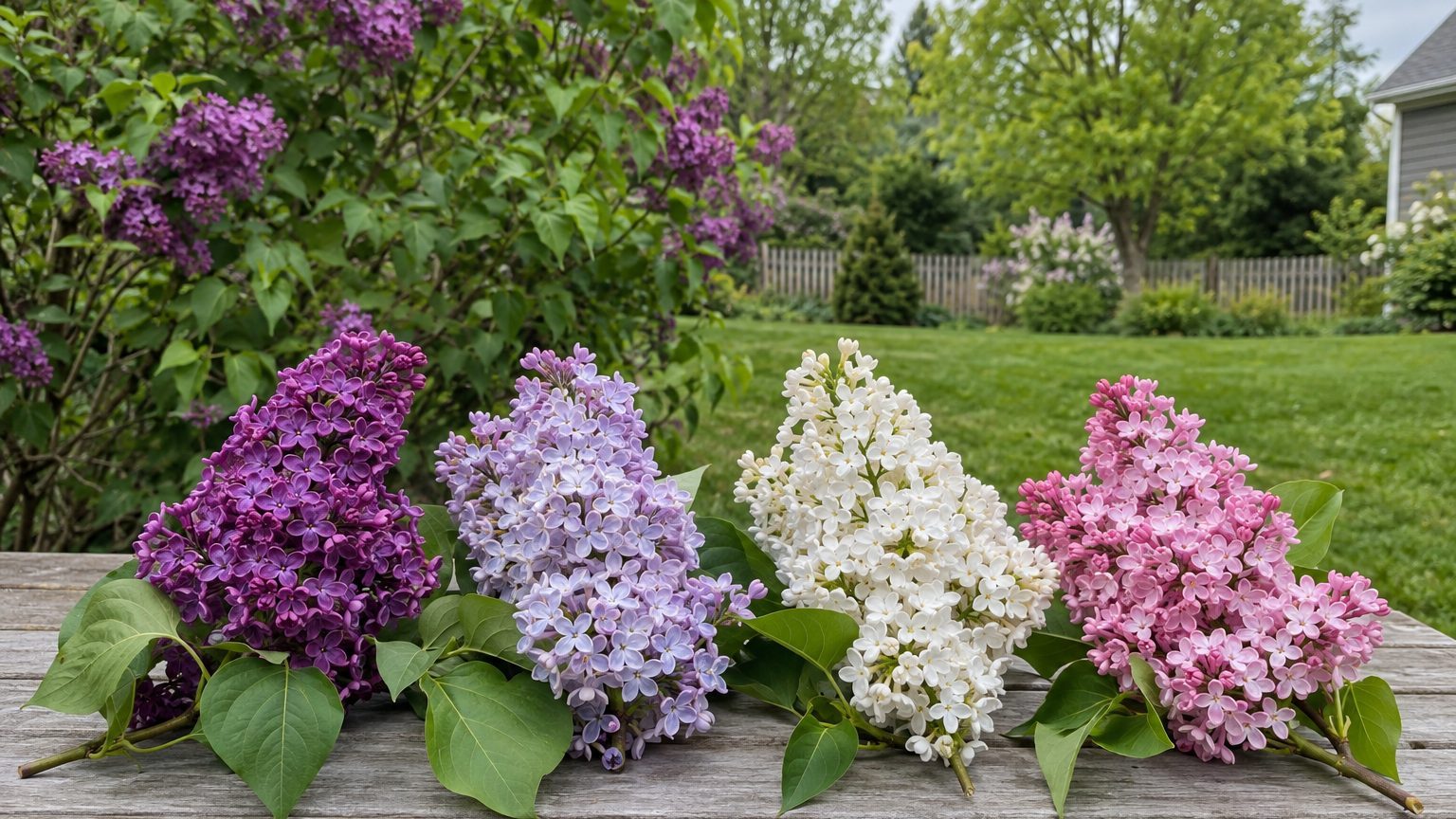
Every late spring, a lilac in full bloom fills a Montana yard with fragrance you can smell from the street. Cold winters suit the shrub, so the real decision is which type to plant: common lilac, an early hybrid, a Preston hybrid or a tree lilac. Each handles Montana’s weather a little differently.
Best Lilacs to Grow in Montana

Common lilacs, hyacinthiflora hybrids, Preston hybrids and Japanese tree lilac all hold up in Montana. Lilacs need a cold winter rest to mature their flower buds, and they struggle in hot, humid summers. They are adapted to USDA zones 3, 4, 5 and milder areas of zone 2, so Montana’s cold winters sit well inside their comfort range.
Common Lilac

Syringa vulgaris, also sold as French hybrid lilac, is the one most people picture. It is noted for large flower clusters and strong fragrance, and hundreds of cultivars run from white to deep purple and from wine-red to light pink.
It adapts to almost any soil and watering condition. Give this naturally large shrub plenty of room before you pick the spot.
Hyacinthiflora Lilacs
These vigorous hybrids look like French hybrids but bloom seven to 14 days earlier. The shrubs themselves are very hardy, so winter is rarely the problem.
The risk is a late frost catching the open flowers. Plant them only where May frosts are less frequent, such as a sheltered, milder valley spot.
Preston Hybrids
Preston hybrids generally flower more reliably in colder, windy areas than the early-blooming hyacinthiflora types.
If your yard sits on an exposed rise or a cold, breezy edge of town, start with these.
Japanese Tree Lilac
Syringa reticulata blooms in June, and its blooms bring the lilac season to a brilliant close. It extends the show after the common lilacs have finished.
Plant several species and the lilacs in your garden can be in full bloom for at least six weeks. A tree lilac is the easy way to add the final stretch.
Own-Root Lilacs
This is a way of buying rather than a type. Lilacs on their own roots are far more hardy than grafted lilacs.
When you shop, ask whether the plant is grafted or grown on its own roots. In a state with winters like Montana’s, that answer matters more than the flower color.
Montana — the year and the numbers
- State
- Montana
- USDA zones
- 3a-6a
- Last spring frost
- April 29 to May 10
- First fall frost
- October 1 to October 14
- Annual rain
- 14 in
- Lawn zone
- transition-season
- Source
- NOAA NCEI 1991-2020 Climate Normals, 32F freeze probabilities · Billings
How to Choose a Lilac for a Montana Garden
Start with your yard rather than the plant tag. Wind, cold pockets and late spring frosts help decide which lilac gives you flowers, while soil and watering conditions leave more room for choice.
Billings is one of the milder valleys, with a last spring freeze falling between April 29 and May 10. Mountain valleys elsewhere in Montana can frost in any month, so lean toward the hardier choices if yours is one of them.
| Your situation | What suits it in Montana | Why |
|---|---|---|
| Very cold, windy winter | Preston hybrids on their own roots | They flower more reliably in colder, windy areas, and own-root plants are far more hardy than grafted ones |
| Mild valley with fewer May frosts | Hyacinthiflora lilacs | They bloom seven to 14 days earlier, so they need frost-light springs |
| Hot, humid summer spot | A sunny site with good air circulation | Lilacs struggle in hot, humid summers, and moving air helps them cope |
| Little time for care | Common lilac | It adapts to almost any soil and watering condition |
| Want a long bloom season | Several species, with a Japanese tree lilac for June | Mixed species can bloom for at least six weeks |
| Worry about winter cold | Any lilac suited to the cold zones | A cold winter rest matures the flower buds |
Small yards need a second look. A common lilac becomes a large shrub, so keep it away from walkways and windows.
Which Lilacs Suit Different Parts of Montana
Montana’s elevation, wind and valley shelter change which lilac gives the most flowers more than the shrub’s winter hardiness does.
- Billings: Sheltered valley yards here are milder, so early hyacinthiflora lilacs have a fair chance of getting through spring with their flowers intact.
- Mountain valleys: Frost can arrive in any month, which makes the later-opening types and a protected planting spot the safer path.
- Windy, colder areas: Preston hybrids are the better pick, since they flower more reliably in these conditions than early bloomers.
Wherever you live in the state, choose the type for your local frost pattern first and the color second.
Lilac Buying Mistakes to Avoid in Montana
Buying a Grafted Plant
A grafted lilac looks the same as any other in the pot, but lilacs on their own roots are far more hardy. Grafted plants are less hardy when winter turns severe.
Check the label or ask the nursery. Choose own-root plants whenever you can.
Planting an Early Bloomer in a Frosty Spot
Hyacinthiflora lilacs open seven to 14 days earlier than the French hybrids. In a yard where May frosts are frequent, that head start can cost you the flowers even though the shrub itself is very hardy.
In those spots, plant Preston hybrids or a common lilac instead, and keep the early types for sheltered, milder corners.
Ignoring the Adult Size
A small pot hides a large shrub. A common lilac eventually becomes a broad shrub, which can crowd a foundation bed or shade a small yard.
Measure the planting spot before you buy. Pruning regularly right after the flowers fade keeps the shrub in bounds, because the buds for next year form in summer. Cutting later in the year removes next spring’s flowers.
Where to Get Lilac Advice in Montana
The Montana State University Extension service publishes lilac guidance written for Montana yards, and each county has an office that knows local frost and wind patterns.
- Check the extension service’s lilac publication before you shop so you know which types it lists as hardy in Montana.
- Call your county extension office to ask which lilacs do well in your valley and how late frosts usually run there.
- Visit a local garden in May or June, when lilacs are in bloom, and note which ones look healthiest before you buy.
Common Questions
When Do Lilacs Bloom in Montana?
Lilacs bloom in May and June, running from late spring into June. Early hybrids open first, and the Japanese tree lilac closes the season in June.
Can You Cut Back an Overgrown Lilac in Montana?
Yes. A hard renovation cut is best done in March or April, while the shrub is still dormant. The cost is the next flowers, because lilacs bloom on last year’s wood, and the plant will not flower for a few years afterward.
Can You Still Prune a Lilac in July?
It can be done in July, right after the flowers fade. Prune right after the flowers fade, since next year’s flower buds form in June and July.