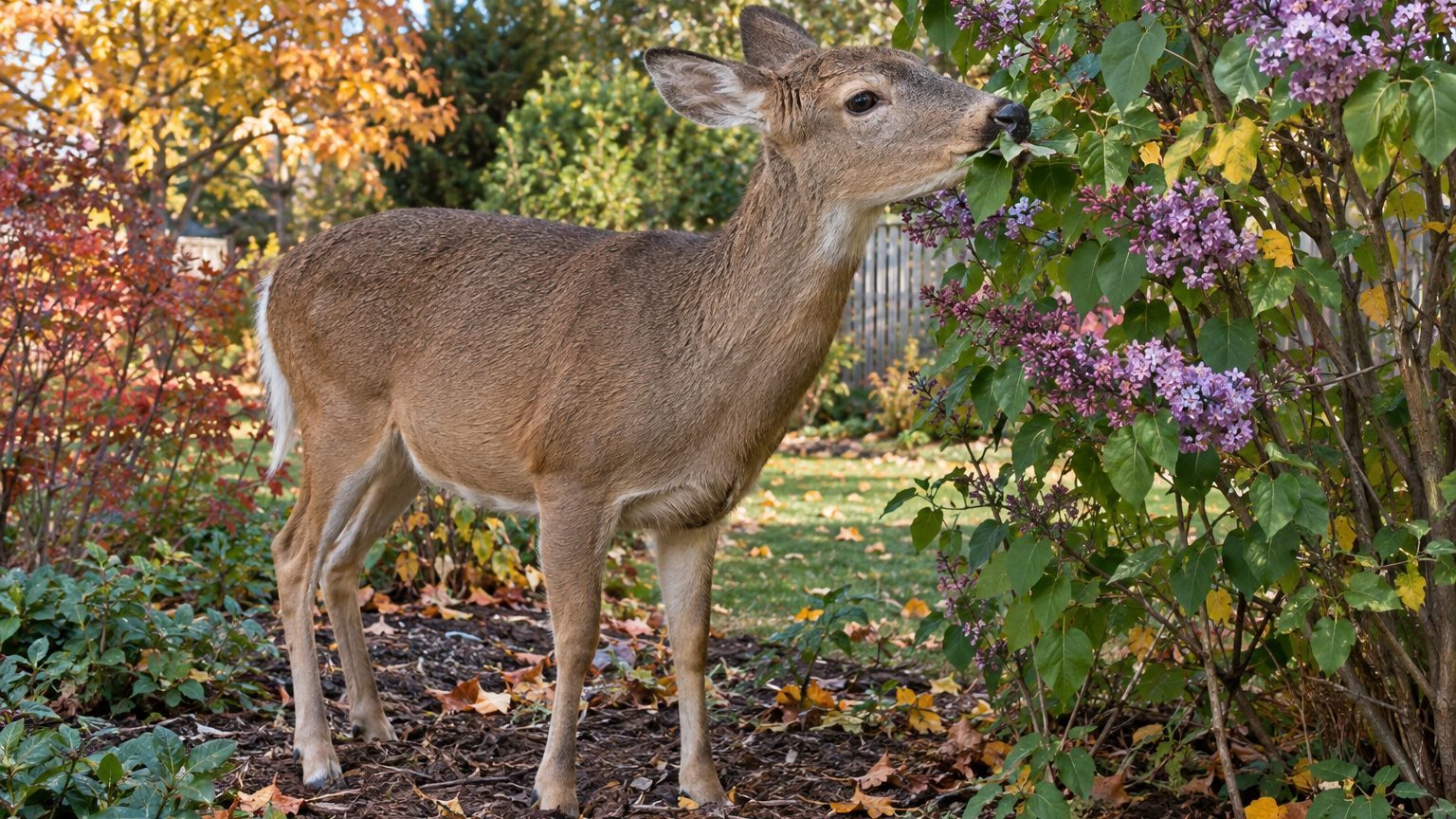
A lilac trunk with long strips of peeled bark, or branches with raggedly chewed ends, usually points to deer rather than disease. The damage tends to show up on the trunk more than on the leaves. Telling a deer from the pests that look similar takes a close look at the bark and the cut ends.
Deer: What You See

Deer leave a rough, torn look on a lilac, and the clues sit on the trunk and the lower branches.
- Bark torn away without any teeth marks, because a deer that strips bark tears it rather than gnawing it.
- Long lines of shredded or peeled bark along the main trunk, reaching up to 3 feet off the ground in Minnesota, where antler rubbing is the cause.
- Wood that looks shiny or polished where an antler has scraped the trunk clean.
- Ragged, frayed edges on twigs and stems, where the deer pulled the growth instead of snipping it.
- Feeding that begins at the ground and climbs well above where rabbits or voles can reach.
Leaves are often left alone, since deer usually avoid browsing on lilac foliage, so a lilac that looks fine from a distance can still be wounded up close.
From the almanac
Lilacs in your state
The dates on this page depend on where you live. Your state's page carries its frost dates, its USDA zones and the year laid out month by month.
Northeast
Southeast
- Alabama
- Arkansas
- Delaware
- Florida
- Georgia
- Kentucky
- Louisiana
- Maryland
- Mississippi
- North Carolina
- South Carolina
- Tennessee
- Virginia
- West Virginia
Midwest
Southwest
West
Pacific Northwest
Canada
Deer or Something Else?
Several lilac problems leave a damaged trunk or odd-looking leaves, and a quick glance can mix them up. Look at the wound itself, then at where it sits on the shrub and what is around it.
Deer injury is torn and fibrous. Insect injury and disease tend to leave holes, swelling or discolored tissue.
| Looks like | How to tell them apart |
|---|---|
| Lilac borer | Cracked, swollen bark with holes and sawdust-like material pushing out, often near the base. Deer leave torn strips with no holes. |
| Lilac blight | Leaves that look scorched, with dark streaks on one side of young shoots and blackened buds. Deer leave torn bark, never blackened buds. |
| Powdery mildew | A white powdery coat on leaves in summer, often on older shrubs. It can wash off in wet weather, while deer damage cannot. |
Oystershell scale is another lookalike. It appears as tiny oyster-shaped bumps scattered over the bark, so a bark that is rough but intact with small bumps points to the insect and not to a deer.
What Causes Deer, and Where It Is Worst
The cause is a deer itself, either rubbing its antlers on the trunk or feeding on the stems. Bucks scrape the bark when they clean and polish their antlers, and a smooth, upright lilac trunk makes a convenient post. Feeding damage comes from deer working over shrubs along their route.
Lilac foliage is usually passed over, so feeding on the shrub often points to a deer with few other choices nearby.
Anywhere deer move through yards, a lilac can be a target. The numbers from Minnesota give a sense of the range, with rubbing marks up to 3 feet from the ground and feeding up to 6 feet or a little higher. Yards that back onto woods, fields, or creek corridors see more traffic than a fenced lot in the middle of town.
How to Treat Deer
Treating deer damage means protecting the shrub from the next visit and tidying what has already been hurt.
- Inspect the whole trunk and lower branches, so that you know how far the bark was torn and whether the wound runs around the stem.
- Check for teeth marks, because bark removed by a deer leaves none, and that separates the damage from rodent gnawing.
- Cut broken or dangling branches back to a clean cut, so that the shrub is not left with ragged stubs that tear further.
- Trim loose, hanging bark flaps back to firm edges with clean tools, so that debris does not hold moisture against the wound.
- Surround the trunk with a sturdy cage or wrap, set a little away from the bark, so that antlers meet a barrier rather than wood.
- Ask your state extension service which deer repellents are registered where you live, so that you use only what is allowed for your yard.
Leave the wound open to the air and skip homemade coatings.
How to Prevent Deer Coming Back
Protection works best when it goes up before deer start visiting, and the calendar points to the seasons when bucks are active and food runs short.
- Set cages or wraps around the trunks of young and thin-stemmed lilacs before antler rubbing begins.
- Walk the yard and fix any gap in the cage or fencing so the trunk stays protected.
- Look over the shrubs after snow or heavy wind, because a cage that has been knocked over no longer protects the trunk.
- Check for fresh rubbing and ragged stems, and inspect the damage before leaves hide it.
- Keep lawn clippings and brush piles away from the lilac so the base remains easy to inspect.
Keep the guards loose enough that the trunk can swell, and adjust them as the stems thicken.
Where This Comes From
The signs and measurements here come from university extension and government plant health pages, including the Minnesota advice on rubbing height. Local deer pressure and the rules on repellents vary, so check with your state’s extension service before you buy or apply anything.
Common Questions
Should You Worry If a Deer Nibbles Lilac Leaves?
Deer usually avoid lilac foliage, but inspect both the leaves and bark when you see damage. Bark damage on the trunk matters more, so look there first.
Can You Tell Deer Damage from Rodent Damage on Lilac?
Look for teeth marks. When a deer removes bark, no teeth marks are left, while gnawing from a smaller animal does leave them.
Does a White Film on Lilac Leaves Mean Deer Are Around?
No. A white powdery film on leaves in summer is powdery mildew, which can wash away once rains become regular.