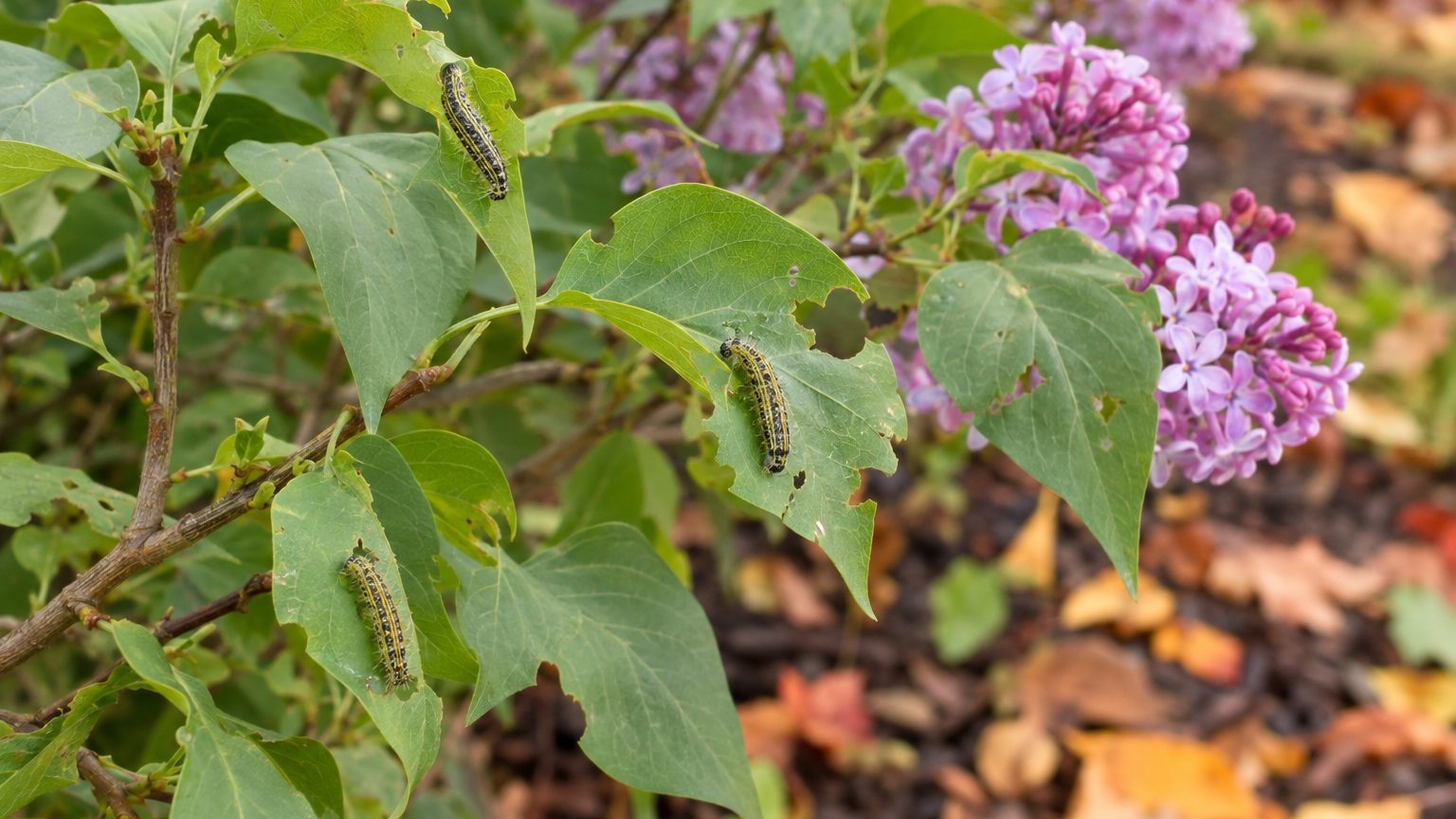
Chewed leaves in summer call for a different response than a pale, grub-like larva under loose bark on a lilac trunk. Some feed openly on the foliage, while the lilac borer works hidden inside the wood. Knowing which one you have decides what you do next.
Caterpillars: What You See

The lilac borer looks different from the leaf-eaters you may find on the same shrub.
- The borer larva has creamy white skin and a small dark head, so it looks pale against the wood it tunnels in.
- Its prolegs are very reduced and end in rings of tiny hooks called crochets.
- Eggs are laid in small groups or singly on the bark of the lower trunk, so that is where trouble begins.
- Leaf-feeding caterpillars sit out in the open and chew foliage, and lilac is one of many trees and shrubs they eat.
- In Ohio, one such leaf feeder keeps eating for 37 to 42 days, which is long enough to leave a branch ragged.
Look at the lower trunk first, then at the leaves, because the two groups leave their marks in different places.
From the almanac
Lilacs in your state
The dates on this page depend on where you live. Your state's page carries its frost dates, its USDA zones and the year laid out month by month.
Northeast
Southeast
- Alabama
- Arkansas
- Delaware
- Florida
- Georgia
- Kentucky
- Louisiana
- Maryland
- Mississippi
- North Carolina
- South Carolina
- Tennessee
- Virginia
- West Virginia
Midwest
Southwest
West
Pacific Northwest
Canada
Caterpillars or Something Else?
Not every pale grub in a lilac is a caterpillar. Many wood-boring pests are beetle larvae, and at a glance they can look much like the borer.
A hand lens settles it quickly. Look at the underside of the body, where a caterpillar carries fleshy prolegs and a beetle larva does not.
| Looks like | How to tell them apart |
|---|---|
| Beetle larva, a pale grub inside the wood | Check the body under magnification: beetle larvae lack prolegs, while the lilac borer has prolegs tipped with rings of tiny hooks. |
Leaf damage is a separate matter. Chewed foliage with caterpillars sitting on it is a leaf-feeder problem, and the borer is not involved. A creamy larva under the bark may be the borer, but check for prolegs before identifying it.
What Causes Caterpillars, and Where It Is Worst
Every caterpillar on a lilac began as an egg laid by a moth. In Colorado, females lay eggs in small groups or singly on the bark of the lower trunk within a week after emerging. The young larvae then tunnel into the wood, which is why damage tends to show up low on the shrub.
Lilac and privet are hosts, but they are attacked less often than other hosts of the borer. Leaf-feeding caterpillars are far less picky, and lilac sits on a long menu with trees such as:
- wild cherry and plum
- maple and birch
- willow and poplar
- apple and pear
- walnut, pecan and ash
How to Treat Caterpillars
Start with what you can see and reach, and move to anything stronger only after you know which caterpillar you have.
- Inspect the lower trunk and the leaves, so that you know whether you are dealing with a borer or a leaf feeder.
- Remove any leaf-feeding caterpillars you can safely reach, then ask a local garden professional how to dispose of them.
- Check the trunk base for damaged bark and signs of tunneling, so that you can tell a borer problem from simple leaf damage.
- Photograph the larva and its prolegs, so that an expert can confirm the identification before you buy anything.
Your state’s cooperative extension service can tell you which controls are approved where you live, and when the timing is right. Take the photo and a sample of the damage with you.
How to Prevent Caterpillars Coming Back
Prevention follows the pests’ own calendar, from the moths laying eggs to the larvae feeding on leaves.
- Inspect the bark of the lower trunk regularly, because that is where borer eggs are laid.
- Once the leaves open, glance at the foliage regularly, so that leaf feeders are caught before they strip a branch.
- Keep mowers and string trimmers away from the base of the trunk to avoid damaging the bark.
Where This Comes From
The notes here come from university extension and government pages on lilac pests, and some of the timing was written for Colorado and Ohio. Check with your own state’s extension service for local timing and approved controls.
Common Questions
Do Privet Hedges Get the Same Caterpillars?
Privet can host the lilac borer as well, though it is attacked less often than other hosts. If you grow both, check the lower stems of the hedge as you check the lilac.
Should You Spray Lilacs as Soon as You See a Caterpillar?
Identify it first. A borer hides in the wood and a leaf feeder sits on the foliage, so one treatment will not suit both. Ask your state’s cooperative extension service for local control advice.
Can the Same Caterpillar Move to Other Trees in Your Yard?
Leaf-feeding caterpillars eat many trees and shrubs, so they can. Privet can host the lilac borer, while ash appears among the hosts of the leaf-feeding caterpillars covered here.