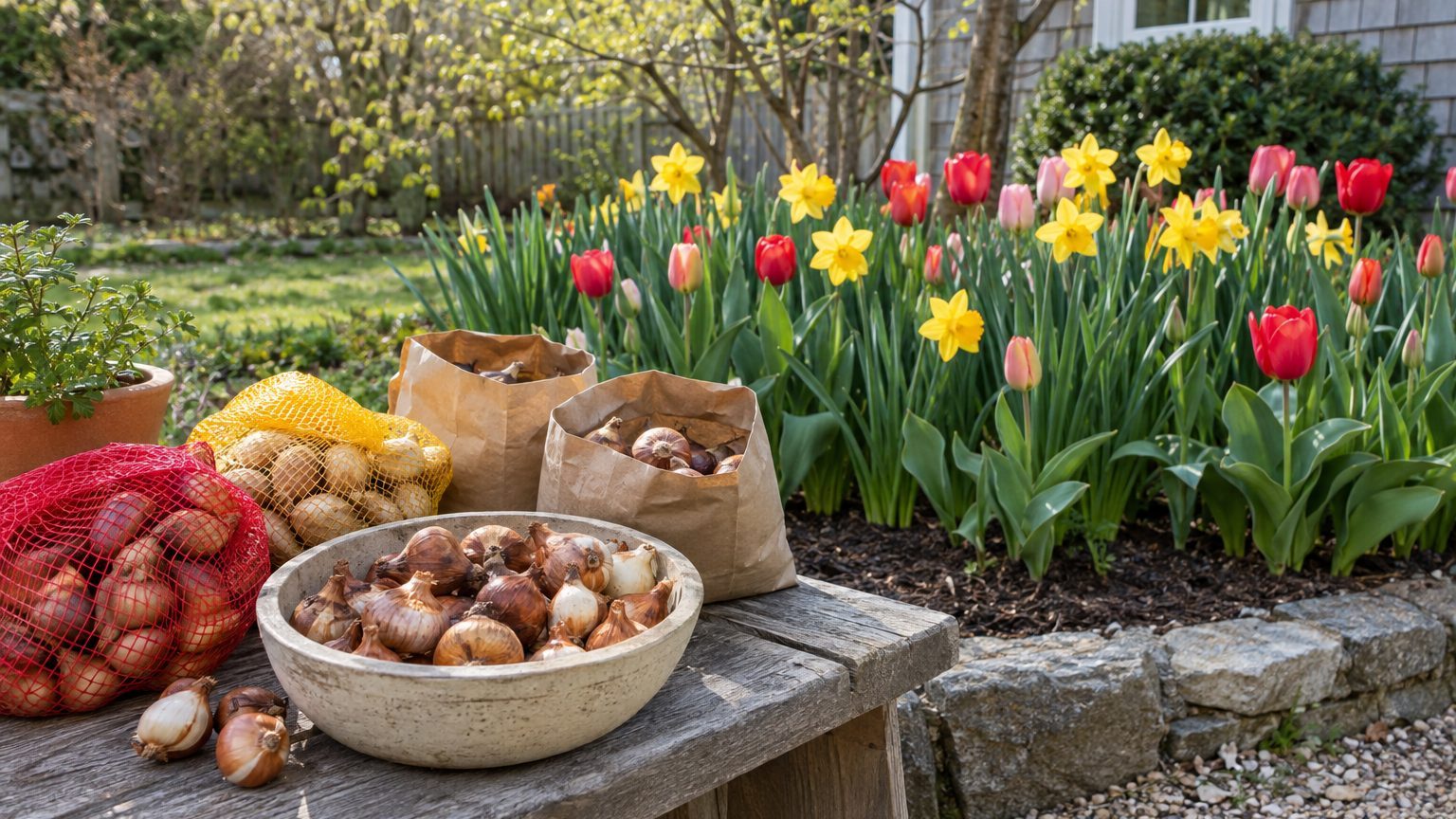
Pick up a bulb in the garden center bin and it tells you a lot before you ever dig a hole: the weight in your palm, the feel of the skin, the firmness under your thumb. Choosing spring bulbs comes down to size, soundness and type, with climate deciding what suits your yard.
Which Spring Bulbs Should You Buy?
Buy the biggest, firmest bulbs of the type your winters suit, since spring bulbs need cold to flower and size decides how much they bloom. Tulips, daffodils, hyacinths and crocus all follow that rule, but each type sets its own size and handling needs.
Climate narrows the field. Where winters are mild, some types need more chilling than your ground provides, and where winters are hard, bulbs that settle in well before the freeze do best.
The state selector just below this section takes you to the page for your state.
From the almanac
Bulbs in your state
The dates on this page depend on where you live. Your state's page carries its frost dates, its USDA zones and the year laid out month by month.
Northeast
Southeast
- Alabama
- Arkansas
- Delaware
- Florida
- Georgia
- Kentucky
- Louisiana
- Maryland
- Mississippi
- North Carolina
- South Carolina
- Tennessee
- Virginia
- West Virginia
Midwest
Southwest
West
Pacific Northwest
Canada
How to Choose Bulbs at the Store

Good bulbs are picked in a particular order, starting with when you shop and ending with how you carry them home.
- Shop early in the season, because in Colorado a September purchase gives the widest selection of size and variety, and Ohio gardeners are told the same about quality.
- Lift each bulb and feel its weight, since a bulb heavy for its size is full of stored food, and larger bulbs give bigger or more numerous flowers.
- Squeeze gently and reject soft spots, mold or rot, because firm, unblemished bulbs bloom well while withered or damaged ones may bloom poorly.
- Check the skin, which should be whole and papery, though some sloughing and cracking is fine on tulips and crocus.
- Look at the tips and roots and leave behind any bulb that is already sprouting or has elongated roots, because it has started growing before it is in the ground.
- Take bulbs home to a cool place, and plant as soon as the ground allows.
Size varies by type, so compare like with like. Some tulip and daffodil varieties are naturally small in stature, and a modest bulb of such a variety is not a poor one. Heat is the quiet danger after purchase. In Washington, bulbs are kept in a dry, dark spot that stays cool if planting must wait, and in South Carolina a cool place between 35 and 55°F is recommended. In North Carolina, bulbs bought in September or October wait in a cool area until planting time.
Choosing Bulbs by Bulb Type
Tulips are where size matters most, so they deserve a closer look at the label and the bulb itself. A bulb that is too small may leaf out and never bloom, and that is a disappointing way to spend a spring.
Daffodils respond to storage temperature, so how the store keeps them counts as much as how they look.
| Bulb Type | What changes | Why it matters |
|---|---|---|
| Tulips | In South Dakota, a circumference of four inches or greater is recommended, and under 2.5 inches flower initiation will not occur | A small bulb gives leaves without a flower |
| Tulips for cutting | In Maryland, a top size of 12/+ cm is ideal, and some growers accept 11/12 cm | Smaller bulbs give smaller flowers and shorter stems |
| Daffodils | In Nebraska, storage at 60 to 65°F preserves the bulb’s energy, while long spells above 65°F can damage the flower inside | A bulb kept too warm can fail to bloom |
For you, that means measuring tulips and keeping daffodils out of warm garages and sunny car trunks. Hyacinths and crocus are best judged by the general signs of weight, firmness and a sound skin, and a crocus with some cracking in its skin is still fine.
Bulb Buying Mistakes to Avoid
Buying Small Tulip Bulbs

Bargain bags often hold undersized bulbs. In South Dakota, a tulip under 2.5 inches around will not initiate a flower, so you get foliage and no bloom. Check the size on the package, and choose bulbs of four inches or more when the label allows.
Letting Bulbs Sit in Heat

A bag left in a hot garage or a warm shed can ruin the flower inside before it is planted. In Washington, bulbs should never be exposed to heat before planting, even briefly. Keep them cool and dark, and get them in the ground when the soil can be worked.
Ignoring Soil Before Planting
Good bulbs still struggle in the wrong soil. In Kansas, a soil pH between 6.0 and 7.0 is recommended. A simple soil test before you plant tells you whether the ground suits the bulbs you bought, and gives you time to adjust it.
Best Bulbs for Your State
The sign to act on is simple: bulbs appear in stores and the soil has cooled enough to dig. The months for each state sit on that state’s page, where you will find what suits your winters.
- Open your state’s page to see which months suit planting where you live.
- Go shopping as soon as bulbs reach the shelves, then plant promptly once the ground can be dug.
Common Questions
Can You Plant Bulbs That Have Started to Sprout?
Sprouting is a sign the bulb has begun growing too early, so it is better to pick unsprouted ones in the store. A bulb you already own that has sprouted should still go in as soon as the ground can be dug, with the shoot left uncovered by hand-packed soil only lightly.
Does a Bulb’s Paper Skin Need to Be Perfect?
For most bulbs, the skin should be whole. Tulips and crocus are the exception, where some sloughing and cracking does no harm.
Is a Bigger Bulb Always Better?
Larger bulbs generally give bigger or more numerous flowers. Some tulip and daffodil varieties are small by nature, so compare bulbs within the same variety.