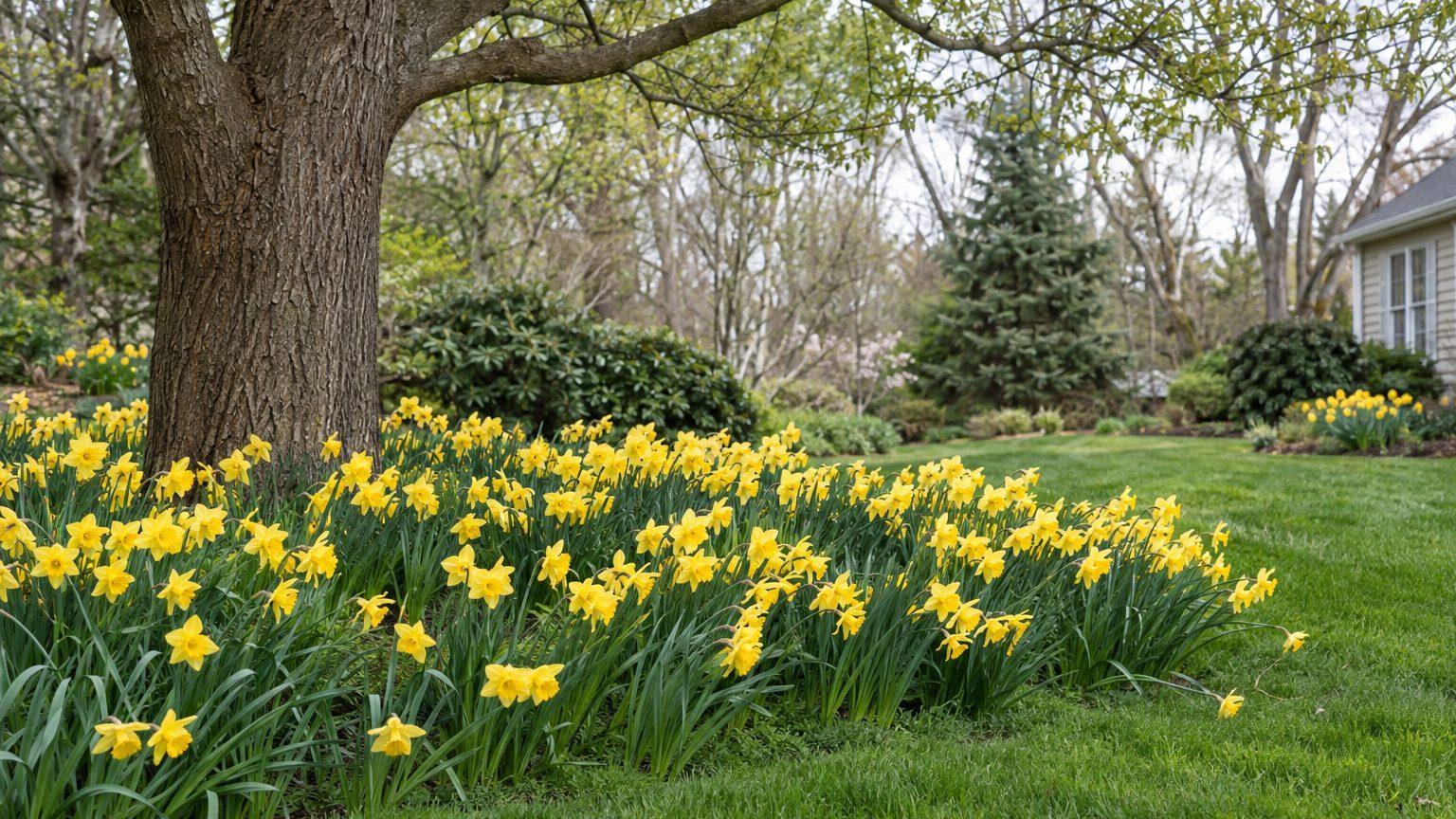
Daffodils and crocus coming up through the grass in early spring look as if they were always there, and the effect is easy to copy. Naturalizing bulbs means planting them loosely, the way they would seed themselves, so they return and spread each year. Success depends on the bulbs you choose, how you scatter them and when the mower comes back out.
Which Bulbs Come Back and Spread?
Bulbs that multiply on their own, either by offsets (small new bulbs that form beside the parent) or by seed, return and thicken year after year. Those are the ones to choose for naturalizing, and they are the ones that earn the label.
Climate and bulb type decide the rest. Spring bulbs need winter cold to flower, and small bulbs behave differently from large ones in a drift. In Missouri, properly spaced bulbs need dividing only every five to 10 years, so a good planting can sit untouched for a long time.
The state selector just below this section leads to the page for your state.
From the almanac
Bulbs in your state
The dates on this page depend on where you live. Your state's page carries its frost dates, its USDA zones and the year laid out month by month.
Northeast
Southeast
- Alabama
- Arkansas
- Delaware
- Florida
- Georgia
- Kentucky
- Louisiana
- Maryland
- Mississippi
- North Carolina
- South Carolina
- Tennessee
- Virginia
- West Virginia
Midwest
Southwest
West
Pacific Northwest
Canada
How to Naturalize Bulbs

Naturalizing is mostly a matter of letting chance arrange the bulbs and then respecting the grass afterward.
- Choose early bloomers such as crocus or small-flowered daffodils for lawns, because in North Carolina they finish blooming before mowing has to start.
- Buy bulbs by the dozens, since a broadcast planting in Kansas runs as many as 500 to 700 per 100 square feet, and thin plantings read as dots instead of drifts.
- Toss the bulbs by the handful over the area, so they land in uneven clusters instead of tidy rows.
- Dig a hole where each bulb falls, or use a bulb auger for quick planting as is done in North Carolina, so the random pattern survives and each pointed end faces up.
- Mix bulbs with different bloom times, because in New York that keeps a lawn colorful for weeks.
- Wait to mow until 6 weeks after flowering, as in North Carolina, so the leaves can keep feeding the bulbs for next year.
That timing is the logic of lawn planting. In New York, early bulbs push up through the turf and bloom before the grass begins to grow, so bulbs and mower rarely compete for the same weeks.
Naturalizing Bulbs by Bulb Type
Size sets how many bulbs make a convincing group. A small bulb disappears when it stands alone, while a large one holds its own in a smaller cluster.
Place matters too, since the numbers below come from different states and each holds where it was written.
| Bulb Type | What changes | Why it matters |
|---|---|---|
| Small bulbs | In Kentucky, groups of at least 10 to 12 | A small bulb needs company to be seen |
| Large bulbs | In Kentucky, groups can be as few as 5 to 6 | Bigger plants make an impression sooner |
| Daffodils | In Iowa, groupings of 10 or more often look best | A clump reads as a drift in the grass |
| Crocus | Stays less than 6 inches tall and wide | Low plants suit lawns, borders and pathways |
| Grape hyacinth | In North Carolina, at least 25 bulbs in a small garden | The sparse look is avoided in a tight space |
For you, that means ordering bulbs by the bag rather than by the handful. Small types such as crocus and grape hyacinth need the biggest counts. In Iowa, drifts of at least 25 bulbs are suggested for them, and groupings of 50 or more look best. Daffodils and other large bulbs get by with smaller groups.
Naturalizing Mistakes to Avoid
Mowing Too Soon

Cutting the grass while the bulb leaves are still green starves the bulbs of the food they store for next year, and the planting thins out over time.
In North Carolina, the wait is 6 weeks after flowering. Mark the date on a calendar and keep the mower off the patch until then. Never tie or cut the leaves while they are green.
Planting Crocus Where You Mow Early

Crocus is a popular lawn bulb, but in Missouri the advice is not to naturalize it in lawns that need mowing in early spring. The mower arrives before the leaves have finished their work.
If your grass gets cut early, plant crocus in a border or a bed along a path instead, and save the lawn for bulbs that finish in time.
Planting Bulbs One by One
Single bulbs stuck in here and there look lost. In Utah, planting in mass rather than scattering bulbs 1 by 1 is the way to get a real splash of color.
In Washington, at least 5 to 7 bulbs of one variety together give punch, and 25 to 30 or more create a carpet. Put the whole bag into one well-chosen area instead of spreading it across the yard.
Naturalizing Bulbs in Your State
The sign to act is the cooling of the soil after summer heat, once bulbs are on the garden center shelves and the ground can be dug. Planting months differ from state to state, and each state has its own page with its months.
- Planting months depend on where you live, so check the right timing for your area before you buy.
- Go there again in spring to match the mowing wait to your own calendar.
- Once you have the months, toss the bulbs, dig where they land and plant them.
Common Questions
Can You Naturalize Bulbs Outside the Lawn?
Yes. In North Carolina, crocus is often planted in mass in lawns, borders, naturalized areas, along pathways and in rock and woodland gardens. Grass is only one of many settings where a loose drift works.
What If Some Bulbs Are Still in the Bag?
Plant them as soon as the ground can be dug. A bulb left in the bag will not wait for next year and will dry out instead of settling roots.
Do Naturalized Bulbs Need Cold Winters?
Spring bulbs need winter cold to flower, which is why they go in during fall and spend the cold months underground. The months that fit your climate are the ones to plant in.