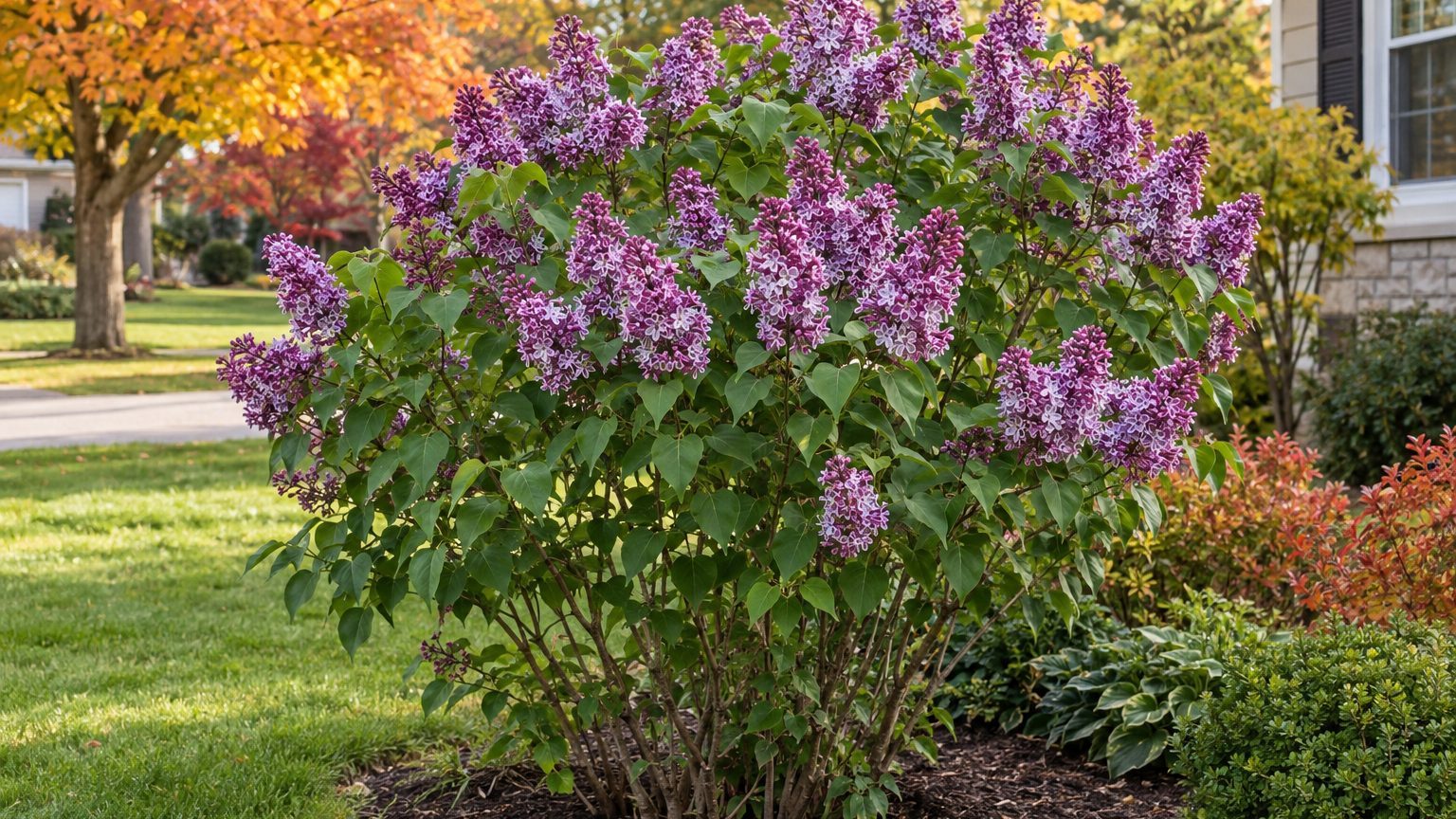
A lilac covered in purple blooms edged in crisp white is hard to walk past. That is Sensation, a cultivar of Syringa vulgaris. Sensation’s white-edged flowers and occasional color reversion are the details worth knowing before you buy.
What Is the Sensation Lilac?
Sensation is a cultivar of Syringa vulgaris, the common lilac. The flowers are a bicolor, purple with white edges, which is what sets it apart from the plain lilac-purple shrubs around it.
That pattern began as a sport, a branch that mutated and showed new coloring. Growers took cuttings from it, and once the pattern held, it was sold as a named cultivar.
Sensation also has above-average resistance to powdery mildew.
From the almanac
Lilacs in your state
The dates on this page depend on where you live. Your state's page carries its frost dates, its USDA zones and the year laid out month by month.
Northeast
Southeast
- Alabama
- Arkansas
- Delaware
- Florida
- Georgia
- Kentucky
- Louisiana
- Maryland
- Mississippi
- North Carolina
- South Carolina
- Tennessee
- Virginia
- West Virginia
Midwest
Southwest
West
Pacific Northwest
Canada
Where Does the Sensation Lilac Grow Best?
Check the plant tag for the hardiness zone and mature size before buying. The state selector just below this section takes you to the page for your own state.
How to Care for the Sensation Lilac Through the Year
Bloom

The flowers open in clusters edged in white. Look closely at the clusters, because some branches may carry plain pink flowers, or a few plain blooms inside an otherwise bicolor cluster. That reversion is not harmful to the plant, and plenty of gardeners simply enjoy the variability.
Pruning After Flowering
If the plain pink branches bother you, cut each one back to a healthy side branch. Sometimes the reversion is only part of a branch, so follow the color to where it ends.
Summer

Fall
Leave the shrub alone.
Winter
Sensation Lilac Diseases and Weak Points
Sensation is among the cultivars with above-average resistance to powdery mildew.
Its color reversion is cosmetic. Because the bicolor pattern came from a genetic variant, it can slip back to plain pink on a branch here and there.
| Threat | How Sensation handles it |
|---|---|
| Powdery mildew | Above-average resistance among common lilacs |
| Color reversion | Plain pink flowers on a branch, harmless to the plant, removable by pruning back to a healthy side branch |
Is the Sensation Lilac Right for Your Yard?
Sensation suits gardeners who like its white-edged purple flowers and can accept occasional color reversion. It does not suit a gardener who wants every flower identical.
- Choose it for a front yard, a property line or a corner near a patio, where the white-edged blooms can be seen up close.
- Skip it if you want uniform color, since some branches may revert to plain pink.
- Open your state page before buying, then check the plant tag.
Common Questions
How Did the Sensation Lilac Get Its Bicolor Flowers?
It started as a sport, a branch with a genetic variation in flower color. When cuttings from that branch kept the pattern, it was introduced to the trade as a named cultivar. This is also why the pattern can occasionally slip.
Which Other Lilacs Resist Powdery Mildew Like Sensation?
Charles Joly and Old Glory are named alongside Sensation as common lilacs with above-average resistance. These cultivars belong to Syringa vulgaris.