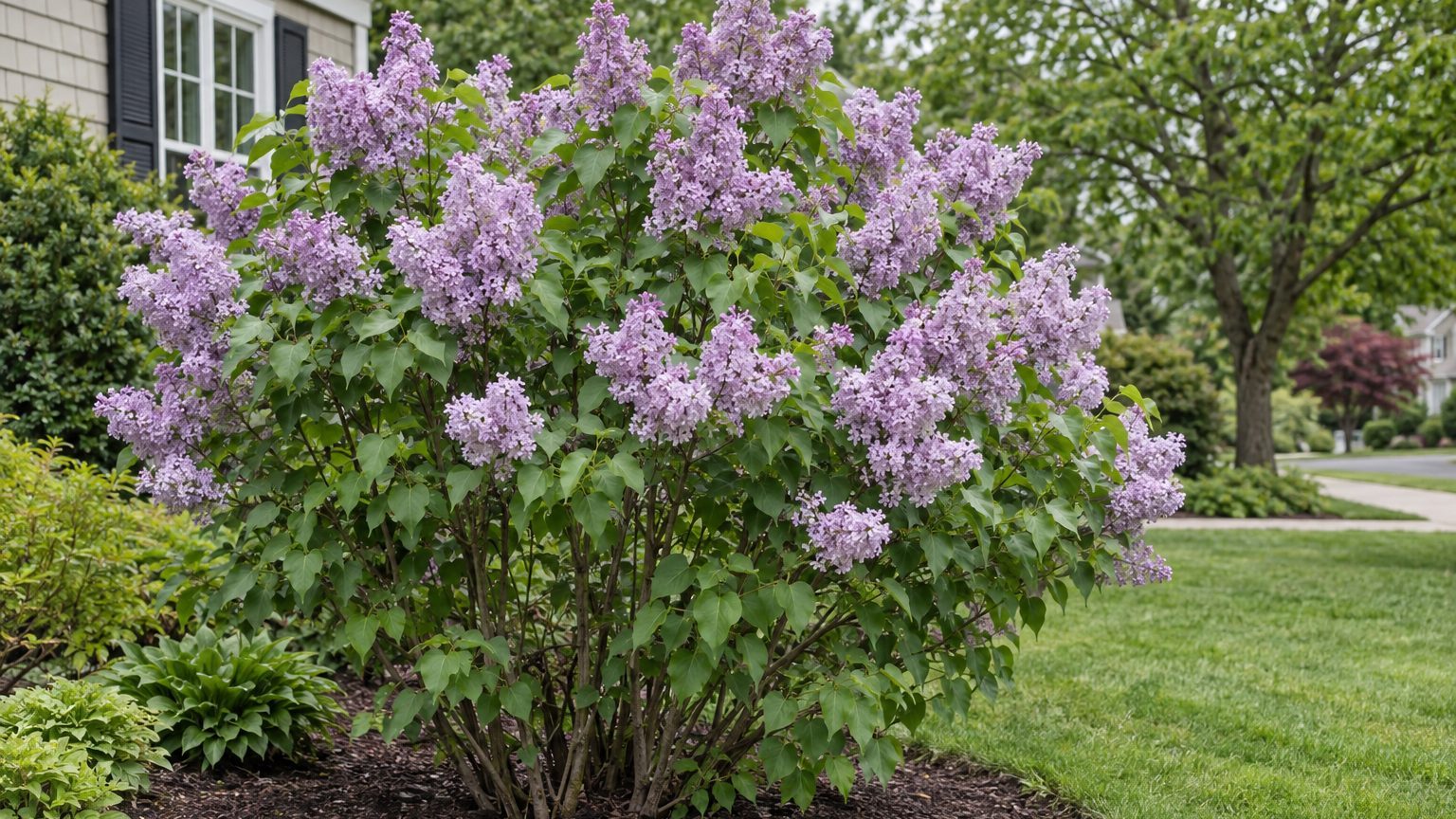
Lilac blossoms that turn brown after a late freeze are a familiar spring disappointment in cold-winter yards. Agnes Smith is a Preston hybrid lilac, and it opens its flowers about a week after common lilacs. That timing, its size and its habits decide where it fits.
What Is the Agnes Smith Lilac?
Agnes Smith belongs to the Preston hybrids, a group valued where spring frosts often freeze earlier-blooming lilacs. It is a tall shrub, and it does not send up the suckers that make common lilacs spread into a thicket.
Most Preston cultivars carry pink or lavender flowers with a scent all their own, so check the plant tag for the exact shade of the one you buy. The blooms come about a week after common lilacs, which is the feature that sets this group apart.
Size matters here. The plant grows strongly 10 to 12 feet high, so it suits a back corner, a screen or a large border better than a spot under a window.
From the almanac
Lilacs in your state
The dates on this page depend on where you live. Your state's page carries its frost dates, its USDA zones and the year laid out month by month.
Northeast
Southeast
- Alabama
- Arkansas
- Delaware
- Florida
- Georgia
- Kentucky
- Louisiana
- Maryland
- Mississippi
- North Carolina
- South Carolina
- Tennessee
- Virginia
- West Virginia
Midwest
Southwest
West
Pacific Northwest
Canada
Where Does the Agnes Smith Lilac Grow Best?
Agnes Smith is valuable where spring frosts often freeze earlier-blooming lilacs because Preston hybrids bloom about a week after common lilacs. The state selector just below this section leads to the page for your state.
- Northern Plains and Mountain West (Montana, North Dakota, Wyoming):
- Upper Midwest and Northeast (Minnesota, Wisconsin, Vermont):
- Deep South and Gulf Coast (Georgia, Alabama, Louisiana):
How to Care for the Agnes Smith Lilac Through the Year
Bloom

The flowers open about a week after common lilacs, so a frost that took your neighbor’s blooms may leave these untouched. Enjoy the scent, and cut stems for a vase if you like.
Pruning
Prune right after the flowers fade. Left to themselves, Preston hybrids can become rampant growers, so shorten the tallest stems and thin crowded branches to keep the shrub in its space. There are no suckers to dig out.
Summer
Give a young plant a deep soak during dry spells and keep mulch over the roots, pulled back from the stems.
Autumn
Leave the shrub unpruned.
Winter
Resist any urge to trim.
Agnes Smith Lilac Diseases and Weak Points
Its strong growth and mature height require attention. Its later bloom can reduce exposure to spring frost, while its strong growth may require pruning.
| Threat | How Agnes Smith handles it |
|---|---|
| Spring frost on flowers | Blooms about a week after common lilacs, which can reduce exposure to spring frost |
| Suckers spreading | Does not sucker |
| Rampant growth | Can run wild if left alone, so it needs pruning after bloom |
| Outgrowing its spot | Grows strongly 10 to 12 feet high, so it needs room from the start |
Plan the space before you plant, since moving a shrub of this size later is hard work.
Is the Agnes Smith Lilac Right for Your Yard?
It fits a yard with space for a shrub that grows strongly 10 to 12 feet high. It is a poor fit for a tiny front bed or a pot.
- Choose it if late freezes keep ruining your common lilac blooms and you have room for its strong growth.
- Skip it if you want a compact shrub, or if you will not prune after bloom, since a neglected Preston hybrid can get unruly.
- Open the page for your state through the selector above to see the planting and pruning months that apply where you live.
Common Questions
Does the Agnes Smith Lilac Need Full Sun?
Check the plant tag for the light requirements of the plant you buy.
Can You Grow the Agnes Smith Lilac in a Container?
A pot is a poor long-term home for a shrub that grows strongly 10 to 12 feet high. Planting it in the ground gives the roots room.
Should You Fertilize an Agnes Smith Lilac?
Follow the plant tag’s feeding directions rather than using a fixed schedule.