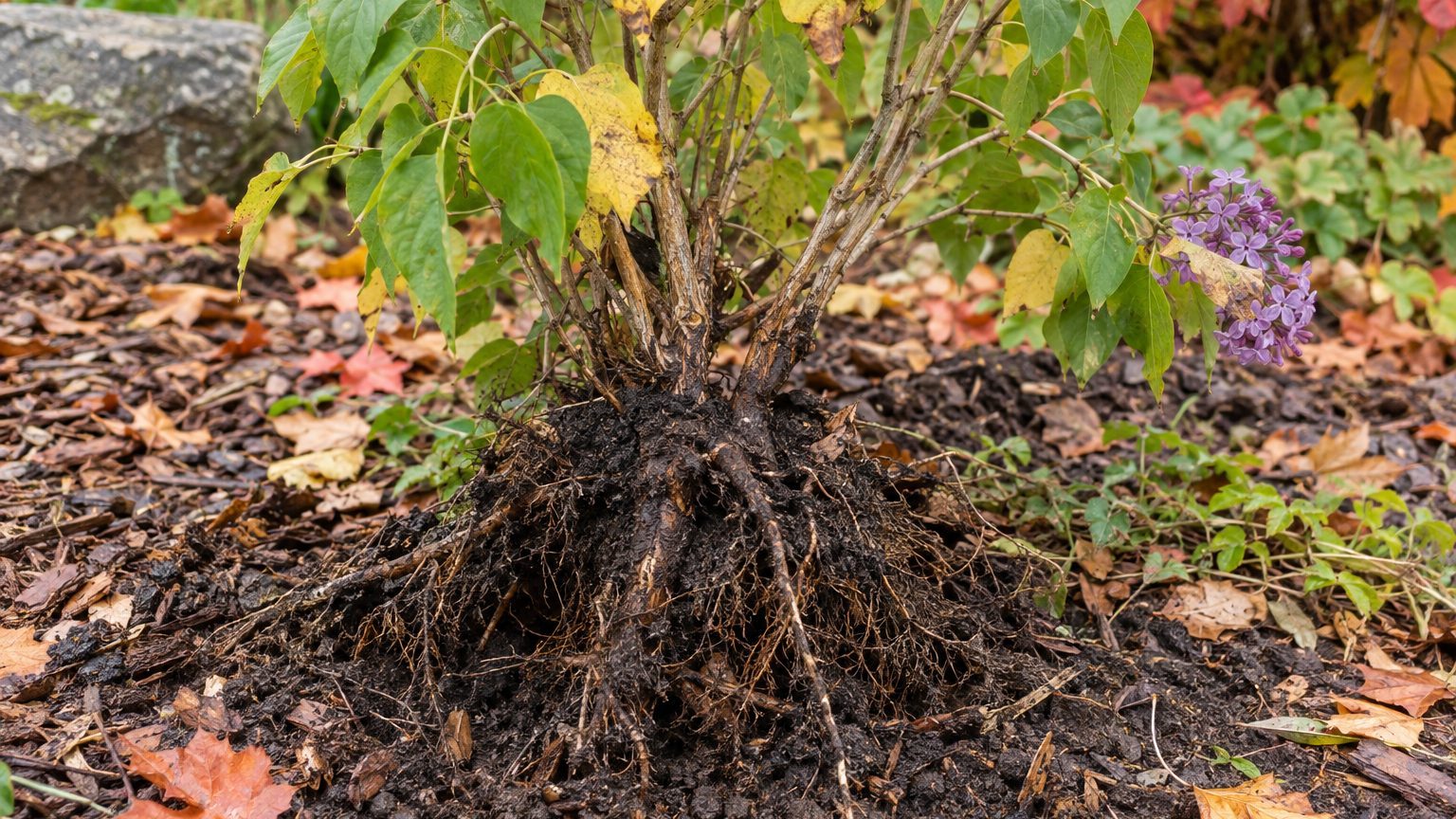
A lilac that wilts and blackens in a wet spring often has more going on than a thirsty root system. Root rot does happen in lilacs, but several other problems copy its look, and the fix depends on telling them apart.
Root Rot: What You See

The trouble starts underground, yet the first clues appear above the soil, so look at the shoots and the base of the shrub.
- Shoots blight and die back over wide areas, even though the pathogen lives in the roots and not in the branches.
- Root sprouts at the base of the shrub are killed over time, which leaves the clump thinner each year.
- Leaves may wilt even though the pathogen lives in the roots.
- Water stands around the base after rain, or the shrub sits in heavy clay that drains slowly.
- A cramped planting spot can leave little room for roots, while slow drainage lets water linger around the base.
Leaf symptoms alone do not settle the diagnosis, so pair them with what the soil and the site are telling you.
From the almanac
Lilacs in your state
The dates on this page depend on where you live. Your state's page carries its frost dates, its USDA zones and the year laid out month by month.
Northeast
Southeast
- Alabama
- Arkansas
- Delaware
- Florida
- Georgia
- Kentucky
- Louisiana
- Maryland
- Mississippi
- North Carolina
- South Carolina
- Tennessee
- Virginia
- West Virginia
Midwest
Southwest
West
Pacific Northwest
Canada
Root Rot or Something Else?
Several lilac problems begin with spotted, wilting leaves. Rot in the roots is only one explanation, and it is often the wrong one when the wet weather has been hard on the whole shrub.
Check the leaf surface and the ground under the shrub before you decide anything.
| Looks like | How to tell them apart |
|---|---|
| Bacterial blight (Pseudomonas syringae) | Leaf spots that darken, with wilting and early leaf drop, in a wet season. Old leaf debris under the shrub carries it over to the next season. |
| Powdery mildew | A grayish-white, powdery coating on leaves, stems and petals that sits on the surface. It shows up where plants are crowded and humid air lingers. |
In Iowa, Verticillium wilt can also look similar in some lilac varieties. When the signs overlap like this, a local plant diagnostic lab can sort them out.
What Causes Root Rot, and Where It Is Worst
The cause is a water mold, Phytophthora, most often the species P. cactorum. It lives in the roots and sends symptoms up into the shoots, which is why the damage looks like a leaf problem first.
Lilacs do well in clay, but clay that drains slowly holds excess moisture in the root zone, and that is exactly what this pathogen needs. Standing water around the crown makes things worse, so low spots and the foot of a downspout are poor places for a lilac.
No region in particular is singled out. The risk follows wet seasons and heavy, slow-draining soil wherever you garden.
How to Treat Root Rot
Work from the site first, since the soil and the surroundings decide whether the shrub can recover.
- Look for standing water after rain, so that you know whether drainage is the real culprit.
- Do not rely on leaf cleanup to treat root rot; improve drainage around the shrub instead.
- Cut back watering and keep irrigation and runoff away from the base, so that the root zone can dry out.
- Remove shoots that have blighted and died, so that dead growth is not left to hold moisture around the clump.
- Take a sample to a local plant diagnostic lab, so that you know whether the cause is the roots or a blight on the leaves.
Any treatment must be approved for lilacs where you live and used exactly as directed. Treatments are not a cure on their own when the soil stays soggy.
How to Prevent Root Rot Coming Back
Prevention is mostly about water, drainage and a clean base, and each task has its moment in the year.
- In early spring, check how water moves across the planting bed and redirect runoff before the shrub leafs out.
- When you plant, in spring or fall, choose a spot that drains well and gives the roots room to spread, since a tight corner works against you.
- During wet spells in the growing season, hold off on extra watering, because the pathogen thrives when the root zone stays saturated.
- After heavy rain, check that water is not standing around the crown.
Mulch kept pulled back from the stems also helps the crown dry quickly after rain.
Where This Comes From
Conditions and approved treatments vary, so get a local diagnosis before you act.
Common Questions
Should You Replace a Lilac That Keeps Struggling?
If the shrub sits in a corner with poor air circulation and little room for roots, replacing it with a species better adapted to the spot may be the more sensible choice than fighting the site year after year.
Can Herbicide Drift Look Like Lilac Disease?
Yes. Environmental injury, including drift or herbicide misuse, can be mistaken for Phytophthora, so think about what has been sprayed nearby before blaming the roots.
Is Powdery Mildew a Sign of Root Rot?
No, it is a separate fungal disease. Spacing plants far enough apart for good air movement dries the foliage faster, and avoiding highly susceptible cultivars lowers the severity.