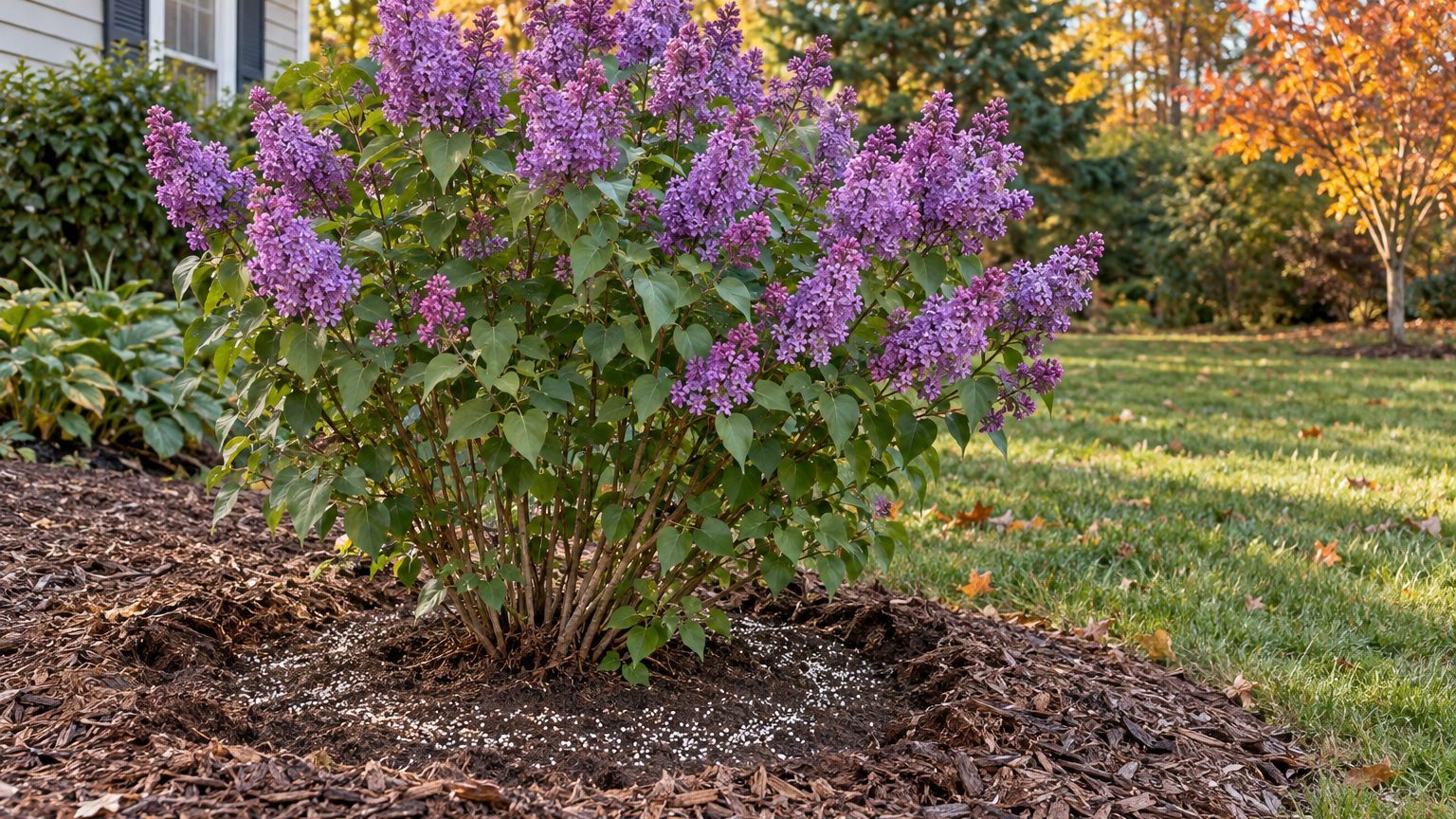
Lilacs that leaf out thick and dark green but hold few clusters of flowers in spring are often getting more feeding than they want. These shrubs do well on little, and where spring feeding is recommended, a light hand usually does the job. Fertilizing lilacs comes down to when you feed, how much you give, and what the mix contains.
Do Lilacs Need Fertilizer?
Usually not much, and sometimes not at all. Lilacs are tough shrubs that bloom well on modest soil, and in Montana the general advice is that they do not need fertilizer, though low rates of phosphorus and potassium sometimes help.
A light spring feeding earns its place where the soil is poor, which is how Iowa guidance puts it. The type of lilac matters too, since reblooming lilacs and California lilacs follow their own rules. Climate shifts the timing, because the ground thaws earlier in some places than in others.
Overdoing it has a price. In Pennsylvania, feeding too much can leave a shrub with all foliage and no flowers. The state selector just below this section leads to the page for your state.
From the almanac
Lilacs in your state
The dates on this page depend on where you live. Your state's page carries its frost dates, its USDA zones and the year laid out month by month.
Northeast
Southeast
- Alabama
- Arkansas
- Delaware
- Florida
- Georgia
- Kentucky
- Louisiana
- Maryland
- Mississippi
- North Carolina
- South Carolina
- Tennessee
- Virginia
- West Virginia
Midwest
Southwest
West
Pacific Northwest
Canada
How to Fertilize Lilacs

The routine is short, and each step protects the flowers.
- Check the soil and the shrub first, so that you add only what is missing. Montana advice is to feed when growth stays weak and soil tests show a nutrient shortfall.
- In Wisconsin, a granular 5-10-5 is a suitable choice.
- In Iowa and Vermont, apply an optional light feeding in early spring, following package directions.
- Measure about one pound for a large, mature bush, the amount used in Montana and Minnesota, so that the dose stays modest and the soil is not overloaded.
- Scatter the granules evenly under the branches, follow the package directions, and water them in when the weather is dry, so that the nutrients reach the roots instead of sitting on the surface.
- In Montana, avoid pushing succulent new shoots that may not harden off before winter. In Montana, succulent new shoots often cannot harden off enough, and winter damage follows.
Timing differs a little from place to place. Arkansas guidance puts the feeding in spring after the shrub should have finished blooming, a bit later than the early spring window used elsewhere. Washington suggests a mix high in phosphorus, such as 15-30-15, in early spring. In Arkansas, the schedule calls for feeding once a year.
Fertilizing Needs by Lilac Type
Lilac is a loose name. Common lilacs and the reblooming types are true lilacs, while California lilac (Ceanothus) is a different shrub that shares the name and has very different appetites.
In North Carolina, reblooming lilacs may be fed again after the initial spring bloom. In Oregon, California lilac does not need nitrogen fertilizer.
| Lilac Type | What changes | Why it matters |
|---|---|---|
| Reblooming lilacs (Bloomerang group) | In North Carolina, feed in early spring once the ground has thawed, then again after the first spring bloom | The later feeding supports another round of flowers |
| California lilac (Ceanothus) | No nitrogen fertilizer, and a lean, well-drained, summer-dry site | It fixes its own nitrogen, so added nitrogen is not needed |
Common lilacs fall between these two. In Iowa, a light feeding in early spring can help where the soil is poor. In North Carolina, give a rebloomer another feeding after its initial spring bloom. If you grow Ceanothus in Oregon, skip nitrogen fertilizer and put your effort into drainage.
Lilac Fertilizing Mistakes to Avoid
Heavy Feeding for More Blooms
Treating a lilac like a lawn, where more food means more growth, backfires. Heavy fertilization in Iowa is known to push leafy growth at the expense of flowers. Stick to a light dose at the package rate, and if the shrub is already lush and flowerless, hold off feeding until it settles down.
Feeding and Pruning Hard Together
A big dose of fertilizer after a hard cutback sends up a crowd of tender young shoots. Maryland advice is to avoid both overfertilizing and excessive pruning, because the soft shoots that result are the ones most open to trouble in spring. Do one task lightly, or space them out. In Florida, the same advice comes with a reminder to cut out and destroy diseased shoots and to skip extra nitrogen.
Feeding a Shaded Shrub
A lilac that sulks under tree branches will not be rescued by fertilizer. Sunlight is a key factor in healthy lilac blooms, according to Oregon advice, which pairs a spring feeding with thinning the overhead branches. Open up the canopy first, then feed lightly, and the shrub has what it needs to set buds.
When to Fertilize Lilacs in Your State
In North Carolina, thawed ground in early spring is the sign to feed reblooming lilacs. For other lilacs, follow the timing on your state page.
- The page for your state gives the months that fit its climate, so go there before you buy fertilizer.
- Use those months as your guide, and spread the granules on a calm, dry day while the soil is workable.
Common Questions
Do Newly Planted Lilacs Need Fertilizer?
Not at first. In Wisconsin, fertilizer may be needed once the lilac is established, which means 2–3 years in the ground. In Minnesota, a lilac benefits from fertilizer or a 2-4 inch mulch of well rotted manure a year after planting. Either way, wait for the roots to settle before you feed.
Should You Feed Lilacs in Poor Soil?
Yes, lightly. A spring feeding helps most where the soil is poor, as Iowa guidance says. If you are unsure, a soil test shows what is missing, so that you give the shrub only that.
How Often Should You Fertilize Lilacs?
Rarely. Pennsylvania advice is that you do not need to fertilize them often, while Ohio guidance tentatively suggests a 5-10-5 every 2-3 years. Arkansas, by contrast, suggests feeding once a year in spring. A shrub blooming well needs no more than that.