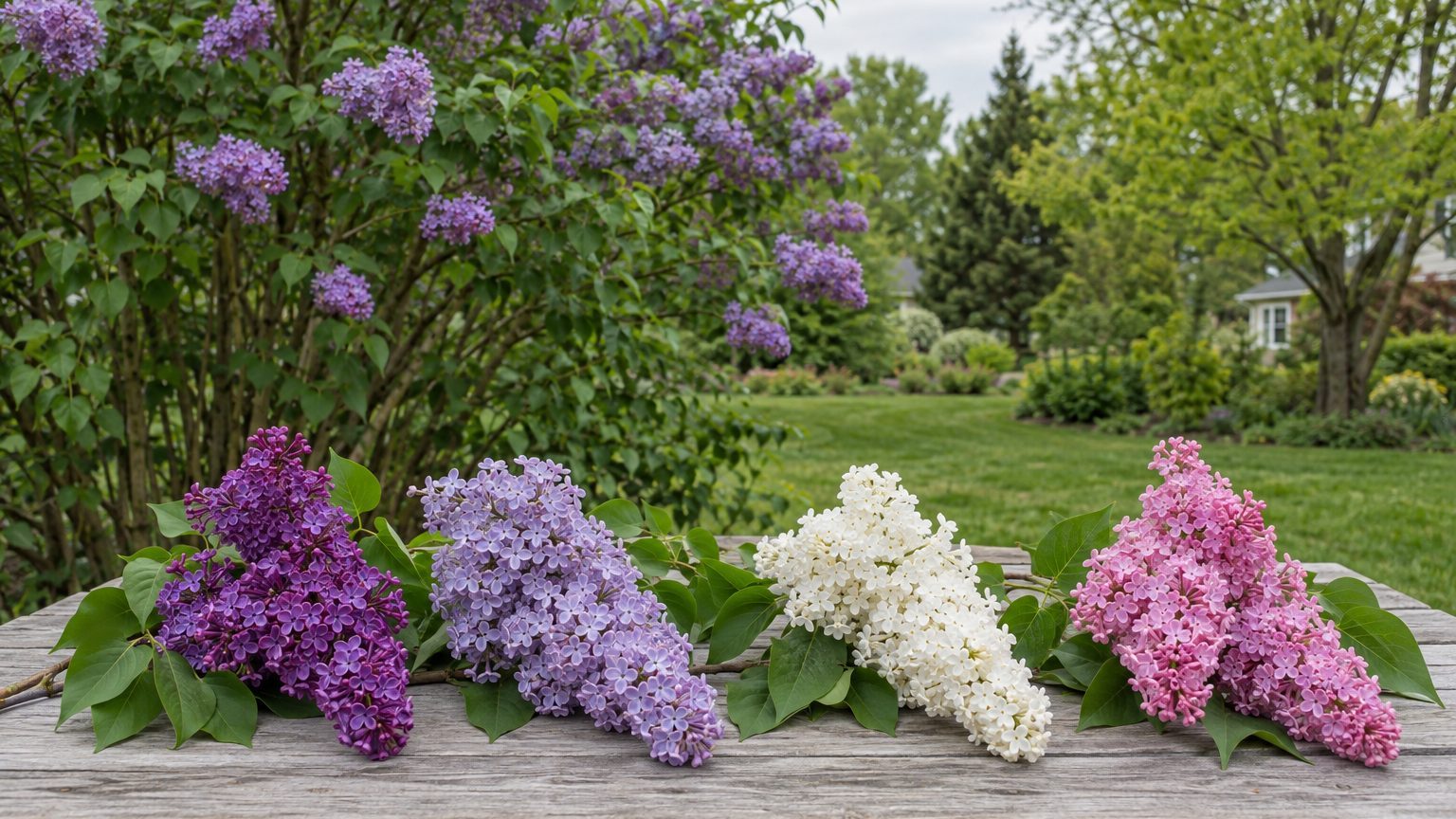
A lilac in full flower perfumes the whole front walk, and in Pennsylvania the plant you choose decides whether that happens reliably or only in a kind year. Common lilac and a handful of compact, disease-resistant cultivars suit most yards here. Which one fits depends mostly on how hot and humid your summers run.
Best Lilacs to Grow in Pennsylvania

Common lilac and cold-hardy hybrids do well across Pennsylvania, while Meyer lilac, dwarf types and a few compact cultivars hold up where summers turn hot and humid.
Lilacs need a cold winter rest to mature their flower buds, and Pennsylvania supplies it, since USDA hardiness zones here run from 5a to 7b. The southeast corner around Philadelphia is where heat and humidity start to push back.
Common Lilac

Syringa vulgaris is the classic lilac, grown for extremely fragrant flowers in mid to late spring. In Pennsylvania it counts among the heat and drought-tolerant ornamentals, so established plants cope with dry spells.
Its weak point is disease. Lilac blight is difficult to control, so buy resistant plants. ‘Edith Cavell’, ‘Glory’, ‘Ludwig Spaeth’ and ‘Pink Elizabeth’ have shown less disease in gardens.
Early Hybrid Lilacs

Hybrids between S. oblata and S. vulgaris are well suited to cold climates and bloom in spring. They fit the colder corners of Pennsylvania, where winter gives the buds the rest they need.
Meyer Lilac
Syringa meyeri ‘Palibin’ is a medium, dense shrub that resists powdery mildew, the problem that commonly afflicts common lilac. That resistance matters in muggy Pennsylvania summers, when the white film on leaves is most likely to appear.
Dwarf Lilacs
Dwarf lilac species and hybrids handle warm, humid conditions much better than traditional varieties. They also stay small, which suits a foundation bed or a narrow side yard better than a full-size shrub.
Miss Kim
‘Miss Kim’ is a round, compact cultivar with pale lavender-purple flowers. Choosing a cultivar with above-average disease resistance and heat tolerance improves your odds in a warm summer.
Bloomerang Series
The Bloomerang series is powdery mildew resistant and reblooms. Some reblooming varieties send up a few flowers sporadically into summer and early autumn, though high heat can still hamper that second show.
Pennsylvania — the year and the numbers
- State
- Pennsylvania
- USDA zones
- 5a-7b
- Last spring frost
- March 29 to April 6
- First fall frost
- November 5 to November 16
- Annual rain
- 44 in
- Lawn zone
- transition-season
- Source
- NOAA NCEI U.S. Climate Normals 1991-2020, 32F freeze probabilities · Philadelphia
How to Choose a Lilac for a Pennsylvania Garden
Start with your summers. A yard in a cold corner of the state rarely has to worry about the cold rest, while a hot, muggy yard needs a plant that shrugs off mildew.
Then think about the spot itself: how much room the plant gets and how much attention you want to give it.
| Your situation | What suits it in Pennsylvania | Why |
|---|---|---|
| Very cold winter | Common lilac or early hybrids | Hybrids of S. oblata and S. vulgaris are well suited to cold climates |
| Hot, humid summer | Meyer lilac ‘Palibin’ or dwarf lilacs | Palibin resists powdery mildew, and dwarf types cope with warm conditions better |
| Little time for care | ‘Edith Cavell’, ‘Glory’, ‘Ludwig Spaeth’ or ‘Pink Elizabeth’ | These common lilacs have shown less disease in gardens |
| Small space | ‘Miss Kim’ or a dwarf lilac | ‘Miss Kim’ grows round and compact |
| Flowers beyond spring | Bloomerang series | It reblooms and resists powdery mildew |
Where situations overlap—for instance, in a small yard with humid summers—a dwarf lilac or Meyer lilac usually meets those needs.
Which Lilacs Suit Different Parts of Pennsylvania
Pennsylvania stretches from a mild southeast to cooler uplands, and that shifts the choice more than the calendar does.
- Philadelphia and the southeast: Spring frost ends earlier here than in the north of the state, and summers feel heavy. Lean toward Meyer lilac, dwarf types, ‘Miss Kim’ and mildew-resistant cultivars.
- The northern tier and the Alleghenies: Spring arrives later here and winters are colder, which is the kind of rest lilac buds want. Common lilac and the early hybrids are at home in these hills.
Between the northern and southeastern parts of the state, let your own summer heat and the conditions in your yard guide the choice.
Lilac Buying Mistakes to Avoid in Pennsylvania
Buying Without Checking Disease
Most common lilac cultivars are susceptible to blight, which is difficult to control once it appears. Ask for a named resistant cultivar before you carry anything to the register, and treat an unlabeled seedling with caution.
Ignoring Heat in the Southeast
Lilacs struggle in hot, humid summers, so a traditional variety planted near Philadelphia may sulk and mildew. Pick a dwarf type, Meyer lilac or a cultivar known for heat tolerance instead, and you keep the fragrance without the fight.
Skipping the Adult Size
A nursery pot says nothing about the shrub it becomes, and a lilac that outgrows its spot tempts you into rough cuts. Read the mature size on the tag and give the plant room from the start.
Routine pruning belongs in May or June, right after the flowers fade. Lilacs bloom on last year’s wood and set next year’s buds soon after flowering, so pruning in late summer, fall or winter removes the following spring’s buds. An overgrown lilac can be cut back hard in March or April, but it will not flower for a few years afterward.
Where to Get Lilac Advice in Pennsylvania
Local growers see which lilacs thrive near you, and Penn State Extension publishes research-based guidance for the state’s yards. Your county extension office can answer questions about a particular plant.
- The Extension site has pages on ornamentals and shrubs, handy before you shop in spring.
- Your county office can look at leaf spots or browning shoots if you bring a photo or a cutting.
Common Questions
When Do Lilacs Bloom in Pennsylvania?
Most lilacs flower in April and May, and later species and cultivars carry on into June. Early hybrids come first, so planting a mix stretches the show.
Do Lilacs Need Full Sun?
Yes. Lilacs thrive in sunny sites with good air circulation, and full sun gives the heaviest flowering. Shade tends to bring leaves and few flowers.
What Colors Do Lilacs Come In?
Named cultivars range across lilac, purple, white, pink and a reddish hue. Some varieties now offer pink or deeper purple blooms than the classic shade.