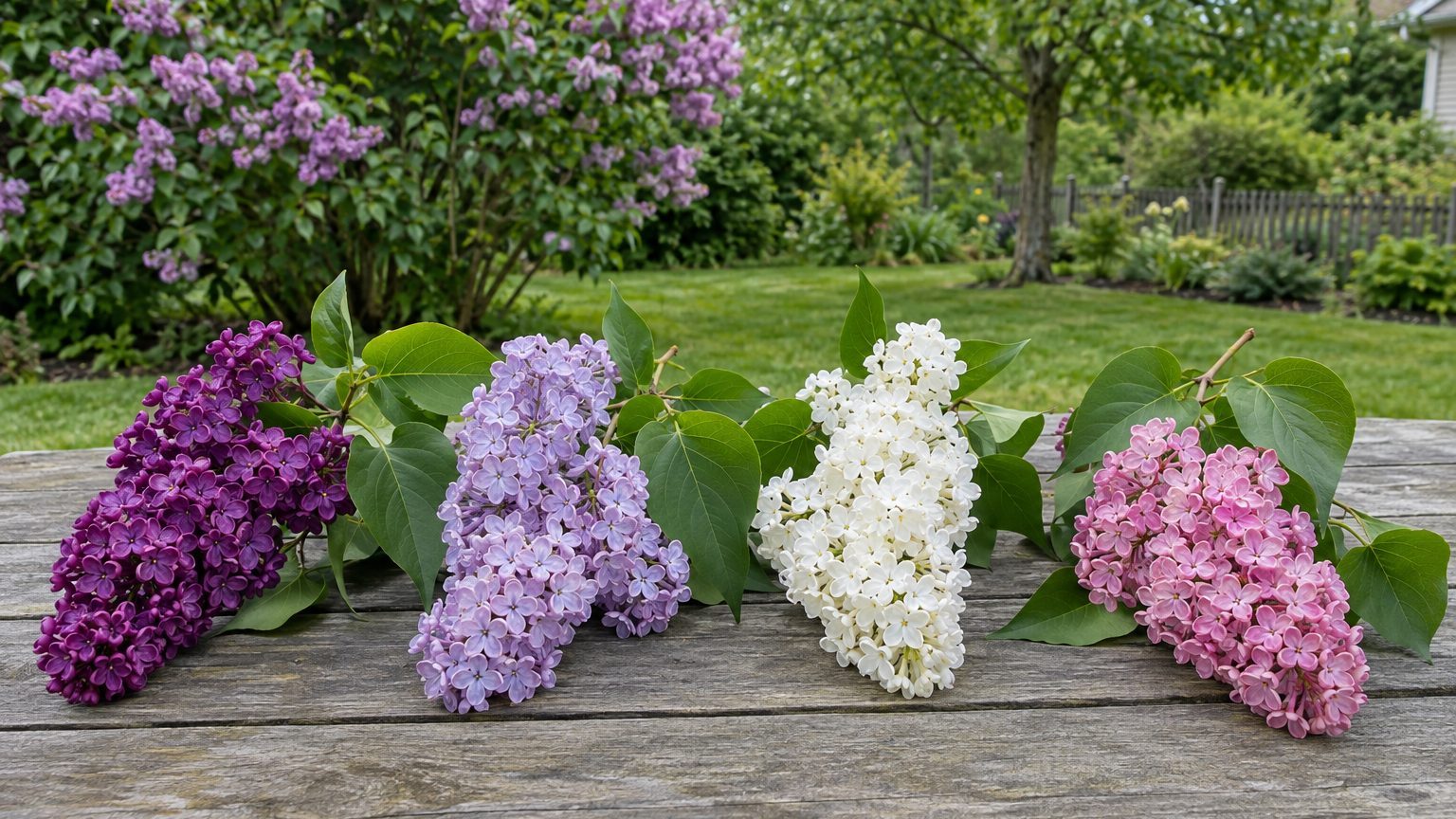
A lilac in full bloom fills the yard with scent and tells you the winter was cold enough. In Ontario, most lilacs get that cold, which is why the old-fashioned types still line so many fences and driveways. The choice that matters is which kind suits your site, your space and your summers.
Best Lilacs to Grow in Ontario

French lilacs, early hybrids, the dwarf Korean lilac and the reblooming Bloomerang series all earn a place here. Summer is the weak spot, since lilacs struggle in hot, humid weather. Give them a sunny spot with good air circulation.
French Lilacs

These are selections of the common lilac, Syringa vulgaris, and they are the best known of the group. Hundreds of cultivars exist, in many colours and floret shapes, so you can pick by flower rather than settling for one standard purple.
Their fragrance is strong, and they flower in mid to late spring.
Sensation

Sensation has purple flowers edged with white, which makes it easy to spot in a nursery row. It is also among the varieties found resistant to a bacterial disease of lilacs in a long trial, and choosing resistant varieties is the best protection against that disease.
Early Hybrids
Hybrids between Syringa oblata and Syringa vulgaris are well suited to cold climates. They bloom in mid to late April, ahead of the common lilacs, so they stretch your lilac season at the front end.
Dwarf Korean Lilac
Syringa meyeri, also called the little-leaf lilac, usually grows about 5 ft tall and as wide. Occasionally it reaches 8 ft.
It blooms profusely, with small violet flowers. Breeders have used it often because it is compact. The dwarf Korean lilac also appears among the varieties found resistant to that bacterial disease.
Bloomerang Series
This series is resistant to powdery mildew and reblooms. Mildew is a common complaint in humid summers, so this series is a useful choice when those conditions are hard to avoid.
Ontario — the year and the numbers
- State
- Ontario
- Hardiness zones
- 7a
- Last spring frost
- April 30
- First fall frost
- October 16
- Annual rain
- 31 in
- Lawn zone
- cool-season
- Source
- Environment and Climate Change Canada — Canadian Climate Normals 1981-2010, station TORONTO LESTER B. PEARSON INT'L A · Toronto
How to Choose a Lilac for an Ontario Garden
Start with your site, then your patience. Toronto sits in Canadian hardiness zone 7a (a Canadian rating, not a USDA zone), and that mild-for-Ontario winter still gives lilacs the rest they need. Colder districts only reinforce the case for the cold-hardy types.
Match the plant to the problem you actually have.
| Your situation | What suits it in Ontario | Why |
|---|---|---|
| Very cold winter | French lilacs or the early hybrids | The hybrids are well suited to cold climates, and French lilacs are the best-known type. |
| Hot, humid summer | Bloomerang series | Lilacs struggle in humid heat, and this series resists powdery mildew. |
| Concern about bacterial disease | Sensation or the dwarf Korean lilac | Both were found resistant to a bacterial disease, and resistant varieties are the best protection. |
| Small space | Dwarf Korean lilac | It usually stays near 5 ft tall and as wide. |
| Need for cold | French lilacs and early hybrids | A cold winter rest matures the flower buds. |
Color can come after size and disease resistance. Named cultivars come in lilac, purple, white, pink and a reddish hue, so size and disease resistance should settle the shortlist first.
Which Lilacs Suit Different Parts of Ontario
Ontario is long and stretches across several climates, so the same lilac behaves differently from one district to the next. These are the differences that change what you plant.
- Toronto’s reference figure for the last spring frost is April 30 on average, which means it comes later in half of all years. Treat that date as the middle of a window, and wait for the weather to settle before planting out tender new growth.
- Niagara and the Lake Erie shore: summers here are warmer and can turn humid, so a mildew-resistant series earns its place beside the classic French lilacs.
- Muskoka and the uplands: spring arrives weeks behind the southern cities, so the early hybrids and French lilacs are the safe choice, and bloom runs later.
- Northern Ontario, around Sudbury and Thunder Bay: winter is long and cold, which is the condition lilacs like best, so French lilacs and the early hybrids fit without trouble.
Lilac bloom runs from April through May and can reach into June, with later species and cultivars at the tail end. Colder districts sit toward the later months.
Lilac Buying Mistakes to Avoid in Ontario
Planting Where Summers Are Sticky
A lilac set in a closed-in, damp corner with poor air circulation struggles in humid heat. Mildew follows. Pick a sunny, open spot, and if your yard is humid anyway, choose a mildew-resistant series.
Buying Without Knowing Adult Size
A small pot hides a large shrub. French lilac cultivars vary in size, while the dwarf Korean lilac usually settles near 5 ft. Read the tag for mature height and width before buying.
Pruning at the Wrong Time
A lilac blooms on last year’s wood and sets next year’s flower buds in summer, soon after it flowers. Prune in May or June, right after the flowers fade. Cutting in late summer, fall or winter removes the coming spring’s flowers.
An overgrown lilac can be cut back hard in March or April. The price is no bloom for a few years afterward.
Where to Get Lilac Advice in Ontario
Ontario’s agriculture and food pages are a useful starting point. Ontario has no local extension page on lilac timing, so these dates follow the nearest comparable climate and should be confirmed with a local garden center or garden society.
- Read Ontario’s agriculture and food pages for provincial guidance on plants and pests, any time you are planning a bed.
- Ask a local garden centre which lilac varieties do well nearby, ideally in early spring when stock arrives.
- Visit a local garden society or master gardener group in late April through May, when lilacs bloom, to see which ones thrive in your district.
Common Questions
When Do Lilacs Bloom in Ontario?
Bloom runs from April through May, with later species and cultivars carrying on into June. The early hybrids open first, in mid to late April.
What Colours Do Lilacs Come In?
Named cultivars range through lilac, purple, white, pink and a reddish hue. Sensation combines purple flowers with white edges.
How Much Sun Does a Lilac Need?
Lilacs do well in sunny sites with good air circulation. Shade and still air invite weak growth and mildew, so choose an open, bright spot.