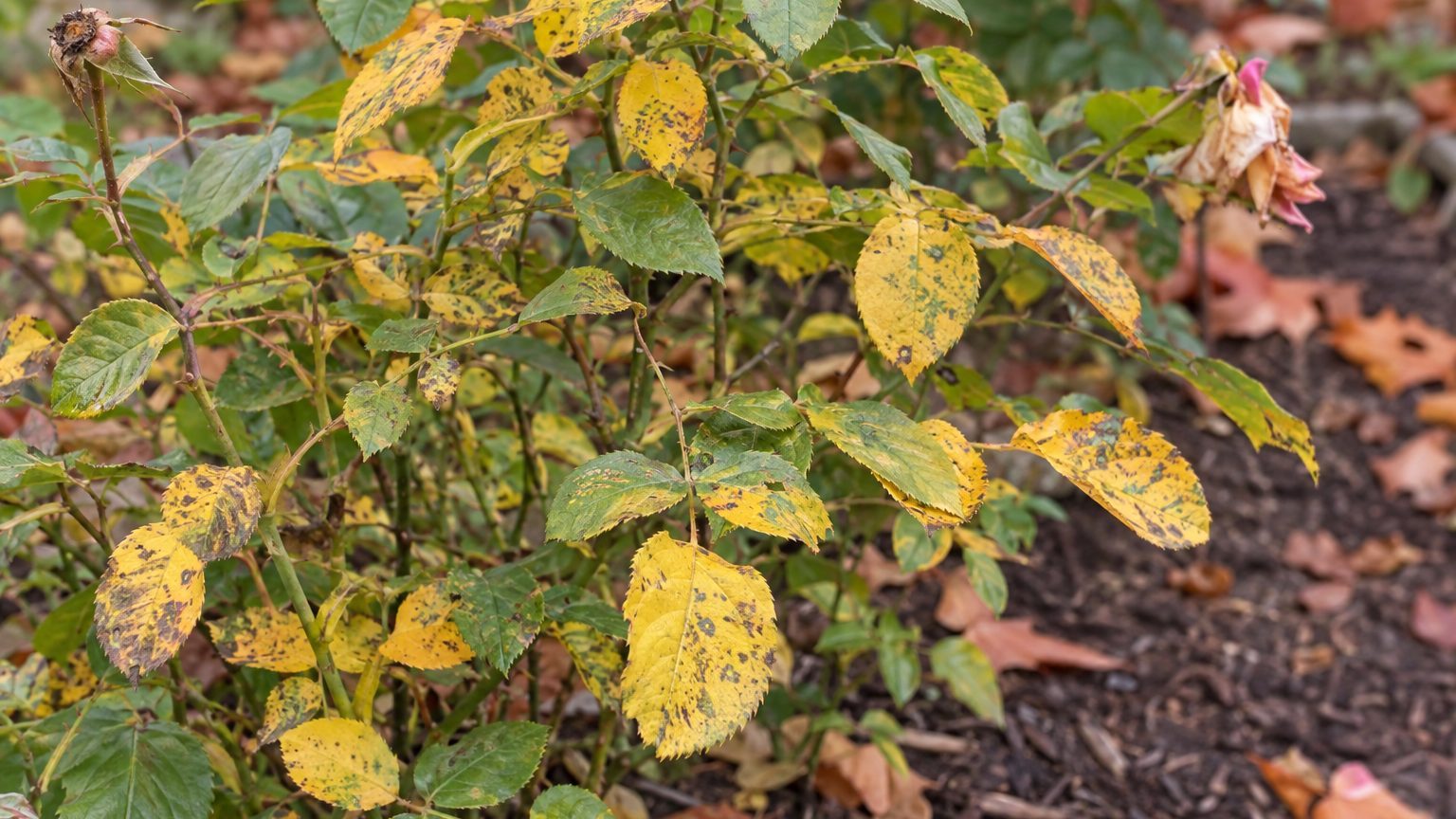
New rose leaves can emerge pale yellow while the veins stay green. It looks like a disease, but it usually points to the soil and to nutrients the roots cannot take up. Reading the pattern correctly tells you whether to change the watering, the soil chemistry or both.
Rose Leaves Turning Yellow With Green Veins: What You See

The pattern is easy to spot once you know where to look, and these are the signs to check on the bush.
- The tissue between the veins fades to yellow while the veins themselves stay green, giving each leaf a netted look.
- The youngest leaves at the tips of the canes show it first, and they are affected more than the older leaves lower down.
- In severe cases, the new leaves come out small and completely white.
- Leaf tips and margins may turn brown and dry as the problem drags on.
- Leaves can drop early, leaving thin, bare-looking canes.
Because the pattern appears on new growth, you will notice it whenever the bush is pushing fresh shoots, and each flush of new leaves can repeat it.
From the almanac
Roses in your state
The dates on this page depend on where you live. Your state's page carries its frost dates, its USDA zones and the year laid out month by month.
Northeast
Southeast
- Alabama
- Arkansas
- Delaware
- Florida
- Georgia
- Kentucky
- Louisiana
- Maryland
- Mississippi
- North Carolina
- South Carolina
- Tennessee
- Virginia
- West Virginia
Midwest
Southwest
West
Pacific Northwest
Canada
Rose Leaves Turning Yellow With Green Veins or Something Else?
A few other problems turn rose leaves yellow, and they call for different fixes. The difference usually shows in what the veins do and in what the soil feels like when you push a trowel in.
| Looks like | How to tell them apart |
|---|---|
| Waterlogged roots | Soil stays soggy and drains poorly, and the yellowing is more general instead of leaving the veins sharply green. |
| Other nutrient shortages | The veins themselves turn yellow, and leaf edges brown and drop early, instead of staying green on new leaves. |
Wet soil and the green-vein pattern can occur together, because soil that is too wet can also leave iron and zinc out of reach. If the bush sits where water lingers, treat the drainage as part of the problem and not as a separate one.
What Causes Rose Leaves Turning Yellow With Green Veins, and Where It Is Worst
The usual cause is a shortage of iron or zinc in the new leaves. Iron may be present in alkaline soil but remain unavailable to the plant. The symptoms are usually tied to soil pH that is too high.
Iron is often tightly bound to soil particles in alkaline, calcareous soils, which describes many soils there. The rose cannot reach it even when plenty is in the ground. Roses are among the plants most often brought in for diagnosis of this problem.
Several conditions raise the odds of trouble:
- Alkaline soil, where iron and zinc turn into forms roots cannot use.
- Soil that stays too wet, which starves roots of oxygen.
- Heavy, poorly drained soil, which can make the symptoms worse.
How to Treat Rose Leaves Turning Yellow With Green Veins
Start with simple checks, and confirm the cause before taking corrective action.
- Compare new leaves with old ones, so you know the yellowing with green veins sits on the youngest growth and not on the whole plant.
- Push a trowel into the soil near the bush and feel it, so you can tell whether poor drainage or too much water is starving the roots of oxygen.
- Take a soil sample to your county extension office for a pH test, so you know whether high pH is locking up iron and zinc.
- Apply iron or zinc in a chelated form to the soil or the leaves, so the plant gets nutrients in a form it can use. A chelated iron product is expected to correct the problem.
- Ease off the watering where the soil stays soggy, so the roots can take up nutrients again.
Your state extension service can tell you which products are approved where you live, and the label sets the amount. Treat new growth as the measure of success, since leaves that have already yellowed rarely change.
How to Prevent Rose Leaves Turning Yellow With Green Veins Coming Back
The pattern returns where the soil stays alkaline or wet, so prevention follows the year around the bush.
- In early spring, before growth starts, test the soil pH so you know whether iron and zinc will be available once the leaves open.
- As the first new leaves unfold, check the tips of the canes, because early signs show on the youngest growth.
- Through the growing season, water so the soil is moist but never soggy, since roots need oxygen to take up nutrients.
- Before planting or moving roses in heavy ground, improve the drainage because poor drainage can worsen the symptoms.
Soil that stays wet and alkaline can bring the problem back no matter what you spray, which is why drainage and pH come before any quick fix.
Where This Comes From
Check with your state extension service before treating.
Common Questions
Why Spray Leaves Instead of Treating the Soil?
In alkaline soil, iron and zinc form insoluble precipitates, so material put on the ground may never reach the roots. That is why these metals can be applied straight to the foliage, and chelated forms can also be used in the soil.
Does Sandy Soil Cause Yellow Leaves with Green Veins?
It can. In California, sandy loam can be low in micronutrients, so roses growing in it may run short of iron and zinc.
How Can You Confirm the Cause Before Treating?
A soil pH test can show whether high pH is involved. Pair the result with what you see on the plant, meaning green veins on new leaves and soil that either drains well or stays wet.