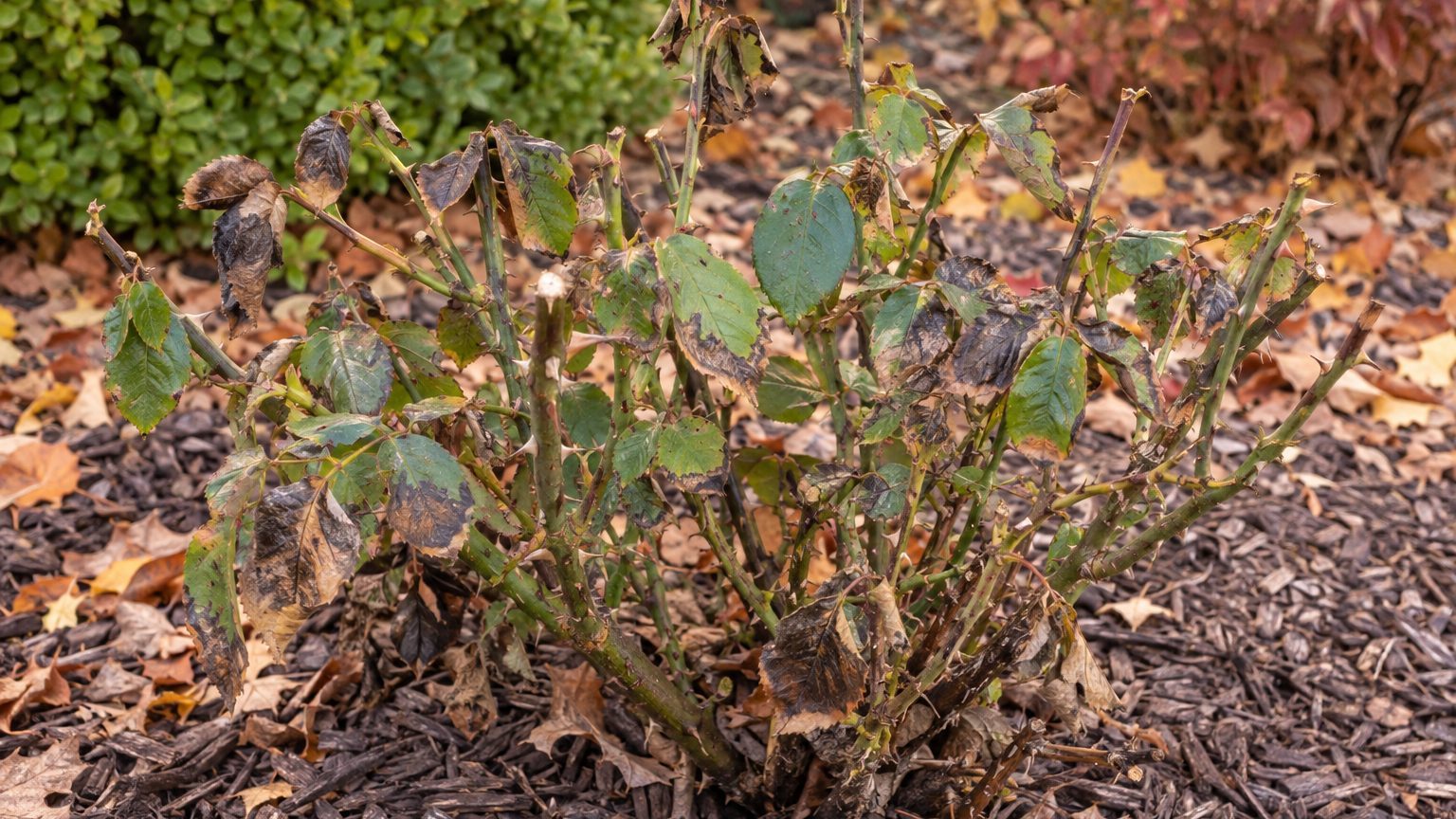
A rose that looked fine at the first leaf-out can start to wilt as the weather warms, with canes that turn brown from the tips down. That pattern usually points to cold injury from the winter before.
Rose Winter Damage: What You See

In Minnesota, winter injury can become visible in spring after the plant seems to wake up normally.
- In Minnesota, new growth emerges in spring, then wilts and dies as the weather turns warm.
- Dark streaks show in the wood when you scrape away a little bark on an affected cane.
- Flowers, twigs and stems die or are dying, often on the parts of the plant that stood highest above the mulch.
- Canes that were alive in fall stay bare, with new growth that emerges then wilts and dies as weather turns warm.
- Stem cankers can appear later on injured canes, because disease organisms move into the damaged tissue.
The damage often looks patchy, with one cane fully dead and its neighbor leafing out normally.
From the almanac
Roses in your state
The dates on this page depend on where you live. Your state's page carries its frost dates, its USDA zones and the year laid out month by month.
Northeast
Southeast
- Alabama
- Arkansas
- Delaware
- Florida
- Georgia
- Kentucky
- Louisiana
- Maryland
- Mississippi
- North Carolina
- South Carolina
- Tennessee
- Virginia
- West Virginia
Midwest
Southwest
West
Pacific Northwest
Canada
Rose Winter Damage or Something Else?
In Minnesota, several rose problems can leave wilted, brown or bare canes in spring or summer. Winter injury is the one tied to the cold season just past, and it shows up as the plant restarts growth.
Checking where the damage sits and what the bark looks like usually settles it.
| Looks like | How to tell them apart |
|---|---|
| In Minnesota, rodent damage causes buds to fail to leaf out or leaf out very poorly in spring | Bark is stripped around the base of the cane with signs of chewing, and the plant may feel wobbly and loosely anchored if the roots were gnawed |
| Verticillium wilt: wilting tips and browning canes | Leaves yellow and drop starting at the lowest leaves and moving upward, and purplish black streaks appear on stems before dieback |
| Rose stem girdler: clumps of leaves wilt and turn brown | In Minnesota, it happens in summer rather than at spring restart, and the stem swells where the damage sits |
Rust is another leaf problem that gets mistaken for winter trouble. It shows orange raised bumps on the underside of leaves, with twisted leaves and powdery orange spores, which is a different picture from a dead cane.
What Causes Rose Winter Damage, and Where It Is Worst
The cause is cold, but the swing between freezing and thawing. Cold damage occurs as plant tissues alternate between freezing and thawing. That is why the goal there is to keep the crown and the lower canes uniformly cold through the deepest winter.
Sudden swings can be very hard on plants. In Nebraska, temperatures can change by 20-30° F in 24 hours, which is very hard on plants. Unseasonably warm spells in January and February, followed by repeated freezing and thawing of the soil, can do a lot of damage there too.
The plant’s own condition and the pruning it received matter as well. In New Hampshire, heavy fall pruning of bush roses can mean losing the entire plant in a severe winter. Roses that go into fall weak, or that are still pushing soft growth, have a harder time getting through.
How to Treat Rose Winter Damage
Treatment is mostly patient pruning and cleanup, done in this order once the plant shows you what survived.
- Wait for new growth to show on the canes, so that you can see which parts are alive and which are not.
- Scrape a little bark from a doubtful cane, because dark streaks in the wood confirm cold injury and green tissue shows the cane is still alive.
- Cut out dead or diseased tissue with the cut made at an angle in healthy tissue just above a node, so that the new shoot grows from sound wood.
- Avoid wounding the remaining canes while you work, since stem canker diseases move into injured tissue.
- Gather the prunings and any fallen leaves and dispose of them, so that disease does not carry over on the debris.
- Keep the plant vigorous through the season with good regular care, so that it has the strength to push replacement canes.
If canes keep dying after you have cut back to healthy wood, or you notice signs of wilt or rodent injury, your state’s extension service can tell you what is approved and advised where you live.
How to Prevent Rose Winter Damage Coming Back
Prevention follows the year, from feeding through the first hard frosts.
- From April through August, feed monthly, as advised in Pennsylvania, and then stop so that late soft growth does not fail to harden off before winter.
- In Nebraska, keep plants healthy and vigorous in fall to improve winter hardiness.
- In New Hampshire, wait until hard frosts have killed any remaining leaves before applying winter protection.
- When you mound mulch for winter in New Hampshire, leaving 18”- 24″ of healthy canes under it gives you new growth and healthy canes in spring.
- In New Hampshire, cut extremely long stems back before winter winds arrive so that they do not whip about and loosen the soil mound around the crown.
- Once the leaves have fallen, clean up and dispose of leaves and any diseased or damaged stems to lower the risk of disease carrying over.
In cold mountain areas of California, a thick layer of leaf mulch may protect roses during the winter.
Where This Comes From
Check with your own state’s extension service for the dates and methods that suit your climate.
Common Questions
Do All Roses Need Winter Protection?
Winter protection is often necessary for most types of garden roses. How much you need depends on the type of rose and where it sits in the garden.
Should You Prune Roses Hard in Fall?
Hard fall pruning is a risk for bush roses in New Hampshire. For tea roses, a good rule there is to cut less in the fall and more heavily in the spring.
Can Fall Fertilizer Help Roses Get Through Winter?
In Pennsylvania, a high potassium fertilizer applied in the fall may increase winter hardiness once the plant is dormant. Check with your local extension service for what is approved in your state.