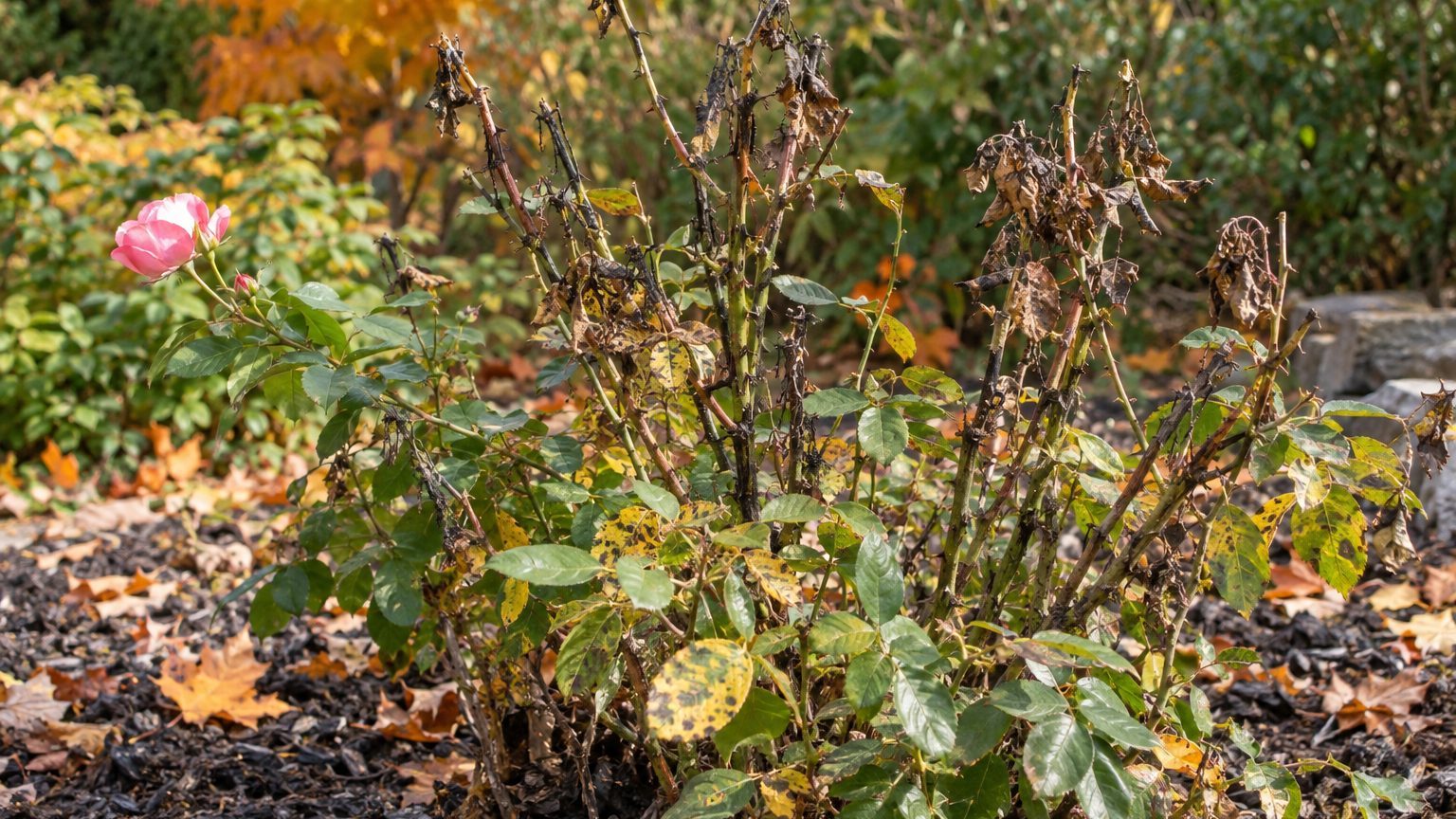
Brown, shriveled stems on a rose bush can point to stem canker, a fungal disease that kills cane tissue beyond the infected spot. The fix is to cut the cane back to healthy wood, and the habits that keep it from returning center on healthy plants and clean pruning cuts.
Rose Canes Dying Back: What You See

The first thing to look for is a dead or discolored patch on a cane, because that patch is where the trouble starts.
- A sunken, often elliptical area on the cane, colored black, brown, dark red or purple, is the sign that sets this problem apart.
- The color of the patch can run anywhere from light tan to dark purplish brown.
- Small yellow, dark red or purple spots on the bark grow slowly and may circle part or all of the cane.
- The bark over the canker may crack open, or the cane may snap at that point.
- Everything above a fully ringed spot wilts, browns or stops growing, while the cane below stays green.
In Tennessee, purple-to-black lesions can show up on canes in fall, while in California infections that start in spring often stay hidden until fall or the next growing season.
From the almanac
Roses in your state
The dates on this page depend on where you live. Your state's page carries its frost dates, its USDA zones and the year laid out month by month.
Northeast
Southeast
- Alabama
- Arkansas
- Delaware
- Florida
- Georgia
- Kentucky
- Louisiana
- Maryland
- Mississippi
- North Carolina
- South Carolina
- Tennessee
- Virginia
- West Virginia
Midwest
Southwest
West
Pacific Northwest
Canada
Rose Canes Dying Back or Something Else?
Several rose problems brown or distort stems, and each calls for a different response. Matching the look of the stem with where it happens on the plant and what the tissue does sorts them out quickly.
| Looks like | How to tell them apart |
|---|---|
| Cane borer damage | Canes brown and die back, and cutting a few inches at a time down the cane reveals the damaged wood before you reach clean, healthy tissue. |
| Rose rosette disease | Mites carrying the virus feed on tender stems, and the disease moves through the whole plant, roots and shoots included, so it never stays on one cane. |
| Crown gall | Wart-like growth shows at the base of the plant, not as a sunken patch farther up a cane. |
Rose rosette has no treatment, and a plant with crown gall is removed and destroyed. A sunken, colored patch partway up a cane, with healthy green wood below it, points back to stem canker.
What Causes Rose Canes Dying Back, and Where It Is Worst
Various fungi cause the cankers, including Botryosphaeria, Leptosphaeria, Coniothyrium and Cryptosporella. They enter healthy canes through wounds, so a bush that has been cut, cracked or battered gives them a way in.
Those wounds come from winter injury, improper pruning, wind, hail damage, thorn abrasions, insects, rodents and flower cutting. Roses already weakened by black spot, poor nutrition or winter injury are the ones where cankers commonly take hold.
The fungus overwinters in infected canes and roots, and in leaf litter under the plants, which is why debris left beneath a bush keeps the problem alive.
How to Treat Rose Canes Dying Back
Control comes down to pruning out cankers as soon as you see them, since no fungicide is specifically available for stem canker.
- Find the canker on the cane, so that you know how far the dead or discolored wood reaches.
- Prune out the cankered wood as soon as you find it.
- Make each cut just above an outward-facing bud, so that new growth heads away from the center of the bush.
- Remove the cut canes and the fallen leaves beneath the plant, so that the fungus has nowhere to overwinter.
- Seal the cut end with wood glue, so that the fresh wound does not become a new entry point.
- Check the bush again later for new discolored spots, so that any new canker comes out while it is small.
Move fast, because a canker can grow until it surrounds the cane or reaches the crown, spreading to other canes or killing the plant.
How to Prevent Rose Canes Dying Back Coming Back
Prevention rests on keeping the plant healthy and keeping wounds to a minimum, and the timing follows the rose year.
- Whenever you prune, make clean cuts above an outward-facing bud and seal them with glue, since wounds are a major way the fungus enters.
- Keep black spot, powdery mildew, and insects under control, because weakened plants are more prone to canker.
- Keep the bush adequately nourished so poor nutrition does not weaken it.
- When cutting flowers, make clean cuts rather than tearing stems, since flower removal is one of the wounds the fungus uses.
- Remove leaf litter beneath the plants, where the fungus can overwinter.
Check regularly for cracked or damaged canes, because wounds give the fungus a way in.
Where This Comes From
Canker control centers on pruning out diseased wood and limiting wounds.
Local rose-care timing can differ.
Common Questions
Will a Rose Recover After the Canes Die Back?
Often it can, when the canker is cut out early. If the canker reaches the crown, the fungus spreads into other canes and the whole plant may wilt and die.
Can You Stop Rose Cankers with a Spray?
No fungicide is specifically available to control stem canker, so pruning out the cankers is the main control.
Can You Replant a Rose Where Another One Died?
If the cause was crown gall, do not put another rose in that spot for several years.