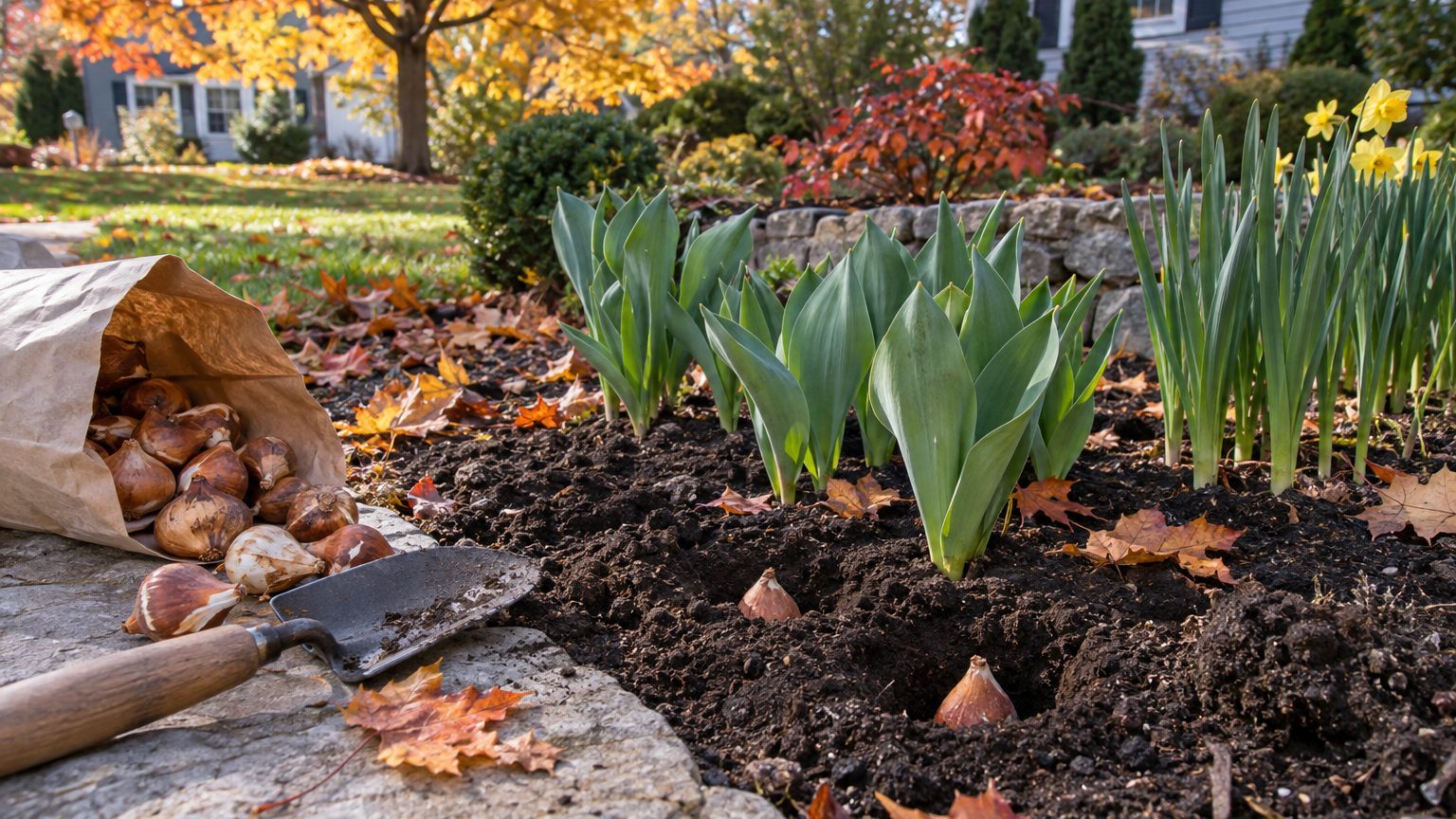
Spring bulbs go into the ground while the garden is winding down, once the soil has lost its summer heat. Tulips and daffodils both follow that rhythm.
When Is the Best Time to Plant Spring Bulbs?
Spring bulbs generally go in during fall once the soil has cooled. Cool soil lets roots form without pushing top growth, and the winter chill that follows prepares the bulb to flower. In Nebraska and New Jersey, the guide is soil below 60°F.
Climate and bulb type shift the window. Mild-winter regions plant later and often need pre-chilled tulips, while cold regions plant earlier. The state selector just below this section leads to the page for your state.
From the almanac
Bulbs in your state
The dates on this page depend on where you live. Your state's page carries its frost dates, its USDA zones and the year laid out month by month.
Northeast
Southeast
- Alabama
- Arkansas
- Delaware
- Florida
- Georgia
- Kentucky
- Louisiana
- Maryland
- Mississippi
- North Carolina
- South Carolina
- Tennessee
- Virginia
- West Virginia
Midwest
Southwest
West
Pacific Northwest
Canada
How to Plant Spring Bulbs

The order of the work matters, because each gesture prepares the next one. Start once the soil has cooled, and finish before the ground turns hard.
- Wait for cool soil, which in South Dakota means below 60 degrees, so that bulbs do not sprout top growth that winter will damage.
- Loosen the bed and work in organic material, which in Pennsylvania means the top 12-18 inches, so that roots meet loose soil that drains instead of holding water around the bulb.
- Dig to the right depth for the bulb, since in Illinois large bulbs go 6 to 8 inches deep and small ones 2 to 3 inches, so that each bulb sits where the soil buffers cold and heat.
- Set each bulb with its nose pointing up, so that the shoot has the shortest path to the surface in spring.
- Space them to suit their size, because in Illinois large bulbs sit a foot apart and small ones 3 to 4 inches apart, so that leaves and roots do not crowd each other.
- Water the bed after planting, so that the soil settles around each bulb and roots start to grow.
Depth is measured from the top of the bulb to the soil surface, which is easy to get wrong. In Indiana, planting about 6 weeks before the ground is expected to freeze gives roots time to establish, and roots keep developing as long as the soil stays above 40 degrees F. Groups look better than single bulbs in a row, so plant in clusters.
Planting Time by Bulb Type
Tulips and daffodils share a fall planting season, but their needs differ at the edges. The chilling requirement is what sets them apart, especially where winters are mild.
Crocuses are another early planting, and soil temperature is the signal for them as well.
| Bulb Type | What changes | Why it matters |
|---|---|---|
| Tulips in mild-winter areas | In eastern North Carolina, plant pre-chilled bulbs in December | Chilling in a fridge for 8 to 10 weeks replaces the winter cold the ground does not supply |
| Tulips in Florida | Refrigerate store-bought bulbs for 8 weeks before planting | Without that chill, the bulb is not prepared to flower |
| Most species in Ohio | Need 10 to 12 weeks of storage at 40 to 50 degrees F | Bulbs stored warmer or for less time may flower poorly |
| Crocus in South Dakota | Plant when soil is below 60 degrees | Cool soil keeps the corm from sprouting too soon |
| Spring bulbs in New Hampshire | Plant once the soil has cooled to a pleasantly chilly range, after the summer warmth has faded but before the ground freezes | Roots form before the ground freezes |
For you, the lesson is to match the bulb to the winter you have. Where the ground stays cold, plant straight into it in fall. Where winters are mild, chill tulips first, and keep them away from fruit in the fridge. Daffodils are named here only as a fall planting, since their needs follow the same soil-temperature rule.
Bulb Planting Mistakes to Avoid
Planting into Warm Soil
Bulbs set out too early meet soil that is still warm, and they may send up leaves that winter cold can damage. In Arkansas, the soil should be between 40 and 60 degrees before planting. If the ground is still warm, hold off until it cools.
Skipping the Chill
Tulips planted straight from a warm shelf in a mild climate may come up weak or not at all. In North Carolina, bulbs need to chill for about 12 to 16 weeks to flower well. Buy pre-chilled bulbs, or chill them yourself in the refrigerator before planting.
Planting Too Shallow
A bulb set too close to the surface faces swings in temperature and may heave out of the soil. Large bulbs in Illinois go 6 to 8 inches deep, and shallow holes leave them exposed. Measure the hole, and loosen the soil below the bulb so roots can go down.
When to Plant Spring Bulbs in Your State
The sign to watch is cooling soil, which tells you more than the calendar does. Once the ground has dropped below the threshold for your area, the bulbs can go in.
- Your state page gives the months for planting where you live, so check it before you buy bulbs.
- Use it again when the nights turn cool, and get the bulbs into the ground.
Common Questions
Can You Plant Tulip Bulbs After the Ground Freezes?
A bulb still unplanted goes in as soon as the ground can be dug. In Indiana, roots keep developing as long as the soil stays above 40 degrees F, so a late planting still has a chance to root.
Do You Need to Chill Tulip Bulbs Before Planting?
Where winters are mild, yes. In Florida, store-bought tulips are refrigerated for 8 weeks before planting. Where winters are cold, the ground does the chilling for you.
How Far Apart Should You Plant Bulbs?
Spacing follows bulb size. In Illinois, large bulbs sit a foot apart, while small bulbs sit 3 to 4 inches apart. In Florida, bulbs planted in groups go 2 to 4 inches apart.