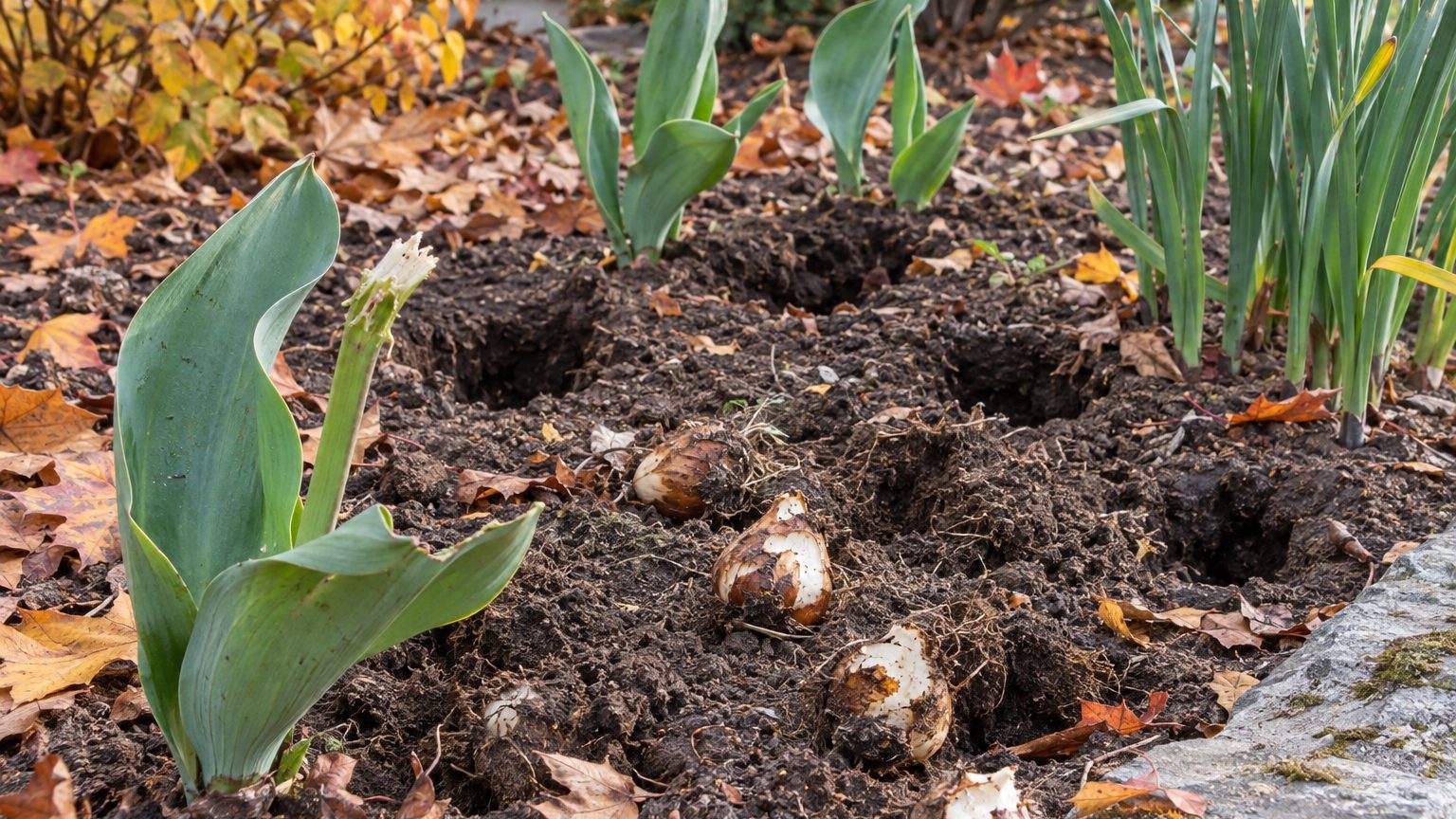
Bulbs that never send up a shoot, or a bed pocked with small holes in spring, usually mean something fed on them out of sight. Voles, squirrels, deer and bulb mites each leave a different mark, and each calls for a different move. Learning those marks makes it easier to protect the bulbs before they flower.
Which Animals and Insects Damage Bulbs?
Across the country, voles and squirrels go after the bulb itself underground, deer browse the leaves and buds above it, and insects and mites attack bulbs in storage or in the soil. What turns up depends on the bulb type and on the climate, since warm, humid regions face more crawling and chewing insects.
In Florida, for example, bulb flies, millipedes and lubber grasshoppers all show up on bulbs, while in South Carolina aphids cause more trouble in cool spring weather. Slugs and snails are common in damp beds in many regions.
The state selector just below this section leads to the page for your state, where the local timing is laid out.
From the almanac
Bulbs in your state
The dates on this page depend on where you live. Your state's page carries its frost dates, its USDA zones and the year laid out month by month.
Northeast
Southeast
- Alabama
- Arkansas
- Delaware
- Florida
- Georgia
- Kentucky
- Louisiana
- Maryland
- Mississippi
- North Carolina
- South Carolina
- Tennessee
- Virginia
- West Virginia
Midwest
Southwest
West
Pacific Northwest
Canada
How to Find and Control Bulb Pests

Trouble tends to arrive in a set order over a bulb’s year, so the checks run from storage to planting and then to spring growth.
- Store bulbs at about 35º F in Connecticut, and check them regularly through winter for soft, rotting or shriveled bulbs, so that decay and blue mold do not spread to the healthy ones.
- Dip cured bulbs that carry mites in 120 °F water before planting, so that the mites die before they reach the soil.
- Handle every bulb gently, because even slight injuries give bulb mites a way in.
- Lay wire mesh over the planted bed, so that voles and squirrels cannot dig down to the bulbs.
- Lift mulch in spring to look for slugs, and check young leaves for puckering or curling, since in South Carolina aphids and thrips cause this distortion.
- Fence the bed or use repellents once leaves emerge, so that deer do not strip the foliage the bulb needs to feed itself for next year.
The mite dip lasts 2 minutes. For slightly damaged bulbs, a longer soak of 3 hours in hot water can control the pests, but watch the water temperature closely, since heat that overshoots will harm the bulb. A bulb that is soft all the way through is better discarded than treated.
Bulb Pests by Bulb Type
Each kind of bulb attracts its own set of problems, and the same pest can matter more on one type than on another. What follows comes from local advice written for particular places.
Daffodils, tulips and summer-flowering bulbs are the clearest examples, and the table lays them out side by side.
| Bulb Type | What changes | Why it matters |
|---|---|---|
| Daffodils (narcissus) | In Florida, bulb mites, bulb flies and millipedes all attack them | Infested bulbs do not grow or fail to flower |
| Tulips | In Florida, the tulip bulb aphid hits stored bulbs and spring leaves, and in Indiana aphids look grayish or powdery white | Stored bulbs lose strength before planting, and leaves lose sap in spring |
| Kaufmanniana tulips | In North Carolina, aphids, slugs and snails show up, and blue mold can form on stored bulbs | Root or bulb rot can follow in poorly drained soil |
| Summer- and fall-flowering bulbs | In South Carolina, aphids and thrips are common | Young leaves pucker, curl or grow oddly |
| Tender summer bulbs | In Nebraska, stored bulbs need checking through winter | Soft, rotting roots or excessive drying go unseen otherwise |
Onions follow the same pattern. In New Mexico, a severe infestation can kill the leaves and shrink the bulb. In practice, that means you scout different parts of the plant depending on the bulb: leaves for tulips, the bulb itself for daffodils, and stored roots for tender bulbs.
Bulb Pest Control Mistakes to Avoid
Rough Handling

Tossing bulbs into a bucket or digging through them with a trowel bruises the skin. Even slight injuries give bulb mites a place to enter, and infested bulbs may stay stunted or flower poorly. Scoop bulbs up by hand, set them down gently, and plant any nicked ones last.
Unchecked Storage

Bulbs stashed in a garage and forgotten can rot or grow blue mold. The fix is to look them over regularly, set aside any that feel soft, and keep the rest at about 35º F in Connecticut. Catching one bad bulb early protects the rest of the batch.
Soggy Beds
Heavy mulch and wet soil invite slugs and rot. In North Carolina, poorly drained soils lead to root or bulb rot, and in Illinois the blight that hits tulips spreads faster in warm weather when humidity is above 95 percent. Plant in well-drained soil, keep mulch thin, and check under it for slugs.
Bulb Pests in Your State
The sign that calls for action is a soft bulb, a missing bulb, a distorted young leaf or a chewed shoot. Local timing for each check differs from state to state, and the page for your state gives the months.
- Open it before storing or planting, to line up the months for sorting and treating bulbs.
- Return in spring, when leaves are up, to match the scouting to what grows in your area.
Common Questions
How Can You Tell Whether Voles, Squirrels or Deer Took the Bulbs?
Dug-up holes with scattered bulb skins on the surface point to squirrels. Plants that vanish with small tunnel openings nearby point to voles. Leaves nipped off with ragged edges, while the bulb stays in the ground, point to deer.
Why Does a Bulb That Feels Soft Never Sprout?
A bulb that is soft when squeezed and sends up nothing may have been hit by bulb fly larvae, which make bulbs soft and unable to grow. Check for a hollow, mushy center before tossing it, and plant the firm bulbs from the same lot.
Does Waiting to Lift Bulbs Raise Pest Losses?
Extended delays in harvesting can mean higher losses from insects and disease. Once the leaves have turned yellow and you plan to lift bulbs, do it without long delay, and never cut the leaves while they are still green.