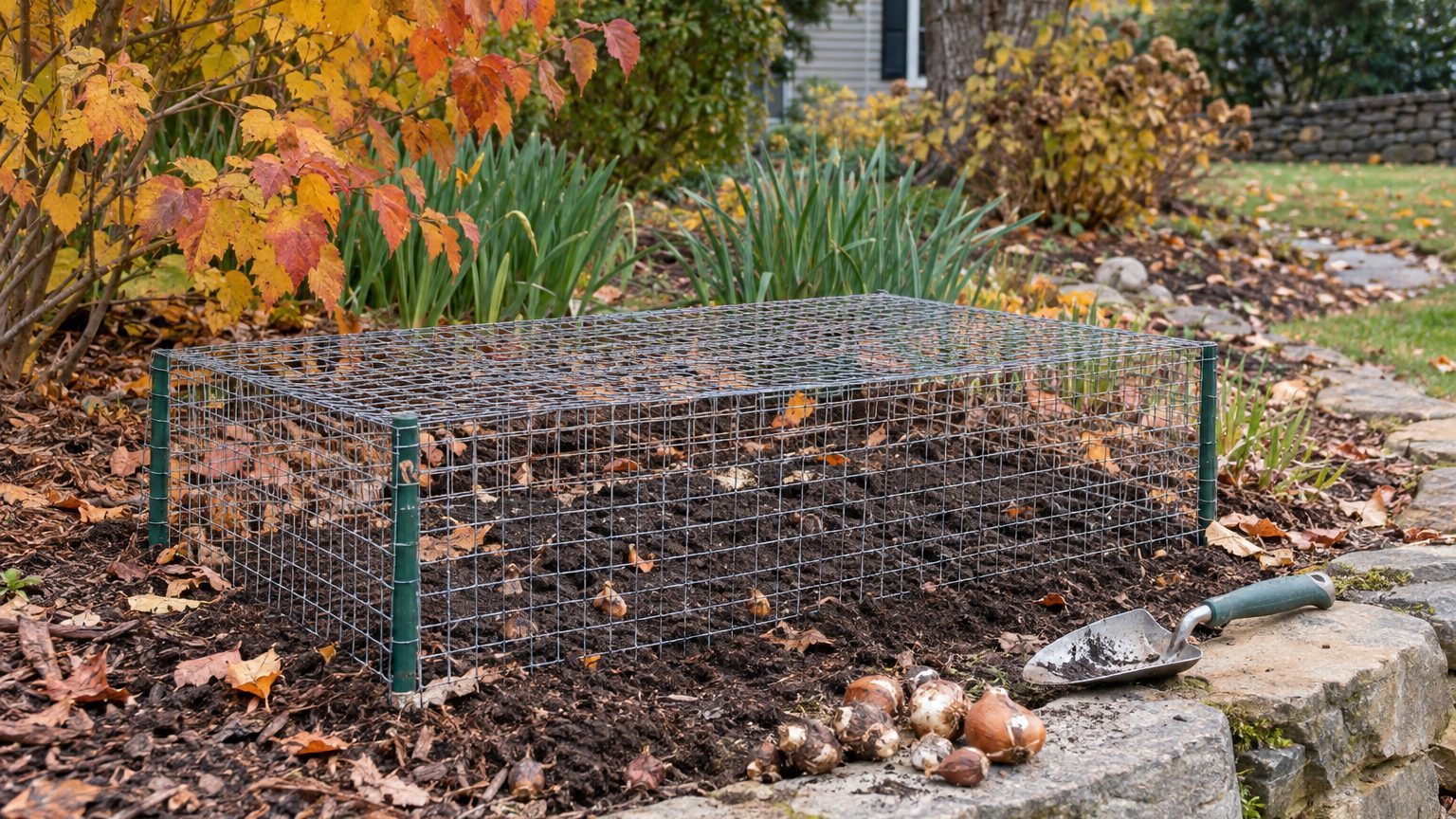
A bed that looks fine after planting and then turns up empty holes, or tulip shoots nibbled to stubs, is a familiar sight for bulb growers. The culprit is usually a deer, squirrel or chipmunk. What it takes depends on the bulbs you chose and how you planted them, and a few choices and a few simple barriers keep most of a bed intact.
Which Bulbs Do Deer and Squirrels Leave Alone?
Daffodils are the dependable choice. In North Carolina, they are described as deer- and rodent-resistant, and they multiply over time. Snowdrops are toxic, so in South Carolina deer go out of their way to avoid them. Tulips and crocus are the usual victims, and in South Carolina animals often dig and eat those bulbs during the winter.
Bulb type sets the rule, while climate shifts how long and how hard animals forage in your yard. The state selector just below this section leads to the page for your state.
From the almanac
Bulbs in your state
The dates on this page depend on where you live. Your state's page carries its frost dates, its USDA zones and the year laid out month by month.
Northeast
Southeast
- Alabama
- Arkansas
- Delaware
- Florida
- Georgia
- Kentucky
- Louisiana
- Maryland
- Mississippi
- North Carolina
- South Carolina
- Tennessee
- Virginia
- West Virginia
Midwest
Southwest
West
Pacific Northwest
Canada
How to Protect Bulbs From Animals

Protection works best when it goes in with the bulbs, since a digging animal gets its reward below ground before anything shows above it.
- Choose bulbs deer dislike for the outer rim of the bed, so that deer that find them there move on. In New York, this keeps them from reaching the lilies and tulips behind.
- Set prized bulbs in a small cage of 1/2-inch mesh, root plate down, so that the whole cage can be buried at the proper depth. In Illinois, several bulbs share one cage, which keeps the work manageable.
- Lay a sheet of hardware cloth over the planted area before the soil goes back, so that diggers meet metal instead of loose earth. In Ohio, this is the suggested route when only a few bulbs are going in and rodents are a problem.
- Dust bulbs or soak them in an animal repellent product before planting, so that they smell unappealing from the start. In Texas, this is the suggested answer to critters eating bulbs through winter.
Mesh with openings about half an inch wide is large enough for leaves to poke through in spring, as a New Hampshire gardener would put it. Leave the leaves in place afterward until they turn yellow, because they are feeding the bulb for next year.
Animal Damage by Bulb Type
Deer browse what grows above ground and rodents go after the bulb itself, so the same bed can lose different things to different animals. A bulb that animals skip needs little more than a good spot.
A bulb they like needs a barrier. The table sorts the bulbs by what the place-based notes say about them.
| Bulb Type | What changes | Why it matters |
|---|---|---|
| Daffodils | In North Carolina, deer- and rodent-resistant, and they multiply over time | Little protection is needed, and the clump grows without chilling or pre-treatment |
| Snowdrops | In South Carolina, deer avoid them because they are toxic | They hold up in a deer-heavy yard where other bulbs would not |
| Siberian squill, grape hyacinth, hyacinths | In Illinois, deer and rabbits do not eat them | They fill gaps in beds where browsing animals are a problem |
| Tulips and crocus | In South Carolina, animals often dig and eat the bulbs in winter | The bulbs can disappear before spring, so they need mesh over or around them |
For you, that means planting the tulips and crocus under mesh and giving daffodils and snowdrops the exposed spots. Lilies sit in a gray zone. In New York, deer that find disliked bulbs at the bed’s edge move on and leave the lilies and tulips alone.
Bulb Protection Mistakes to Avoid
Adding Bone Meal at Planting

Bone meal is a long-standing habit in bulb planting. In North Carolina, it is advised against because it attracts animals instead of deterring them, and a bed that smells like a meal gets dug.
Plant bulbs in plain soil instead, and let the winter cold and the soil do the rest.
Putting Tulips on the Outer Edge

Tulips along the front of a bed are the first thing a deer reaches. A rim of bulbs deer dislike, as New York gardeners use, turns the animals away before they find anything they like.
Keep the tulips toward the middle and put the daffodils on the outside.
Leaving the Bed Bare
Freshly planted soil is loose, and that invites digging. In Washington, bulbs are most vulnerable in fall right after planting, while the soil is still soft and worked up.
Cover the bed as soon as the last bulb is in, so the barrier is down while the soil is at its softest.
Protecting Bulbs in Your State
The sign to act is freshly worked soil with bulbs in it, since that is when animals find a bed. Each State has its own planting months, and the months for each State are on that State’s page.
- Plant spring bulbs in the months suited to your state, and have mesh and cages ready before then.
Common Questions
Should You Dig Up Tulips and Check Them?
In Connecticut, tulips are dug when they look crowded and each year when disease is a concern. Inspect the bulbs before replanting and discard any that are not firm, are discolored, or otherwise look unhealthy.
Can Dry Winter Weather Hurt Bulbs Even When Animals Stay Away?
In South Dakota, dry winter air can speed moisture loss from foliage. Without enough moisture in the soil, shoots may dry out, which stunts growth or causes dieback. Mesh does nothing for that, so a bed that stays dry through a mild winter needs watering.
What Should You Do with Bulbs Still Unplanted?
Plant them as soon as the ground can be dug, and give them the same protection as the rest of the bed. A bulb left waiting only loses time to settle in before the cold.