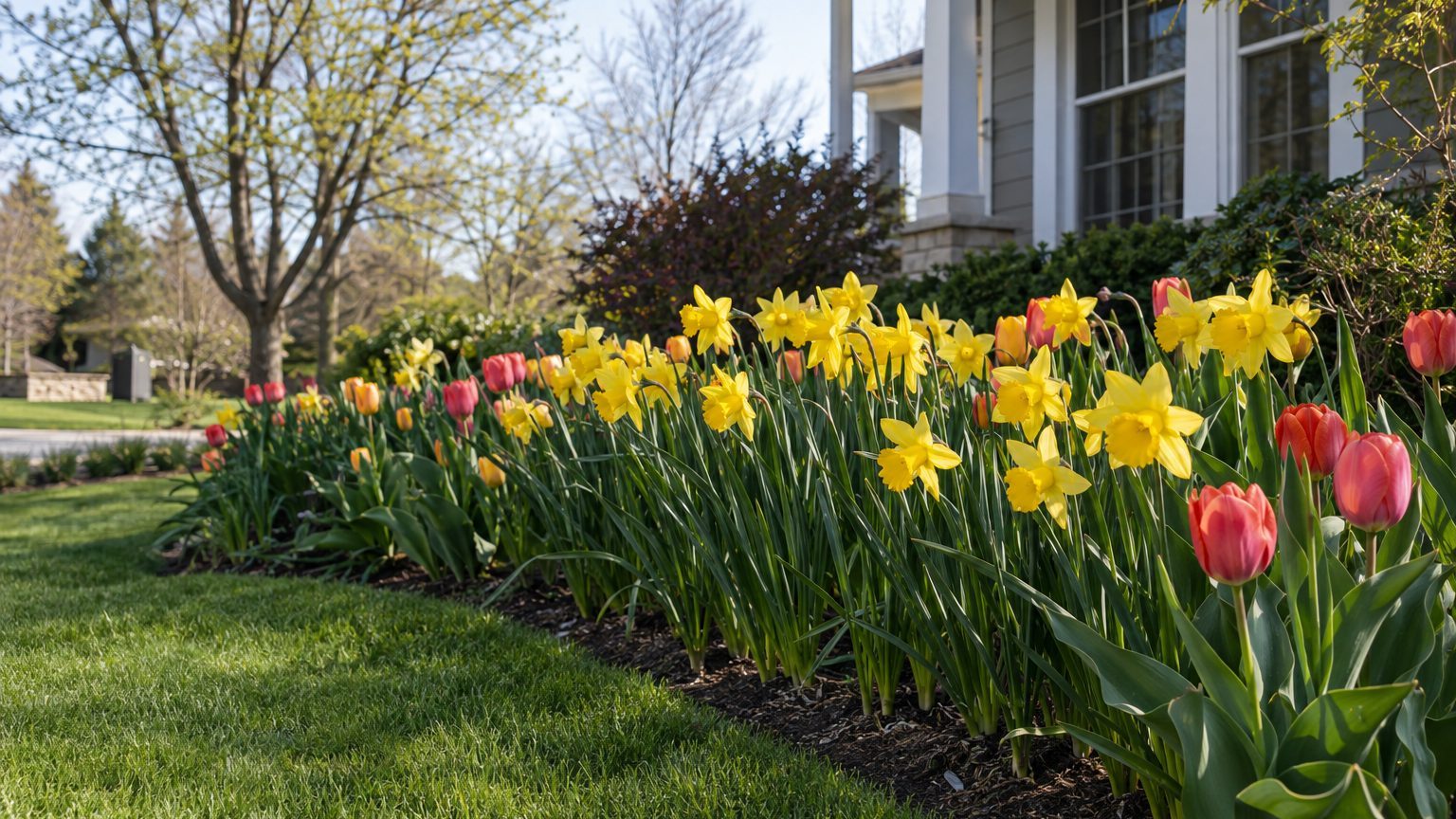
Daffodil leaves pushing through cold ground in late winter are the payoff for a job done months earlier, in the fall. Those bulbs went in while the soil was cooling and the garden was winding down. Timing decides whether the roots settle before the hard freeze, and whether the flowers open at all.
When Should You Plant Daffodils?
Plant daffodil bulbs in the fall, once the soil has cooled and well before it freezes solid. They need winter cold to flower, and many bulbs want a chill of 12 to 16 weeks, which the ground supplies once they are planted.
Climate moves the window. In South Dakota, the soil should be below 60 degrees when the bulbs go in, so a cooling bed matters more than a date on the calendar. Milder winters give more room, and in South Carolina bulbs can go in any time before Dec. 1.
The state selector just below this section leads to the page for your state.
From the almanac
Bulbs in your state
The dates on this page depend on where you live. Your state's page carries its frost dates, its USDA zones and the year laid out month by month.
Northeast
Southeast
- Alabama
- Arkansas
- Delaware
- Florida
- Georgia
- Kentucky
- Louisiana
- Maryland
- Mississippi
- North Carolina
- South Carolina
- Tennessee
- Virginia
- West Virginia
Midwest
Southwest
West
Pacific Northwest
Canada
How to Grow Daffodils

Daffodils ask for little beyond sun, loose soil and patience, and the work goes in this order.
- Choose a sunny spot, because in Nebraska bulbs need at least 10 hours of direct sun per day to bloom in successive years.
- Dig the soil 12 inches deep and work in compost and a complete fertilizer, as Virginia growers do, so the roots meet loose, fed soil instead of a hard bed.
- Set standard bulbs pointed end up and 6 inches deep, as in Illinois, with smaller species bulbs placed shallower, so each one has enough soil cover against winter cold.
- Water the bed after planting, so the soil settles around the bulbs and the roots start to grow.
- Leave the leaves in place after the flowers fade until they turn yellow, so they can feed the bulb for next spring.
- Lift and divide crowded clumps, which in Utah happens every 3 to 4 years, because long-lived bulbs multiply and a packed clump blooms less.
Spacing of 6 to 12 inches apart in Illinois gives each bulb room to make offsets. Daffodils are perennial bulbs that should return year after year in Maryland, and the yellowing leaves are what pay for that return. In North Carolina, a site sunny in winter and shady in summer suits them, such as the ground under a deciduous tree.
Daffodil Types by Bulb Type
Narcissus are extremely variable. In Illinois they are sorted into 12 named divisions, grouped by flower form rather than by how the bulb is grown.
Most differences show up in the bloom, not in the planting hole. A few features are worth knowing before you buy.
| Bulb Type | What changes | Why it matters |
|---|---|---|
| Long-trumpet types | Trumpet is long and tubular | Gives a bold, upright look in a border |
| Short-cup types | Trumpet is short and cuplike | Gives a softer, rounder flower shape |
| Single or double flowers | Flowers come single or double | Double forms look fuller in a bed |
| Several flowers per stalk | One or several flowers open on a stalk | Stalks with several flowers fill a spot with more color |
| Smaller species bulbs | Planted more shallowly in Illinois than standard bulbs | A shallow seat suits a small bulb and avoids burying it too deep |
For you, the choice comes down to the look you want, since the sunny site, loose soil and fall planting stay the same across the group. Colors run through white, pink, yellow, orange and orange-red, and the six lower segments of the flower are white or yellow. Mixing forms in one bed gives a varied show.
Daffodil Growing Mistakes to Avoid
Cutting Leaves Early

Tidying green leaves right after the flowers fade starves the bulb. The leaves are making the food that builds next year’s flower, so a bulb cut back too soon blooms smaller, or not at all.
Let the foliage turn yellow before it comes off. If it bothers you, plant perennials nearby that will grow up and hide it.
Planting in Deep Shade
In Pennsylvania, daffodils tolerate part shade, about 4 to 6 hours of direct sun. Below that, the bulbs may leaf out but make fewer flowers each year.
If a clump has gone blind, mark it and move it to a brighter spot after the leaves yellow. A bed under bare winter trees can still work, since the sun arrives while the leaves are growing.
Watering Dormant Bulbs

In Florida, daffodils need at least 1 inch of rain or equivalent watering each week during growth and bloom. Once dormant, they are highly drought tolerant, and soggy summer soil can rot a bulb sitting idle.
Water in dry spells while the plants are in leaf. When the foliage fades, stop, and keep summer sprinklers off the bed if the soil drains slowly.
When to Plant Daffodils in Your State
The sign that triggers the job is cooling ground. Once the soil has dropped below 60 degrees, as in South Dakota, daffodil bulbs can go in, and the months that fit follow each state’s climate.
- Planting months depend on your state’s climate, so check the right window for your area before you buy bulbs.
- Pick up your bulbs when the soil is cooling and plant them as soon as the ground can be dug.
Common Questions
Can You Plant Daffodils in January?
In North Carolina, November and December are the preferred months, but some gardeners have had success planting even into January. A bulb still unplanted goes in as soon as the ground can be dug.
Will Daffodils Survive Winter in Your Zone?
In Pennsylvania, the daffodil is a hardy bulb that overwinters in USDA zones 3 through 8. Check your zone before planting, and give extra attention to drainage if your winters are wet.
When Do Daffodils Bloom?
In Illinois, daffodils bloom from early spring into spring, depending on the form you planted. Planting a mix of forms stretches the show over more of the season.