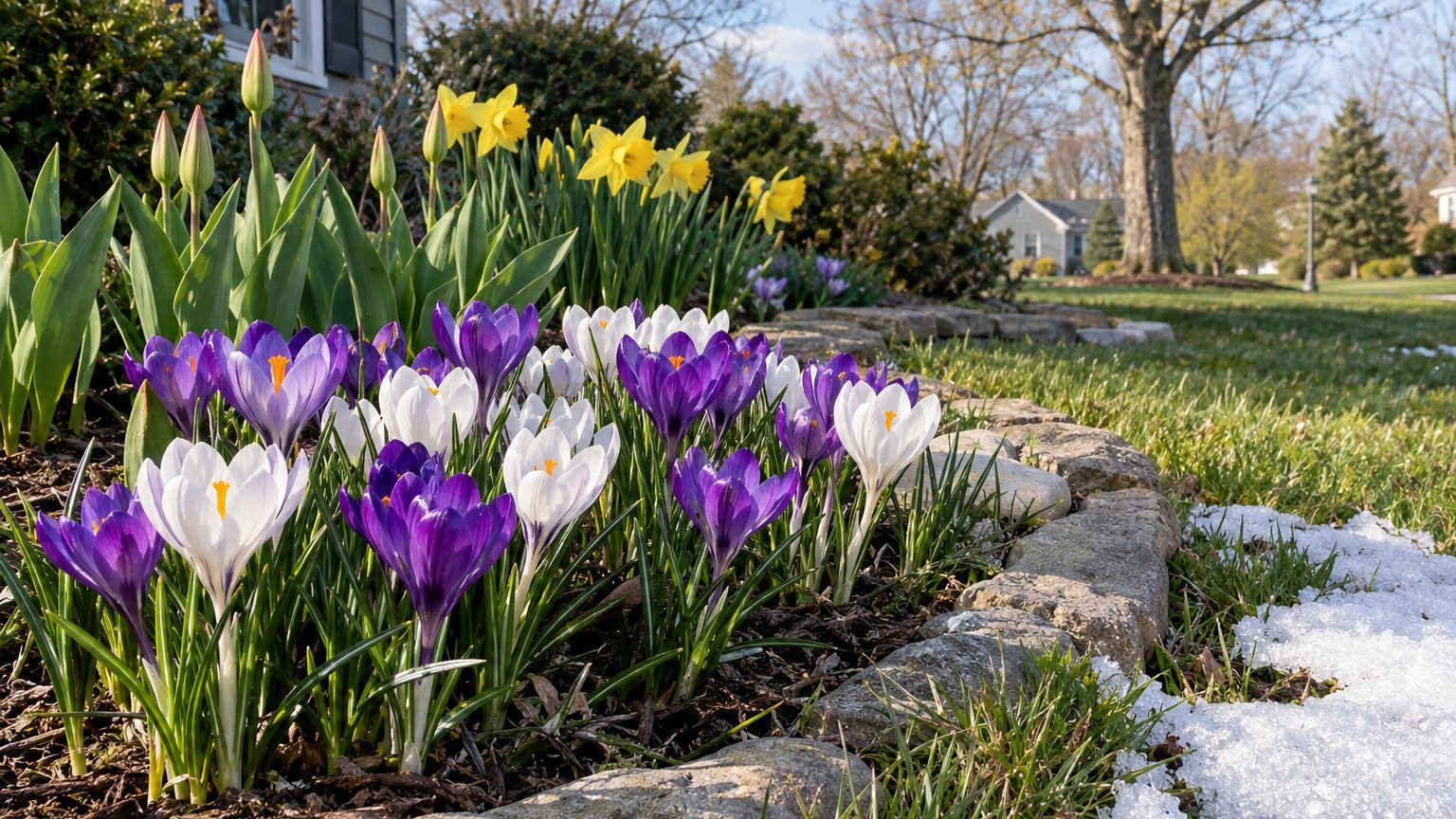
Crocus flowers open in the cold, often while patches of snow still sit on the lawn, and the corms behind that show go into the ground the autumn before. Planting happens once the soil has cooled and before it freezes. Timing, depth and spacing, plus a few habits that keep squirrels and mowers from undoing the work, decide how well a clump returns.
When Should You Plant Crocus Bulbs?
Crocus goes in the ground in fall, once the soil has cooled and before it freezes hard. In Tennessee, that means temperatures below 60 degrees and a planting window of October to November. In South Dakota, soil under that same 60 degree mark is the cue.
Climate shifts the picture. In Texas, where winters are mild, crocus needs six to 10 weeks of chilling before it is planted, so the corms spend time in cold storage first. Where winters are cold, the ground itself supplies the chill.
The state selector just below this section leads to the page for your state.
From the almanac
Bulbs in your state
The dates on this page depend on where you live. Your state's page carries its frost dates, its USDA zones and the year laid out month by month.
Northeast
Southeast
- Alabama
- Arkansas
- Delaware
- Florida
- Georgia
- Kentucky
- Louisiana
- Maryland
- Mississippi
- North Carolina
- South Carolina
- Tennessee
- Virginia
- West Virginia
Midwest
Southwest
West
Pacific Northwest
Canada
How to Grow Crocus

Crocus asks for little, but the order of the work matters, because each step protects the corm through winter and sets up the spring show.
- Wait for cool nights before planting, so the corms are not pushed into growth by warm soil. In South Dakota, nighttime temperatures holding in the 40 to 50 degree range signal that it is time.
- Choose a spot in full sun or light shade with well-drained soil, because corms sitting in wet ground rot over winter.
- Dig each hole about 3 inches deep, which is what Illinois and Tennessee growers use, so the corm sits below the reach of frost heave yet still close enough to the surface for the shoots to push through early.
- Set the corm with the pointed tip facing up, as North Dakota growers advise, so the shoot does not waste energy turning toward the light.
- Space the corms 3 to 4 inches apart, so each clump has room to multiply without crowding its neighbors.
- Group them in drifts rather than single rows. In South Dakota, large groups of 20 to 30 bulbs look stunning, and in Wisconsin, clusters of 5 or more look best and can naturalize under ideal conditions.
For a lawn planting, choose crocus because only bulbs that flower very early in spring suit turf, according to Kentucky growers. The foliage then finishes its work before mowing season starts. Leave the leaves alone until they turn yellow, since they feed the corm for next year. Do not be surprised if crocus appears under a shrub you never planted it beneath, which is part of how it spreads.
Crocus Types by Bulb Type
Crocus grows from a corm, a waxy, irregular storage organ wrapped in a dark-brown, leathery skin. Plantings from corms differ from those grown from other bulb forms mainly in how deep and how tightly they go in.
Two kinds of crocus are worth telling apart on the label. Spring crocus, such as the woodland species, flowers from late winter to early spring. Autumn crocus, a different plant called Colchicum, flowers in early fall.
| Bulb Type | What changes | Why it matters |
|---|---|---|
| Spring crocus corms (common or Dutch) | Plant in fall about 2.5 inches deep and 2 inches apart in North Carolina, 35 to 70 corms per square foot | Close spacing fills a patch quickly for a dense carpet of color |
| Woodland crocus (Crocus tommasinianus) | Plant 3 to 4 inches deep and 3 to 4 inches apart in North Carolina, with lavender to red purple flowers from late winter to early spring | It is the species noted as squirrel resistant in Tennessee, though it spreads prolifically |
| Autumn crocus (Colchicum) | Plant 3 to 6 inches deep and about 6 inches apart in Wisconsin, and each corm sends up 1 to 10 flower stalks in early fall | It needs more room and a different calendar than the spring types |
For most yards, the practical difference is spacing. If you want a fast, thick carpet, plant spring crocus closer and shallower. If you want a patch that fills in on its own, woodland crocus is the one to pick, and give it space to spread. Plants stay small, usually only 4 to 6 inches tall in Arkansas, so they suit the front edge of a bed or the open lawn.
Crocus Growing Mistakes to Avoid
Planting Too Early

Corms set into warm soil can sprout before winter, and the tender shoots are then exposed to cold they were not meant to meet. Hold off until soil temperatures fall below 60 degrees, which in Tennessee happens by October and November. In warm regions, that is also when pre-chilled corms go in.
Planting Too Shallow or Too Deep
Corms set just under the surface are easy pickings for squirrels and prone to frost heave. Planting far deeper than 3 inches delays the shoots. Aim for 3 inches in most places, and go a little deeper only in the larger spacing that autumn crocus calls for in Wisconsin.
Cutting the Leaves Too Soon
After the flowers fade, the narrow leaves keep feeding the corm. Mowing them down or tying them while still green leaves the corm underfed, and next spring brings fewer flowers. Wait until the foliage turns yellow, and in a lawn planting hold off mowing that patch until then. Only very early flowering bulbs belong in turf for exactly this reason.
When to Plant Crocus in Your State
The sign to act on is cool soil: nights settling into the 40 to 50 degree range in South Dakota, and ground that has dropped below 60 degrees but not yet frozen. When that arrives, the corms go in.
- Planting months depend on where you live, so check the timing for your area before ordering corms.
- Go there again in late summer to line up the planting date with your local cool-down.
Common Questions
Can You Plant Crocus in a Lawn?
Yes, as long as the bulb flowers very early in spring, as crocus does. The leaves then die back on their own before regular mowing begins, so the corms keep their food supply.
Will Squirrels Dig Up Crocus?
They can. Woodland crocus, Crocus tommasinianus, is noted as squirrel resistant in Tennessee, though it spreads freely, so give it room.
How Tall Do Crocus Plants Grow?
Crocus plants stay small, usually only 4 to 6 inches tall in Arkansas, which is why they work best in clusters at the front of a bed or in the lawn.