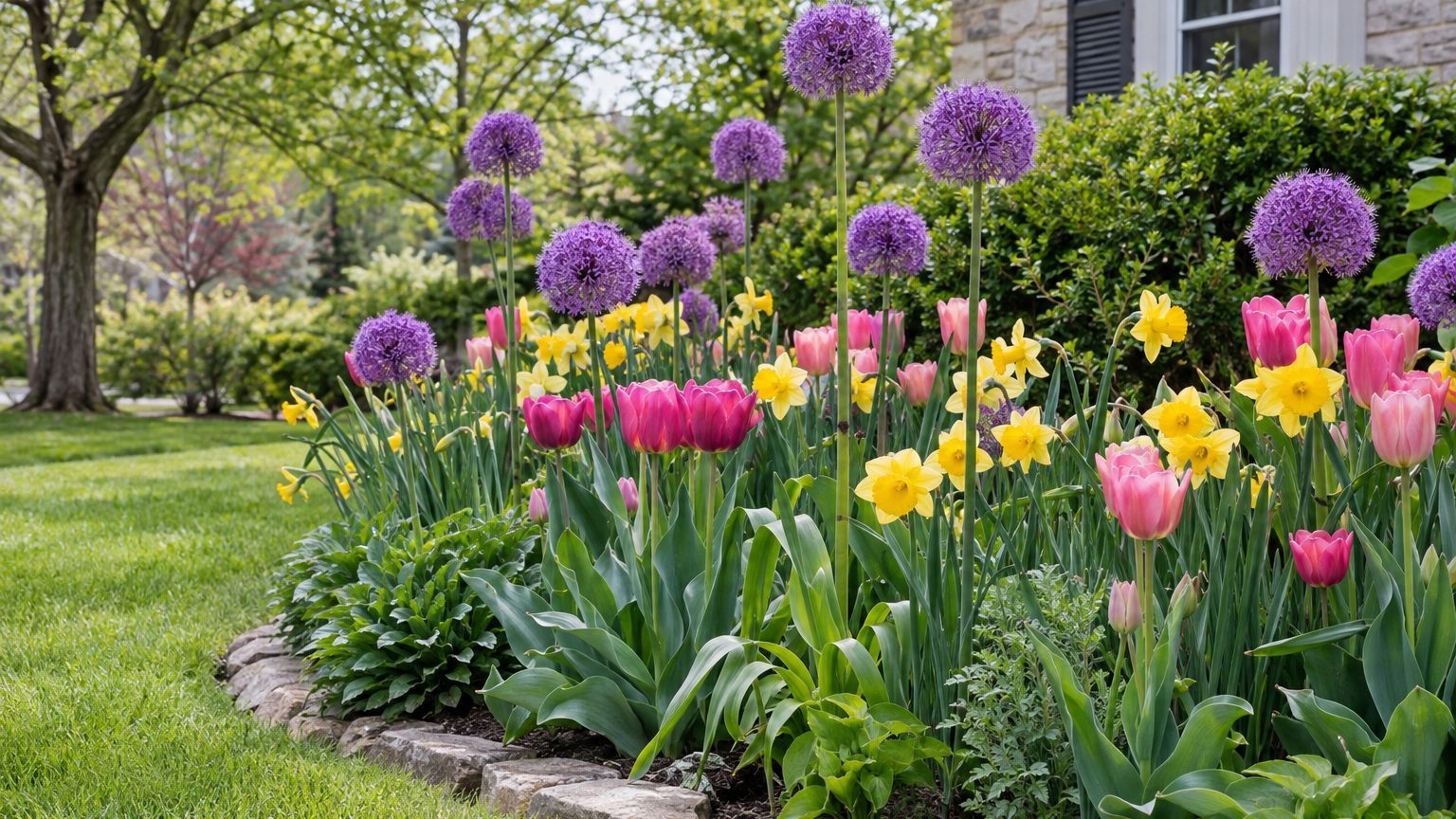
Tall pinkish purple globes held high on bare stalks are a late spring sight, and each one begins as a bulb tucked into cool autumn soil. Growing alliums well comes down to a few simple choices about timing, depth and sun, and most of them are settled in a single afternoon of planting.
When Should You Plant Allium Bulbs?
Plant allium bulbs in the fall, a little ahead of the hard freeze that locks up the soil. Gardeners in the South plant later than those in the northern states, and big bulbs go deeper than small ones, so climate and bulb type both move the exact date.
In Iowa, bulbs are planted in October. In South Dakota, alliums are easygoing enough to go in a few weeks before a hard frost, which still leaves the roots time to settle before the ground stiffens.
Roots that form in the cool autumn soil are what carry the plant into its spring growth. The state selector just below this section leads to the page for your state, where the planting months are set for your climate.
From the almanac
Bulbs in your state
The dates on this page depend on where you live. Your state's page carries its frost dates, its USDA zones and the year laid out month by month.
Northeast
Southeast
- Alabama
- Arkansas
- Delaware
- Florida
- Georgia
- Kentucky
- Louisiana
- Maryland
- Mississippi
- North Carolina
- South Carolina
- Tennessee
- Virginia
- West Virginia
Midwest
Southwest
West
Pacific Northwest
Canada
How to Grow Alliums

Alliums ask for very little, and a short order of work protects the bulb all the way to bloom.
- Choose a spot with dry to medium, well-drained soil, so that the bulb never sits in cold standing water through the winter.
- Dig each hole to a depth that matches the bulb, deeper for large bulbs and shallower for small ones, so the tall stalk stands on firm ground.
- Set each bulb pointed end up and one foot from its neighbor, so the big flower heads have room to open without crowding.
- Cover the bulbs and water them in during the fall, so the roots start growing before the soil turns cold.
- Let the leaves stay after the flowers fade until they turn yellow, then cut them back, so the bulb has time to store energy for next year.
Bloom comes late in the bulb season. In Illinois, the flowers open from late spring to early summer, and in New Hampshire the big globes show up in late April or May. Deer may pass them by, but pocket gophers in Wyoming have been known to eat them.
Allium Types by Bulb Type
Bulb size decides how deep the hole goes, and the type of allium decides how tall the flower stands. Garden centers sell everything from compact types to giants, so a quick look at the label saves guesswork.
Planting and bloom differences vary by bulb type, and each figure is given along with the place where it was written.
| Bulb Type | What changes | Why it matters |
|---|---|---|
| Larger bulbs | Planted 6 to 8 inches deep | A deep hole suits the bulk of a big bulb |
| Smaller bulbs | Planted 3 to 4 inches deep | A shallow hole keeps a small bulb from being buried too far down |
| Big globe types | Stalk 3 to 4 feet tall in Illinois | Tall stalks belong behind lower plants |
| Giant globe types | Stalk 4 to 5 feet tall in Nebraska | Some stand taller than the fence rail, so plan the view |
| Compact to mid-height types | Height from 6 inches to almost 3 feet in Utah | Short ones suit the front of a bed |
| Allium ‘Millenium’ | Stems 18 to 20 inches tall, blooming mid to late summer in North Carolina | It brings color later in the season than the spring globes |
For you, this means reading the bulb size before digging. Large bulbs get the deeper hole, small ones the shallow hole, and the expected height decides where in the bed they stand.
Allium Growing Mistakes to Avoid
Planting in Shade

Alliums love sunlight, and in South Dakota they do best where the spot stays sunny all day long. Part shade can work, as in South Carolina where they grow in full sun to part shade, but a deeply shaded bed gives the bulb little of what it likes. Move the planting to the brightest open ground you have.
Leaving Bulbs Unplanted

A bag of bulbs forgotten on a shelf past planting time still has a chance. Plant it as soon as the soil can be dug, because a bulb in the ground can grow roots and one in the bag cannot. Check the bulbs first and discard any that feel soft.
Ignoring Crowded Clumps
Clumps grow thicker each year, and bulbs packed together compete for room. In Wisconsin, the advice is to divide every third year or when 8 to 10 bulbs appear in the clump. Lift the clump, separate the bulbs and replant them with space around each one.
When to Plant Alliums in Your State
The sign to act is cooling autumn soil with a hard frost still ahead of you. That is the moment the bulbs should be going into the ground, and the months for each state are on the page for that state.
- You will find the planting months for your state there, so open it before you shop for bulbs.
- Go back to it when nights turn cool, then dig your holes and set the bulbs in.
Common Questions
How Long Do Alliums Keep Coming Back?
In North Carolina, ornamental onions bloom for three or four years before dying out, and they may occasionally last longer when planted in perfect conditions. Dividing crowded clumps helps keep a planting going.
Can You Divide Alliums in Spring or Only in Fall?
In North Carolina, bulbs are divided as needed in spring or fall. Pick the season when the clump looks crowded and the ground is workable.
Is ‘Purple Sensation’ a Good Allium for Cold Climates?
In Alaska, the showy allium called ‘Purple Sensation’ is recommended as a bulb to consider planting in the fall. It joins the bed on the same schedule as other alliums.