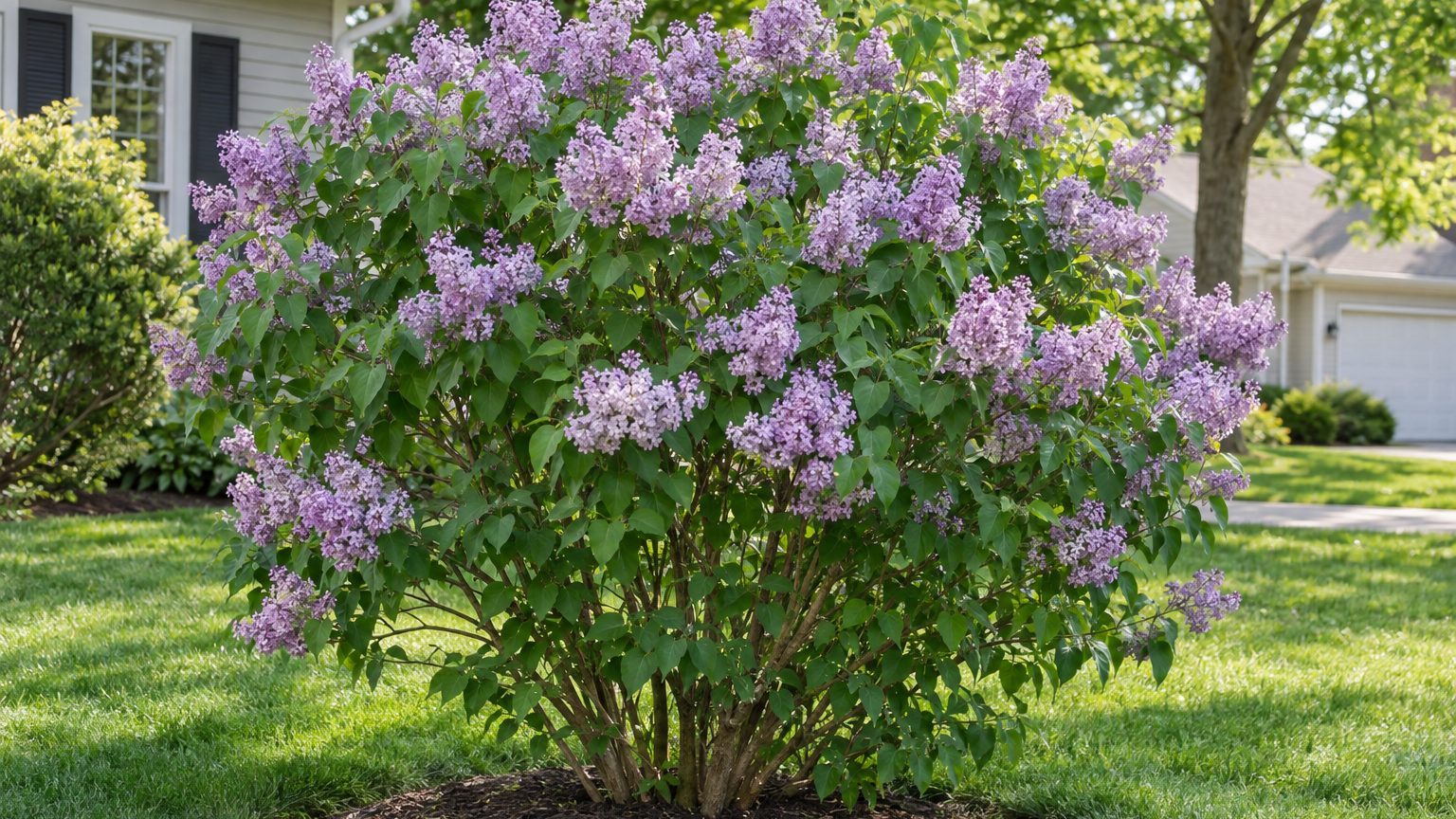
In May, lavender clusters open at the tips of a Miss Kim’s branches and the scent carries across the yard. The shrub stays tidy enough for a foundation bed or a corner by the patio. Its compact habit and fragrant flowers make it appealing, but the site still matters.
What Is the Miss Kim Lilac?
Miss Kim is a cultivar of the Manchurian lilac, a lilac with dense foliage and a compact habit. Purple buds open into paired terminal clusters of lavender tubular blossoms, and the flowers are very fragrant.
The bloom color is lilac-blue. Each cluster can reach up to three inches long.
It blooms slightly later than a common lilac and has a compact habit. It also keeps interest after the flowers fade, with deep burgundy fall color.
Reported mature sizes vary. Heights reported run from 4 to 9 feet, and the spread is often given as 5 to 7 feet. Check the plant tag for the size of the plant you buy.
From the almanac
Lilacs in your state
The dates on this page depend on where you live. Your state's page carries its frost dates, its USDA zones and the year laid out month by month.
Northeast
Southeast
- Alabama
- Arkansas
- Delaware
- Florida
- Georgia
- Kentucky
- Louisiana
- Maryland
- Mississippi
- North Carolina
- South Carolina
- Tennessee
- Virginia
- West Virginia
Midwest
Southwest
West
Pacific Northwest
Canada
Where Does the Miss Kim Lilac Grow Best?
Miss Kim grows best in full sun with good air circulation.
- Sunny sites: Full sun and good air circulation suit this shrub. Average, well-drained soil suits it.
- Humid sites: Its excellent resistance to powdery mildew is useful where that disease is a concern. Give the branches good air circulation.
- Gulf Coast and Deep South: Louisiana, Mississippi and southern Georgia are a struggle, because short winters and long, wet heat work against lilacs in general.
The state selector just below this section takes you to the page for your own state.
How to Care for the Miss Kim Lilac Through the Year
Bloom

Flowers open in May, slightly later than on a common lilac.
Hummingbirds and butterflies will visit the rest.
Pruning
Check your state page before pruning.
Summer
Full sun and average, well-drained soil keep the plant easy. Because it asks for little maintenance, summer mostly means watching it.
Use your state page to guide summer care.
Autumn
The foliage turns deep burgundy, a third season of interest after the flowers and the summer leaves.
Check your state page for the local planting window.
Winter
Use your state page for winter-care guidance.
Miss Kim Lilac Diseases and Weak Points
It has been recognized for hardiness and pest resistance, including excellent resistance to powdery mildew.
| Threat | How Miss Kim handles it |
|---|---|
| Powdery mildew | Excellent resistance |
| Insects and disease in general | No serious problems |
Give it full sun, well-drained soil and good air circulation. A spot with good air circulation and well-drained soil suits the shrub.
Is the Miss Kim Lilac Right for Your Yard?
It suits a sunny spot where a small shrub is wanted, such as a foundation corner or a mixed border. It is a poor match for shade or wet soil.
- Small yards: the compact habit fits tight beds.
- Scent lovers: plant it near a patio, a window or a walkway, where May fragrance is noticed.
- Check the Miss Kim lilac page for local planting guidance.
Common Questions
Does the Miss Kim Lilac Attract Hummingbirds and Butterflies?
Yes. The fragrant flowers draw both, so a planting near a seating area gives you a front-row view.
Does Miss Kim Lilac Have Fall Color?
It does. The leaves turn deep burgundy, which gives the shrub three seasons of interest.
Is Miss Kim a Syringa Patula or a Syringa Pubescens?
Both names are in use. Many references list it as Syringa patula, and others place it as Syringa pubescens subsp. patula. Either way, it is the same compact Manchurian lilac.