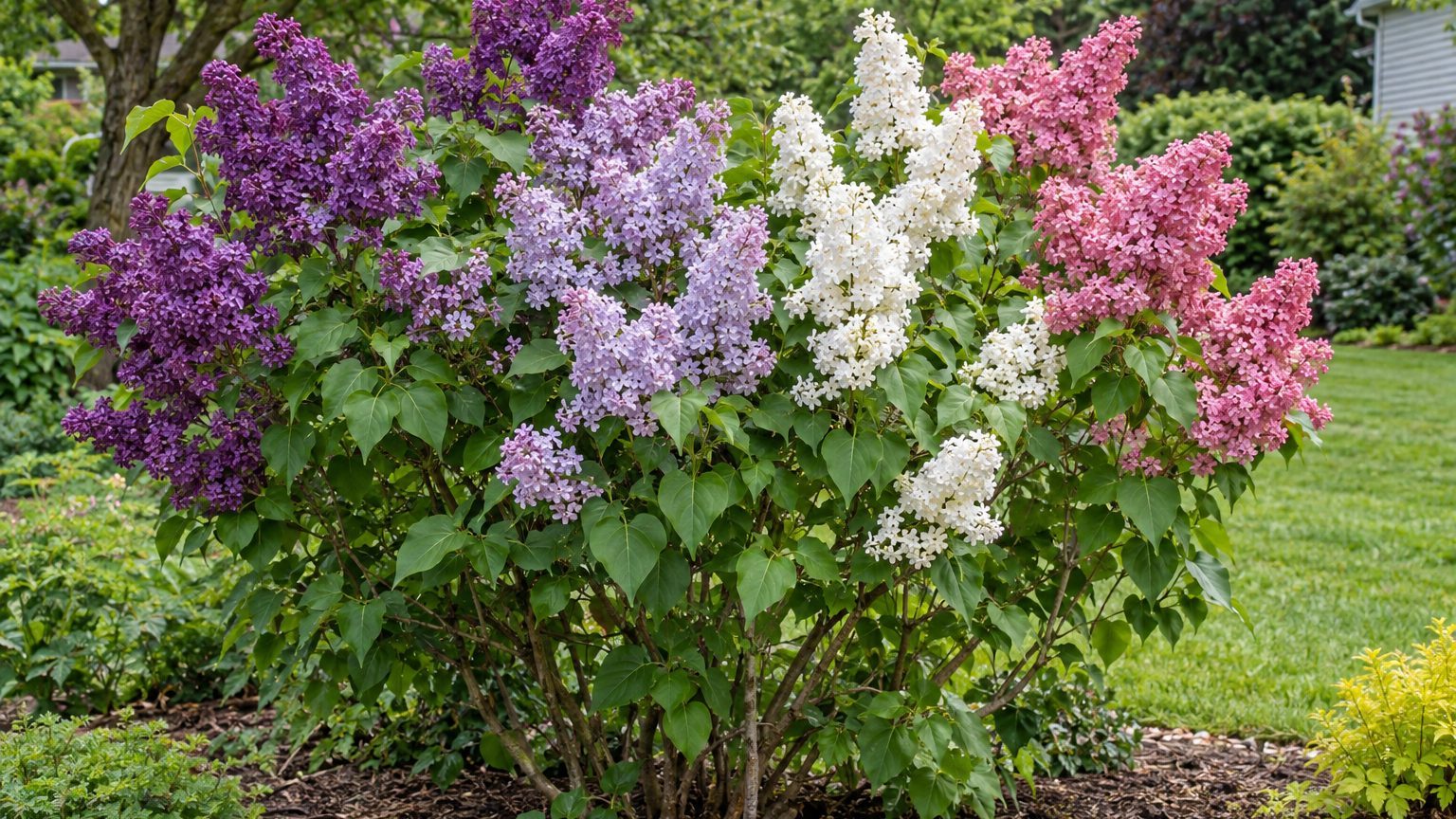
A lilac in full bloom in a New Jersey front yard is a late April and May sight, and the shrubs that carry it best are the ones bred to handle humid summers. The state sits in USDA hardiness zones 6a-7b, which gives lilacs their cold rest but tests them in summer heat.
Best Lilacs to Grow in New Jersey

Common lilac, dwarf lilacs and disease-resistant selections do well here, because lilacs need a cold winter rest to mature their flower buds and struggle in hot, humid summers. New Jersey winters supply the cold, so the choice comes down to summer toughness and mildew resistance.
Common Lilac

Syringa vulgaris is the classic common lilac, grown for very fragrant flowers in mid to late spring. Named cultivars come in lilac, purple, white, pink and a reddish hue. Most are prone to disease, so pick selections with a good record.
Edith Cavell

Most common lilac cultivars are susceptible to blight, but ‘Edith Cavell’ has been observed with less disease in gardens. Choosing a plant like this is easier than fighting blight later, since blight is difficult to control.
Glory
‘Glory’ is another common lilac cultivar seen with less disease in gardens. If you want the classic old-fashioned shrub and its scent, a cultivar with a lighter disease record is a sensible choice in humid weather.
Ludwig Spaeth
‘Ludwig Spaeth’ belongs to the same short list of common lilac cultivars with less disease. Buying blight-resistant varieties whenever you plant new lilacs is the advice, and this one fits it.
Pink Elizabeth
‘Pink Elizabeth’ also shows less disease in gardens, and it adds a softer color to the usual purples. Like the others, it wants full sun and decent air circulation around the branches.
Meyer Lilac Palibin
Syringa meyeri ‘Palibin’ is a medium, dense shrub that resists powdery mildew, which commonly afflicts common lilac. It needs full sun for the best flowering, so give it an open spot.
Miss Kim
‘Miss Kim’ is a round, compact cultivar with pale lavender-purple flowers. Dwarf lilac species and hybrids tend to handle hot, humid summers better than traditional varieties.
Bloomerang
The Bloomerang series is powdery mildew resistant and reblooms, sporadically producing flowers into summer and early autumn. High heat can still hamper that rebloom, so treat it as a bonus.
New Jersey — the year and the numbers
- State
- New Jersey
- USDA zones
- 6a-7b
- Last spring frost
- March 29 to April 6
- First fall frost
- November 4 to November 16
- Annual rain
- 47 in
- Lawn zone
- transition-season
- Source
- NOAA NCEI U.S. Climate Normals 1991-2020, 32F freeze probabilities · Newark
How to Choose a Lilac for a New Jersey Garden
Start with what your yard throws at a lilac: heat, humidity, limited space or limited time. Lilacs want sun and good air circulation, and they do best where winters are cold.
For anyone set on lilacs despite the challenges, the advice is to try cultivars with above-average disease resistance and heat tolerance.
| Your situation | What suits it in New Jersey | Why |
|---|---|---|
| Hot, humid summer | Meyer lilac ‘Palibin’ or a Bloomerang | Meyer lilac ‘Palibin’ and the Bloomerang series resist powdery mildew, which humidity encourages |
| Very cold winter | Common lilac or a hybrid of S. oblata and S. vulgaris | These hybrids suit cold climates |
| Little time for care | ‘Edith Cavell’, ‘Glory’, ‘Ludwig Spaeth’ or ‘Pink Elizabeth’ | These cultivars have been observed with less disease in gardens |
| Small space | ‘Miss Kim’ or another dwarf lilac | Compact, round habit and better tolerance of hot, humid summers |
| Need for winter cold | Common lilac in an open, sunny site | Flower buds need a cold rest to mature |
Resistance to blight also shows up in some other species, including S. josikaea, S. komarowii, S. microphylla, S. pekinensis and S. reflexa, which are worth asking a nursery about.
Which Lilacs Suit Different Parts of New Jersey
The state runs from cooler northern hills to a milder south, and that shifts which lilac makes sense.
- The Skylands of northwest New Jersey: Winters are colder here, so common lilacs and the cold-hardy S. oblata hybrids get the rest their buds need.
- Central New Jersey: A mix of both worlds, where mildew-resistant picks such as Meyer lilac give insurance against humid summers.
- The Jersey Shore and South Jersey: Summers feel hotter and stickier, so dwarf lilacs and heat-tolerant cultivars are the safer bet.
Wherever you garden, full sun and open air around the shrub matter more than any single variety.
Lilac Buying Mistakes to Avoid in New Jersey
Buying a Blight-Prone Cultivar
Most common lilac cultivars are susceptible to blight, and it is difficult to control once it arrives. The cost is a shrub that declines over the years. Choose a blight-resistant variety at planting instead.
Ignoring Summer Heat
Lilacs struggle in hot, humid summers, and powdery mildew is the usual result on traditional types. Skip the old standards in a muggy, crowded spot and pick a dwarf or mildew-resistant lilac with better heat tolerance.
Pruning at the Wrong Time
A lilac sets next year’s flower buds in summer, soon after it flowers, so pruning in late summer, fall or winter cuts off spring flowers. Prune right after the flowers fade, in May or June. A hard renovation cut of an overgrown shrub belongs in March or April, and it will not flower for a few years afterward.
Where to Get Lilac Advice in New Jersey
Rutgers NJAES publishes pruning guidance for spring-flowering shrubs, and your county office can speak to local soil and summer conditions.
- Its pruning guidance explains that lilacs bloom on one-year-old wood and should be pruned immediately after flowering.
- Your county extension office can help with disease questions, best brought in with a branch sample when leaves show spotting or blight.
Common Questions
Can You Grow Lilacs in Southern New Jersey?
Yes, though hot, humid summers make mildew a concern. Dwarf lilacs and mildew-resistant selections such as Meyer lilac handle it better than traditional varieties.
Do Lilacs Rebloom in New Jersey?
The Bloomerang series reblooms, sporadically producing flowers into summer and early autumn. High heat can still hamper rebloom.
When Do Lilacs Bloom in New Jersey?
April and May are the main months, with later species and cultivars carrying color into June.