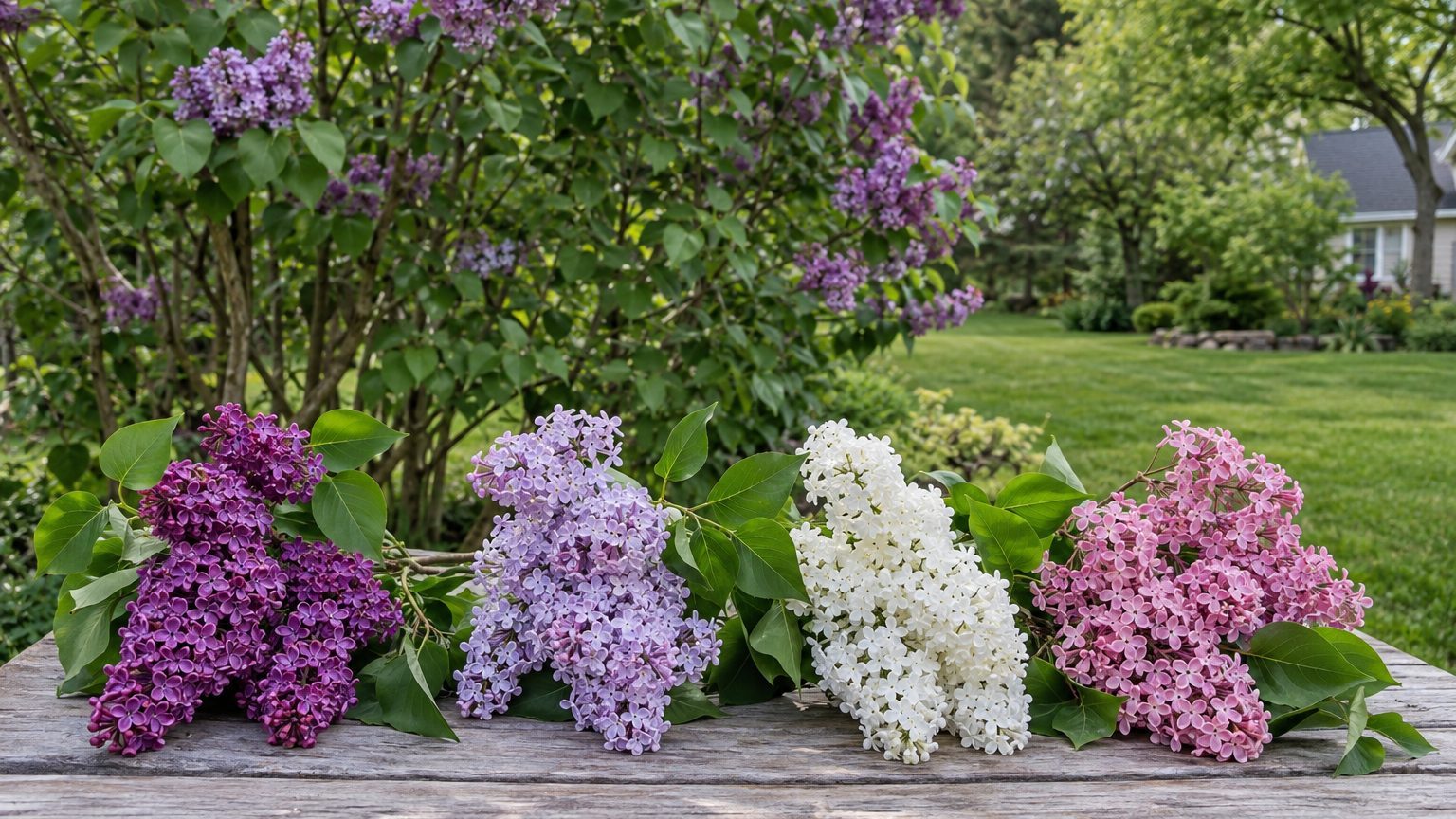
A lilac in full bloom fills a New York yard with scent from the sidewalk to the back fence. The common lilac suits the state’s cold winters, while dwarf and mildew-resistant hybrids fit tighter, more humid yards. Which one belongs in your garden depends on winter cold, summer humidity and how much room the shrub gets.
Best Lilacs to Grow in New York

The common lilac and the newer hybrids built on it do well in New York, because lilacs want a cold winter rest to mature their flower buds. Cold is not the limit here, since the USDA hardiness zones across the state run from 3b to 7b. Hot, humid summers and disease pressure are the real tests, so the choice comes down to resistance and size.
Common Lilac

Syringa vulgaris is the lilac that comes to mind for most people, with fragrant masses of purple, lavender and white flowers in May. Winter chill is essential to its bud development, which is why it thrives in a cold-winter state.
It is susceptible to powdery mildew, bacterial blight, scale and borers. Give it a sunny site with good air circulation, and the leaves will dry faster after rain.
Disease-Resistant Cultivars

Some resistant cultivars have been reported, and there are other less susceptible species and hybrids on the market. In a yard where mildew has marked past lilacs, they are the sensible starting point.
Ask the nursery which cultivars are known to shrug off mildew before you buy, and plant them where air moves freely.
Bloomerang Series
This series of lilacs is powdery mildew resistant and reblooms. Like many dwarf hybrid lilacs, it is more disease-resistant than typical common lilac and matures shorter in height.
That shorter habit suits a foundation bed or a small front yard, where a full-size shrub would crowd the path.
Hyacinthiflora Hybrids
These are very vigorous hybrid lilacs that look like French hybrids but bloom earlier. Early flowers are the catch, because a late frost can burn open buds.
They are not recommended where late frosts can catch their early flowers. Plant them only in spots that warm up early and rarely see those late cold snaps.
New York — the year and the numbers
- State
- New York
- USDA zones
- 3b-7b
- Last spring frost
- March 23 to April 3
- First fall frost
- November 14 to November 27
- Annual rain
- 50 in
- Lawn zone
- cool-season
- Source
- NOAA NCEI U.S. Climate Normals 1991-2020, 32F freeze probabilities · New York City
How to Choose a Lilac for a New York Garden
Start with your winter and your summer. A lilac that thrives in a cold Adirondack yard may sulk in a humid Long Island one, and the right pick follows that difference.
Then think about time and space. A lilac that stays shorter and shrugs off mildew asks less of you than a large shrub that needs watching every summer.
| Your situation | What suits it in New York | Why |
|---|---|---|
| Very cold winter | Common lilac | Lilacs are well suited to cold climates, and winter chill is essential to bud development. |
| Hot, humid summer | Resistant cultivars or the Bloomerang series | Lilacs struggle in hot, humid summers, and powdery mildew is a known problem of common lilac. |
| Little time for care | Bloomerang series | It is more disease-resistant than typical common lilac, so fewer problems to manage. |
| Small space | Bloomerang series or another dwarf hybrid | These mature shorter in height. |
| Late spring frost | Common lilac rather than Hyacinthiflora hybrids | Hyacinthiflora bloom early and are not recommended where late spring frosts occur. |
A yard with real winters and good air movement can suit the common lilac. Where summers sit damp and heavy, lean toward resistant types.
Which Lilacs Suit Different Parts of New York
New York spans USDA zones 3b to 7b, so the same shrub behaves differently from the north country to the coast.
- Adirondacks: Winters are deep and cold, which lilacs welcome. Frost also lingers into spring, so skip the early-blooming Hyacinthiflora hybrids and choose common lilac.
- Upstate: Frost comes earlier in fall and later in spring than in the city, so late frost is a real risk for early bloomers. Common lilac and resistant cultivars are both sound choices.
- New York City and Long Island: Winters are milder and summers hotter and more humid, which is where lilacs struggle. Mildew-resistant cultivars and the Bloomerang series are the safer picks, planted in sun with open air around them.
Whichever region you garden in, a spot with sun and moving air does as much for a lilac as the variety does.
Lilac Buying Mistakes to Avoid in New York
Choosing Early Bloomers for Frosty Spots
Hyacinthiflora hybrids open early, so a late frost can take the flowers. The cost is a bare season after you paid for the shrub.
In the Adirondacks and in upstate yards where frost lingers, buy common lilac instead.
Ignoring Summer Humidity
A lilac needs a cold winter rest and does poorly in hot, humid summers. In a damp downstate yard, an ordinary common lilac can end up coated in mildew and thin on flowers.
Choose resistant cultivars or the Bloomerang series, and plant with room for air to move.
Buying Without Knowing Adult Size
A small pot hides what the shrub becomes. A common lilac planted by a window or walkway can outgrow its spot, and fixing it later means a hard cut that costs flowers.
Read the tag for mature height before you buy. For tight spaces, pick a dwarf hybrid such as the Bloomerang series, which matures shorter.
Where to Get Lilac Advice in New York
For questions about a particular shrub or yard, the state’s extension network is the place to start. Cornell Cooperative Extension connects gardeners with people who know local soils and weather.
- Your county office can help identify a diseased leaf or borer damage if you bring a sample.
- Master gardener volunteers through the county office can suggest lilacs that suit your part of the state, so ask before you shop for a new shrub.
Common Questions
When Do Lilacs Bloom in New York?
Lilacs flower in April and May, and later species can carry on into June. Common lilac is the one that fills the yard with scent in May.
When Should You Prune Lilacs in New York?
Prune in May or June, right after the flowers fade. A lilac blooms on last year’s wood and sets next year’s flower buds in summer, so pruning in late summer, fall or winter cuts off the next spring’s flowers.
Can You Cut Back an Overgrown Lilac in New York?
Yes, in March or April, while the shrub is still dormant. Cut it back hard and expect no flowers for a few years afterward, since the blooms form on wood you removed.