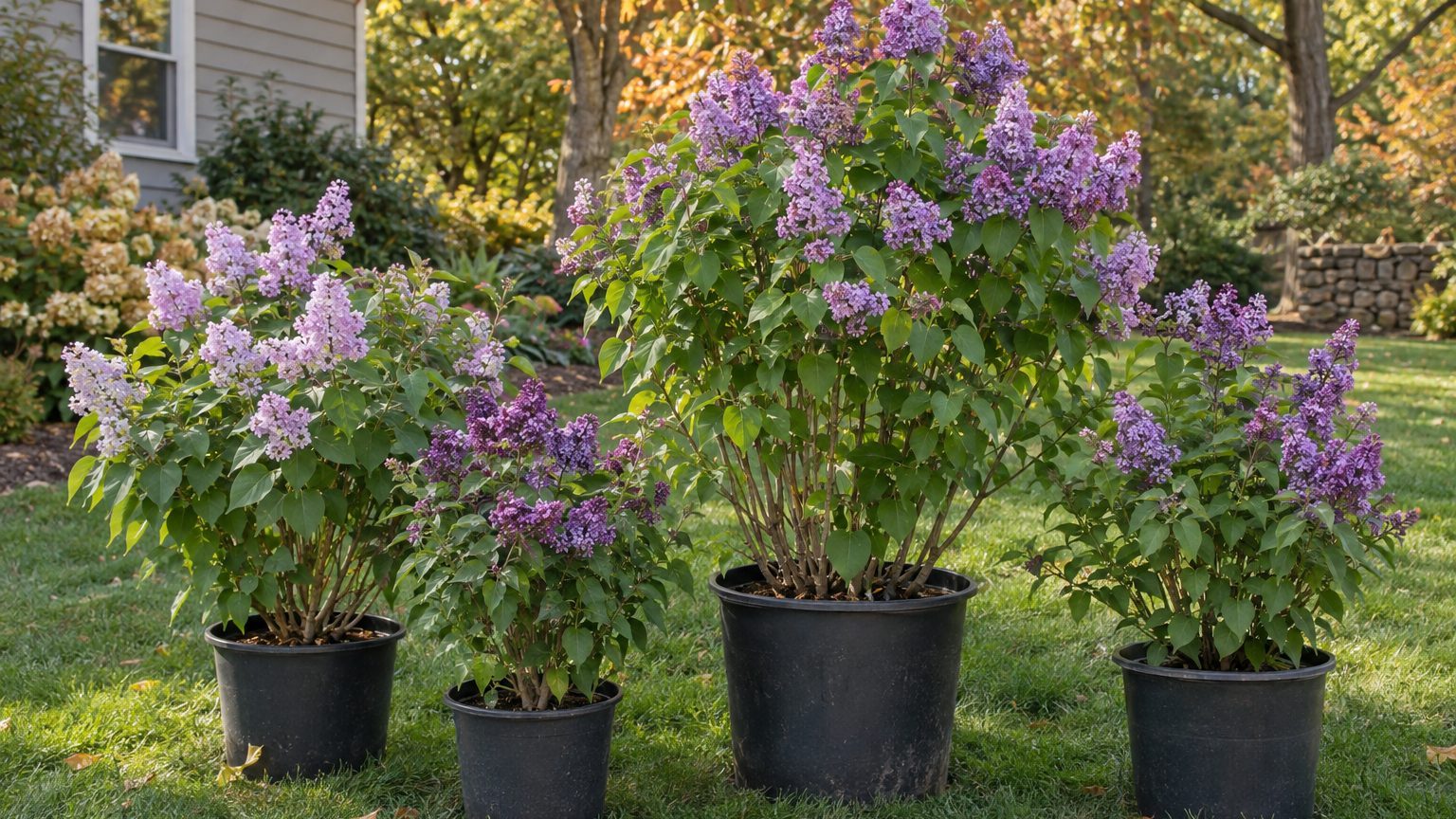
A lilac in full bloom stops you at the fence in spring, and the shrub that gets there is rarely the one grabbed on impulse at the garden center. Winter cold, summer heat and the room you can spare decide whether a lilac thrives or merely survives. Choosing a lilac comes down to matching the plant to your climate first, then to the spot it will fill.
Which Lilac Is Right for Your Yard?
Pick a lilac that suits the winter cold where you live, then fit its full-grown size to the space you have. Lilacs are cold-country shrubs. In Nebraska, most species are described as performing well in zones 3-7.
Warmer climates change the answer. In Nebraska, lilacs lack vigor and flower unreliably in southern gardens in hardiness zone 8 and higher. Type matters too, since some lilacs are large shrubs, some grow as small trees, and some bloom earlier or later than the others.
The state selector just under this section leads to the page for your state.
From the almanac
Lilacs in your state
The dates on this page depend on where you live. Your state's page carries its frost dates, its USDA zones and the year laid out month by month.
Northeast
Southeast
- Alabama
- Arkansas
- Delaware
- Florida
- Georgia
- Kentucky
- Louisiana
- Maryland
- Mississippi
- North Carolina
- South Carolina
- Tennessee
- Virginia
- West Virginia
Midwest
Southwest
West
Pacific Northwest
Canada
How to Choose a Lilac Bush

Start with the place and move outward to the plant: your zone, the light and soil you have, and the room for a grown shrub.
- Check your hardiness zone before anything else, so that you shop only among lilacs that get the winter cold their buds need.
- Measure the planting space against adult size, because lilacs are generally large shrubs that grow tall and wide. tall and wide.
- Choose the sunniest spot available, since a lilac tolerates some shade but sets more flowers in full sun.
- Check drainage and soil acidity, because in North Carolina lilacs prefer reasonably fertile, well-drained soil that never becomes water-logged, with a pH near 7.0.
- In Illinois, look for cultivars that resist powdery mildew for lower maintenance.
- Add lilacs from several different groups if you want a longer show, because in Wisconsin overlapping bloom times can stretch flowering to 5–6 weeks.
Mixing groups also varies shrub form, leaf texture and fall color, so the planting still earns its place after the flowers fade. Size deserves the most honest look. A shrub squeezed against a porch or walkway ends up pruned hard every year to fit, and that costs you flowers.
Choosing a Lilac by Lilac Type
Lilac is a family of species and hybrids, and the differences between them are practical ones. Some grow into small trees, some stay compact, and some handle damp air better than the rest.
Pick the trait that limits your yard most, whether that is winter cold, space or air movement, and shop within the type that answers it.
| Lilac Type | What changes | Why it matters |
|---|---|---|
| Common lilac | Needs a long period of winter chill | The buds need that cold to mature into flowers |
| Early lilac (Hyacinthiflora) | In North Carolina, grows and thrives in hardiness zones 3 through 7 | Cooler temperatures let the buds mature into spring blooms |
| Late lilac | In North Carolina, height and width each run 6 ft. 0 in. – 10 ft. 0 in. | Its mature spread needs a bed with enough room |
| Manchurian lilac | Has more powdery mildew resistance than other lilacs | It still does best where air circulates well, so give it open space |
| Pekin lilac | In Montana, grows to a 15- to 25-foot tree form with peeling bark | It needs overhead room but adds interest in the bare months |
For a yard with limited room, check the mature width before choosing any late or mildew-resistant lilac. For a lawn with space, Pekin lilac gives you a tree with character. Japanese tree lilac is another tree-form option, covered in the questions at the end.
Lilac Buying Mistakes to Avoid
Early Bloomer in a Frost Pocket
Early-blooming Hyacinthiflora lilacs open ahead of the others. In Montana, they are not recommended for locations where frosts occur in May. A late frost on open flowers costs you the season’s show.
If your yard has a low spot where cold air settles, put a later-blooming group there instead.
Mildew-Prone Cultivar
Picking by flower color alone can saddle you with a shrub that needs regular care against powdery mildew. In Illinois, resistant cultivars are the choice for lower maintenance.
Ask the nursery whether a cultivar resists mildew, read the plant tag, and plant it where air moves freely.
Low-Chill Label Taken Too Far
In North Carolina, some low-chill cultivars have been developed, but even these perform best with an extended, cold winter rest. A tag that says low chill does not turn a warm yard into a cold one.
Treat the label as a small help at the margin of lilac country, and settle your zone before you settle on a cultivar.
Best Lilacs for Your State
The sign to move on is simple: you know your winter cold and your spot, and a type suits those conditions. Local timing and conditions then take over, and they differ from state to state. The months for each state are on the page for that state.
- Open the lilac page for your state while you are still choosing, before a shrub goes in the cart.
- Go back to it once the lilac is in your hands, since planting and care months follow your state’s climate.
Common Questions
How Long Does a Lilac Live?
A Japanese tree lilac can live up to 50 years if properly maintained. A little care at planting is worth it for a shrub that stays that long.
Can a Lilac Grow as a Small Tree?
Yes. Japanese tree lilac can be grown in zones 3-7, and Pekin lilac differs from it in its more vigorous growth.
What Soil Does a Downy Lilac Want?
Downy lilac, also called hairy lilac, does best in moist, well-drained soil with a neutral or slightly alkaline pH.