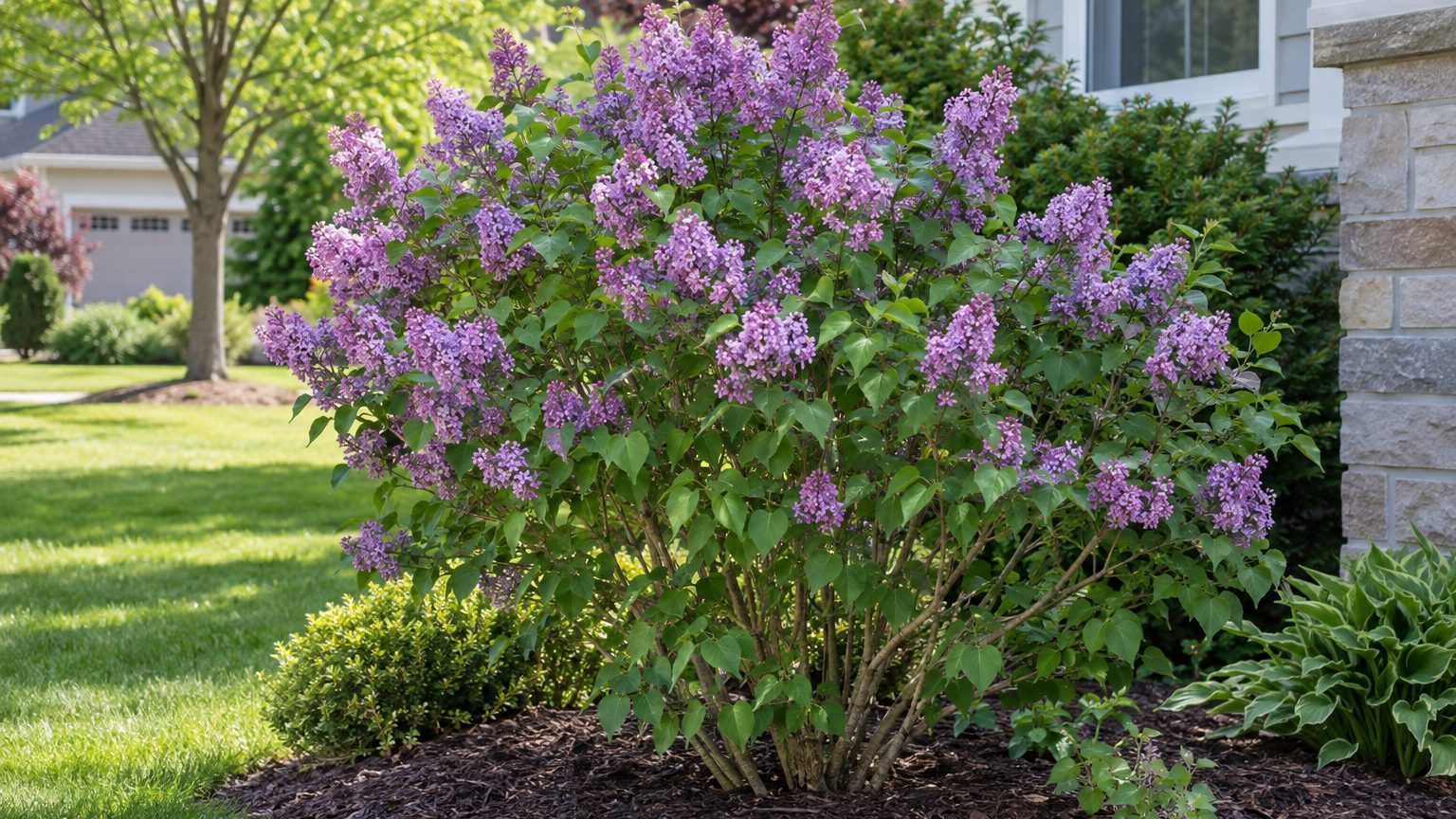
A low, rounded shrub covered in fragrant pink clusters in late spring is often a Palibin lilac. It stays compact and keeps its glossy foliage after the flowers fade.
What Is the Palibin Lilac?
Palibin is a cultivar of Syringa meyeri, sold as dwarf Korean lilac, dwarf littleleaf lilac or simply Palibin lilac. It is a deciduous shrub with a dense, broadly mounded shape that grows slowly to 4–6 feet tall and spreads about the same.
The leaves are small, rounded and glossy, giving the shrub a fine texture. Purple-red buds open to whitish-pink, fragrant flower clusters in late May.
It does not sucker, so it stays where you plant it instead of sending up shoots across the bed. Few seed capsules form after bloom, which leaves the shrub tidy.
From the almanac
Lilacs in your state
The dates on this page depend on where you live. Your state's page carries its frost dates, its USDA zones and the year laid out month by month.
Northeast
Southeast
- Alabama
- Arkansas
- Delaware
- Florida
- Georgia
- Kentucky
- Louisiana
- Maryland
- Mississippi
- North Carolina
- South Carolina
- Tennessee
- Virginia
- West Virginia
Midwest
Southwest
West
Pacific Northwest
Canada
Where Does the Palibin Lilac Grow Best?
Palibin is hardy in USDA Zone 3 and is very heat tolerant.
- Cold-winter yards: Palibin is hardy in USDA Zone 3.
- Vermont, Maine and New Hampshire gardeners can plant it in open ground, even in exposed spots.
- Hot-summer yards: Palibin is very heat tolerant.
- Louisiana, Mississippi and coastal Alabama gardeners can expect sparse bloom, if any.
The state selector just below this section leads to the page for your own state, where timing is spelled out for your area.
How to Care for the Palibin Lilac Through the Year
Bloom

Flowers open in late May and are fragrant. Plant it near a path, window or entry where you will notice it.
Pruning
Little pruning is needed, but some shaping is generally desirable right after flowering. Do not shear.
Summer
The shrub is very heat tolerant and does well in alkaline soil with a pH of 6.5 to 8.0. Use your state page to guide summer care.
Fall
The small leaves can turn maroon to purplish before they drop.
Winter
Use your state page for winter-care guidance.
Palibin Lilac Diseases and Weak Points
Palibin resists powdery mildew. It also resists bacterial blight.
| Threat | How Palibin handles it |
|---|---|
| Powdery mildew | Resistant |
| Bacterial blight | Resistant |
| Summer heat | Very heat tolerant |
| Pests and disease in general | Listed as resistant |
Avoid shearing.
Is the Palibin Lilac Right for Your Yard?
It fits a spot with room for a compact, broadly mounded shrub. It asks for little pruning.
- Give it room to spread where you can enjoy its fragrant flowers in late May.
- Check your state page for local planting guidance.
- Open your state’s page from the selector above to see which months suit planting in your area.
Common Questions
Will a Palibin Lilac Bloom the First Year?
Plant age alone does not answer that question. It is known for flowering by the time it reaches one foot tall.
Where Should You Plant a Palibin Lilac?
Choose a spot with room for its broadly mounded shape. Leave enough room for the mounded shape to spread without crowding walkways or neighbors, since it stays wide and rounded.
Can You Grow Palibin Lilac as a Hedge?
Check local guidance before using several plants as a hedge. Shape each shrub after flowering, and do not shear.