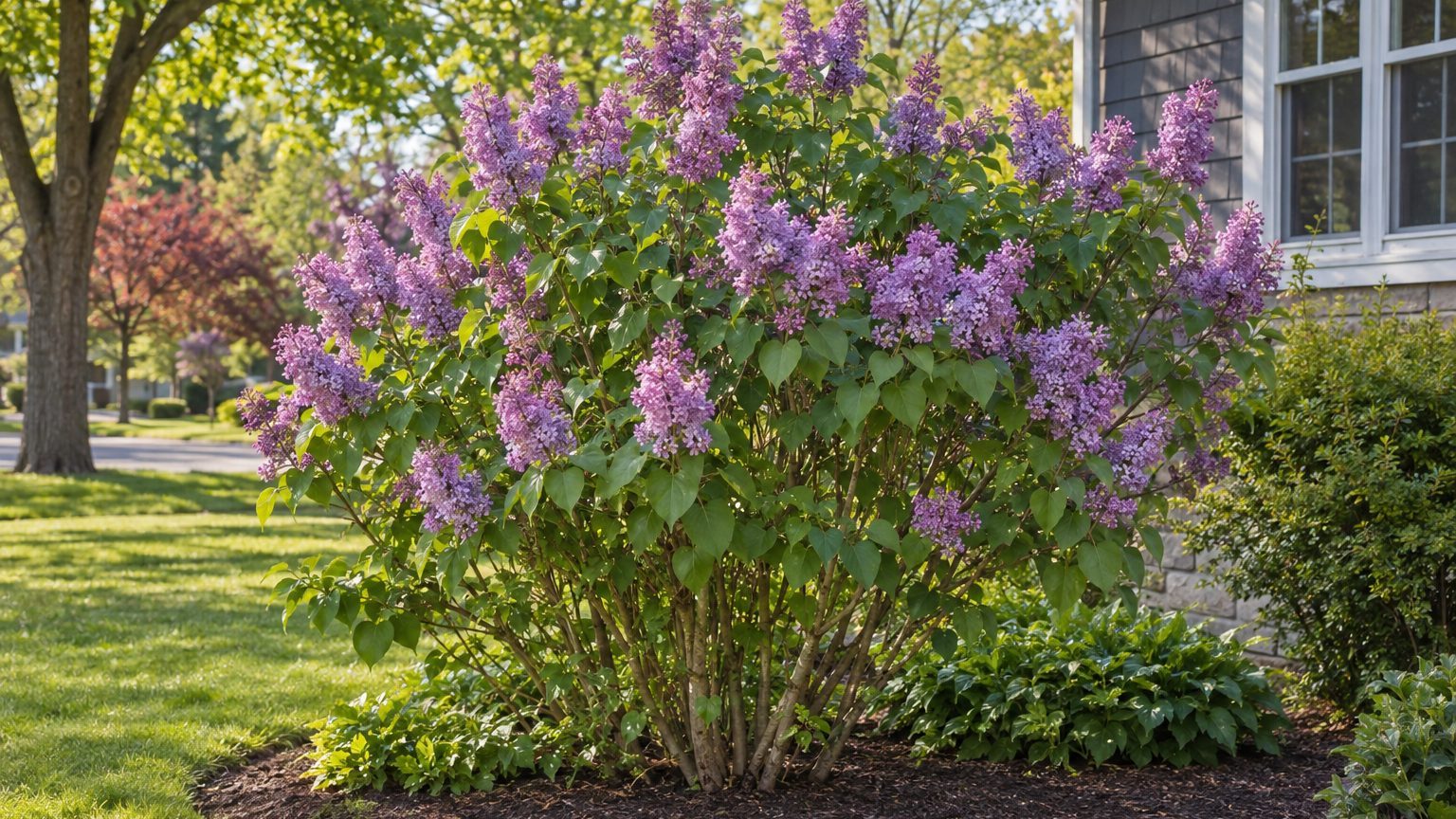
A lilac in full bloom stops you on the sidewalk, and the deep magenta clusters of Charles Joly bring fragrance to the yard in mid spring. Charles Joly lilac is a plant with a clear identity, ideal sites in the yard, and simple habits that keep it blooming year after year.
What Is the Charles Joly Lilac?
Charles Joly is a cultivar of the common lilac, Syringa vulgaris, an old-fashioned classic. It grows as a strong, narrow, upright shrub and carries fragrant flowers that open from purple buds into deep magenta, sometimes described as wine-red.
The florets are double, so each little bloom looks fuller than a single lilac flower. The clusters are numerous and smaller than on some other lilacs, which gives the shrub a dense, busy look at peak bloom.
Plan for height more than width. Plants reach 8-10′ tall and spread 6′ in many descriptions, though in time they can reach 12′ tall and 10′ wide.
From the almanac
Lilacs in your state
The dates on this page depend on where you live. Your state's page carries its frost dates, its USDA zones and the year laid out month by month.
Northeast
Southeast
- Alabama
- Arkansas
- Delaware
- Florida
- Georgia
- Kentucky
- Louisiana
- Maryland
- Mississippi
- North Carolina
- South Carolina
- Tennessee
- Virginia
- West Virginia
Midwest
Southwest
West
Pacific Northwest
Canada
Where Does the Charles Joly Lilac Grow Best?
- Upper Midwest and Northeast: Minnesota, Wisconsin, New York and Connecticut give the cold winters and cool springs that suit it, and the shrub is a familiar sight in older neighborhoods there.
- Mountain West and Plains: Montana and Iowa also work well.
- Mid-Atlantic: Maryland can grow it, and its resistance to mildew is a real advantage in humid summers.
- Deep South and Gulf Coast: this is where it tends to suffer, since mild winters give too little chilling and heat and humidity stress the plant.
The state selector just below this section leads to the page for your own state, with the local details for where you live.
How to Care for the Charles Joly Lilac Through the Year
Bloom

Flowering comes in mid spring, and the flowers are fragrant. Full sun to light shade suits it.
Pruning
This cultivar grows upright and narrow.
Summer
Summer asks for little.
Leave room for a spread of 6′ to 10′.
Fall
Winter
Charles Joly Lilac Diseases and Weak Points
Charles Joly is one of the common lilac cultivars with above-average powdery mildew resistance.
| Threat | How Charles Joly handles it |
|---|---|
| Powdery mildew | Above-average resistance among common lilac cultivars |
| Powdery mildew (rated by another garden guide) | Fairly resistant |
Resistance lowers the risk without removing it.
Is the Charles Joly Lilac Right for Your Yard?
It suits a spot in full sun to light shade with room to grow tall. It is a poor fit for a tight bed by a front door.
- A back corner or property line gives it space to reach full height, and you will see the best flowering there in mid spring.
- A narrow side yard works because of its upright habit, though it still needs sun and air around the leaves.
- If you garden in the Deep South, check your state page before buying, then choose a plant suited to your climate.
Common Questions
Does the Charles Joly Lilac Have a Scent?
Yes. The flowers are fragrant.
How Tall Does a Charles Joly Lilac Get?
Plan on 8-10′ tall with a 6′ spread, though over time plants can reach 12′ tall and 10′ wide. Give it room accordingly, and check the plant tag for the size of the one you buy.
Can You Grow a Charles Joly Lilac in Light Shade?
You can. It tolerates full sun to light shade.