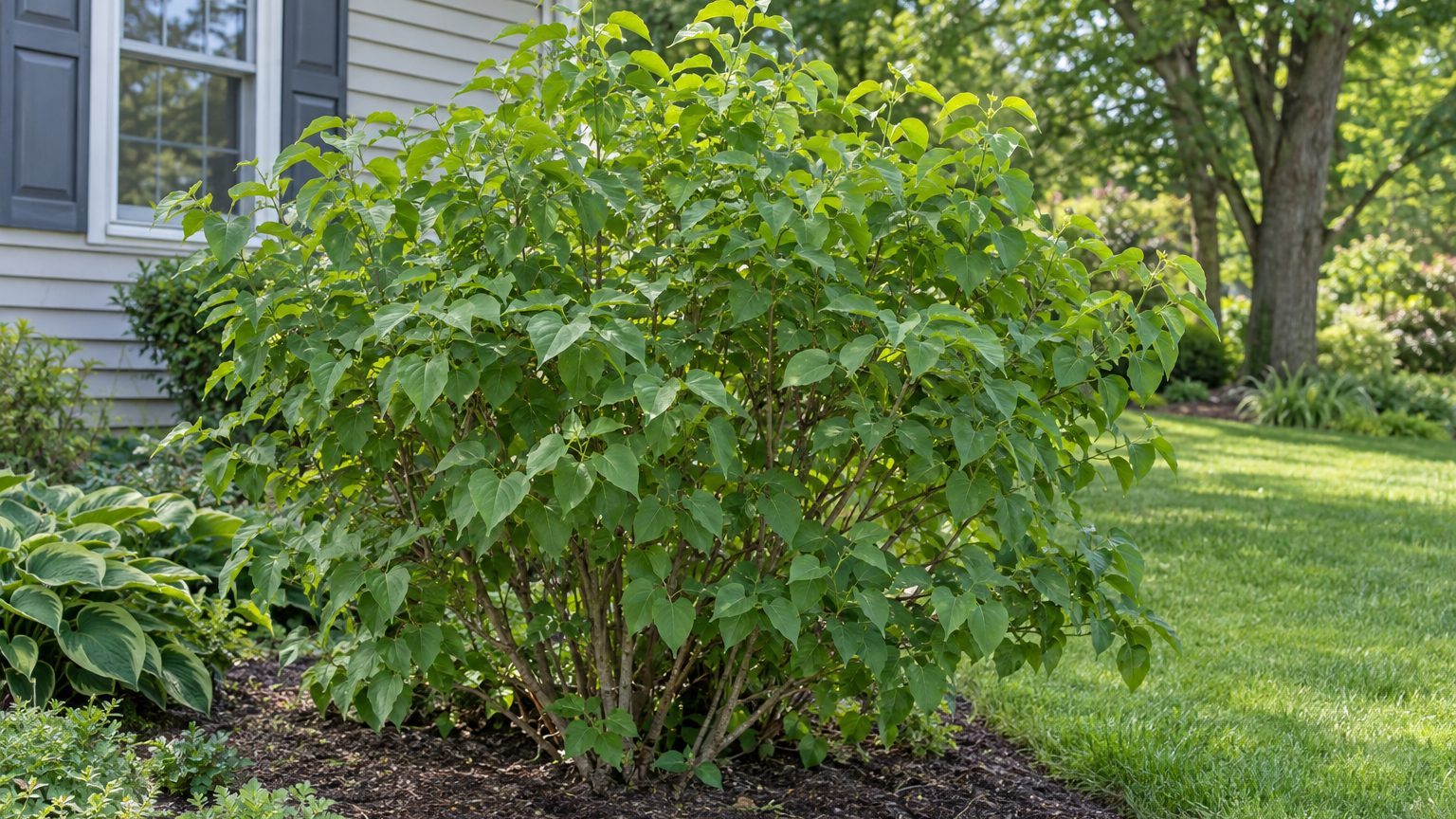
A lilac that leafs out thick and green every spring but never shows a single flower cluster is rarely sick. It is almost always missing something it needs the summer before: sun, an untouched set of buds, or enough winter cold. Most of the fixes are small changes in how you prune, feed and site the shrub.
Why Is Your Lilac Not Blooming?
Across the country, a lilac fails to flower for one of a few reasons: too little sun, pruning at the wrong time, too much nitrogen, a plant that is still young, or a winter that was too mild or too harsh. Which one applies depends on the lilac type and your climate.
The timing is the part that surprises people. In Illinois, extension advice points out that a lilac starts building its flower buds the year before, on old wood. Anything that damages or removes that wood in between costs you the show.
The state selector just below this section leads to the page for your state, where the local timing is laid out.
From the almanac
Lilacs in your state
The dates on this page depend on where you live. Your state's page carries its frost dates, its USDA zones and the year laid out month by month.
Northeast
Southeast
- Alabama
- Arkansas
- Delaware
- Florida
- Georgia
- Kentucky
- Louisiana
- Maryland
- Mississippi
- North Carolina
- South Carolina
- Tennessee
- Virginia
- West Virginia
Midwest
Southwest
West
Pacific Northwest
Canada
How to Get a Lilac to Bloom

Work through the likely causes in the order you can actually act on them, starting with the one that costs nothing to check.
- Measure the sun your lilac gets through the day, because in Wisconsin the advice is at least 6 hours of direct light to set buds for the following spring, and a shrub that falls short will grow leaves instead.
- Trim back or remove whatever is shading the shrub, such as a neighboring tree limb or a fence extension, so the light reaches the buds forming in summer.
- Prune right after the flowers fade and not later, because the buds for next year form shortly afterward and a late cut takes them off.
- Pull back on high-nitrogen feeding and stay away from fertilizer spread for the lawn nearby, since it pushes soft leafy growth at the expense of flowers.
- Be patient with a young plant, since in Ohio lilacs are said to take 4 to 5 years to flower, and a newly planted shrub is simply building its framework first.
Two causes sit outside your control. In Maryland, warmer winters are a concern because common lilac buds need a stretch of winter chill to open fully. And in Maryland, a lilac cut back hard may need a few years before the regrowth is mature enough to flower again.
Blooming Habits by Lilac Type
Common lilac (Syringa vulgaris) is the one most people picture, with the classic fragrant clusters. It leans on cold winters, which is why it struggles in mild climates and why warm spells matter to it.
The name also gets attached to other plants. Texas lilac, which is really vitex, runs on a very different schedule, and the advice for it does not carry over to the true lilacs.
| Lilac Type | What changes | Why it matters |
|---|---|---|
| Common lilac (Syringa vulgaris) | Needs a long stretch of winter chill for buds to mature | Mild winters can leave a healthy shrub with few or no flowers |
| Spring-blooming lilacs in general | Flower on wood formed the previous year | Pruning just after flowering protects next spring’s buds |
| Texas lilac (vitex) | Blooms again after seed pods or stalks are removed | In Texas, plants flower again within six weeks of that removal |
For you, this means matching the care to the plant in the ground. A true lilac wants its pruning done early and its winters cold, while a vitex sold as Texas lilac rewards trimming spent stalks during the season. In Washington, the plain advice for a lilac whose buds were lost to winter is to hope for milder winters or buy hardier lilacs.
Lilac Blooming Mistakes to Avoid
Winter Pruning
Cutting a lilac back in fall or winter tidies the shape and removes the flower buds already formed. In Washington, pruning in winter eliminates the following spring’s blooms.
If the shrub looks ragged in the cold months, leave it alone. Shape it once the blooms are finished.
Heavy Nitrogen Feeding
A generous dose of nitrogen gives you dark, lush leaves and very little else. In Montana, soft new shoots often cannot harden off enough before cold arrives, and winter damage follows.
Skip routine feeding unless a soil test calls for it. A lilac planted in decent soil usually does fine without extra help.
Severe Cutting Back
Cutting a big lilac to a few stumps feels like a fresh start, but the shrub answers with vigorous leafy shoots, not flowers. In Maryland, plants may need a few years before the regrowth is mature enough to flower again.
When an old lilac needs renewing, spread the work over several seasons and remove only some of the oldest stems at a time, so the plant keeps flowering wood.
When Lilacs Bloom in Your State
Lilacs open on the calendar of your climate, and the sign that matters is the clusters fading on the branches. That is your cue to prune, before the next year’s buds form.
- Each state’s page lays out the months for flowering and pruning where you live, so open it before you pick up the shears.
- Check it once in late winter to confirm you are leaving the shrub untouched until the petals drop.
Common Questions
When Do Lilacs Form Next Year’s Flower Buds?
In Montana, extension advice says the flowering buds for the next year are produced in June and July on almost all species. That is why a cut made after the blooms fade has to come soon, before those buds develop.
Can a Cold Winter Kill Lilac Flower Buds?
Yes. In Washington, the guidance is that if winter killed the buds, the fix is to hope for milder winters or plant hardier lilacs. A shrub with healthy leaves but no flowers after a harsh season, and no pruning that year, fits this pattern.
Should You Remove Seed Pods from a Texas Lilac?
In Texas, yes. Left in place, the seeds hold back a profusion of new bloom spikes and may produce seedlings that differ from the parent plant and turn into a nuisance. Removing the pods or stalks brings plants back into bloom within six weeks, depending on weather and care.