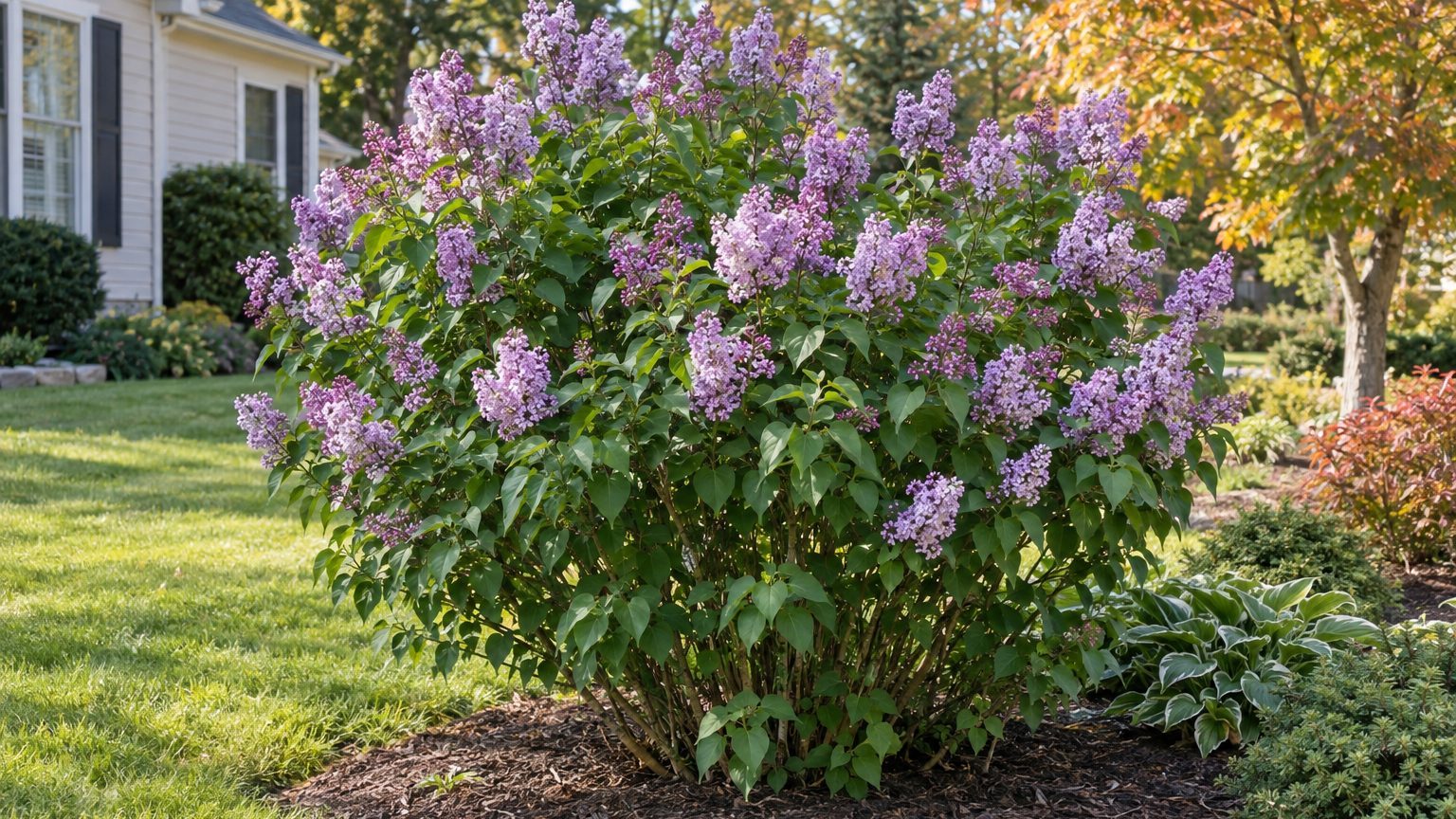
A lilac that flowers in spring and then reblooms sporadically in late summer or autumn is the reason gardeners reach for a Bloomerang. It stays shorter than the old-fashioned lilac, resists the mildew that mars so many of them, and asks for cold winters and a sunny spot.
What Is the Bloomerang Lilac?
Bloomerang is a series of lilac cultivars, not a single plant. The series matures shorter than the common lilac, Syringa vulgaris, and is more disease-resistant. Several flower colors are sold within the group.
What sets it apart is timing. After the main spring flush, it sporadically blooms again in summer or autumn. That works because it flowers on old wood and on new wood, so a shoot grown this season can still carry buds.
Expect a shrub listed at 4 ft. 0 in. – 5 ft. 0 in. in height and width, though the series also includes smaller dwarf selections.
From the almanac
Lilacs in your state
The dates on this page depend on where you live. Your state's page carries its frost dates, its USDA zones and the year laid out month by month.
Northeast
Southeast
- Alabama
- Arkansas
- Delaware
- Florida
- Georgia
- Kentucky
- Louisiana
- Maryland
- Mississippi
- North Carolina
- South Carolina
- Tennessee
- Virginia
- West Virginia
Midwest
Southwest
West
Pacific Northwest
Canada
Where Does the Bloomerang Lilac Grow Best?
Bloomerang needs a real winter to set good bloom, and it tolerates summer warmth through zone 7. It reblooms best in cooler summers or when sheltered from afternoon heat. The state selector just below this section takes you to the page for your own state.
- Upper Midwest:
- Northeast:
- Piedmont and Mid-South: In warmer summers, shelter it from afternoon heat.
- Gulf Coast:
Zone is a guide, not a guarantee. In a warm summer, choose a full-sun site sheltered from afternoon heat.
How to Care for the Bloomerang Lilac Through the Year
Spring Bloom

The main show arrives in spring, and fertilizer helps it. Feed once in early spring when the ground has thawed, then feed again after the first flowers fade. That second feeding supports the rebloom later on.
Plant it in full sun, in rich, moist soil that drains well. Neutral to slightly alkaline soil suits it, and so does a spot with good air movement.
Pruning After Bloom
If the shrub needs shaping, prune right after the first flowers finish in early spring. The buds for next year form on wood that grows after that, so cuts made at other times will thin the display the following year.
Pruning at other times of the year will diminish the floral display in the following year. Still, pruning time matters.
Summer
Summer is when the rebloom happens, though sporadically. It does best in cooler summers or in a full-sun site sheltered from afternoon heat.
Powdery mildew can dull the foliage in summer. The shrub shrugs it off, so treat it as a cosmetic problem. Keep the soil moist but never soggy, since lilacs resent wet roots.
Fall
Sporadic rebloom can continue into autumn. Leave the shears in the shed, because trimming now removes next spring’s buds.
Winter
Cold is part of the plan. Like nearly all lilacs, Bloomerang needs a period of cold weather to bloom well. Leave the branches alone until bloom has finished next spring.
Bloomerang Lilac Diseases and Weak Points
Bloomerang is more disease-resistant than typical common lilac, and it is specifically resistant to powdery mildew. That can make the foliage easier to keep tidy.
Wet soil, heavy shade, hot summers and mistimed pruning all show up in how the shrub looks and how much it flowers.
| Threat | How Bloomerang handles it |
|---|---|
| Powdery mildew | Resistant. It can still mark summer foliage but does little permanent damage. |
| Disease in general | More resistant than typical Syringa vulgaris. |
| Warm summers | Tolerates warmth through zone 7, but reblooms best where summers are cooler or afternoons are shaded. |
| Soggy soil or heavy shade | Dislikes both, so choose a sunny, well-drained site. |
| Pruning at the wrong time | Cuts made outside the window just after the first bloom reduce next year’s flowers. |
Powdery mildew can mar the foliage in summer but does little permanent damage to the shrub. Fix drainage and airflow first if the same shrub keeps struggling.
Is the Bloomerang Lilac Right for Your Yard?
It suits a yard with full sun, well-drained soil and winters cold enough to chill the buds. It fits smaller beds well, since it stays shorter than common lilacs. A shady, wet or mild-winter yard is a poor match.
- Choose it if you want spring flowers with sporadic rebloom later and will prune only if necessary, immediately after the first bloom.
- Skip it for deep shade or soggy corners.
- Open State by State Garden’s page for your state to see the timing and regional notes for your area, then pick a sunny spot before you buy.
Common Questions
What Soil and Light Does a Bloomerang Lilac Need?
Full sun and organically rich, moist soil that drains well. Neutral to slightly alkaline soil suits it best. Heavy shade and soggy ground both work against it.
How Far Apart Should You Plant Bloomerang Lilacs?
Leave enough room for each shrub’s full width and good air circulation. The plant tag gives the mature size of the specific selection you buy.
Is There a Bloomerang Lilac Smaller than 4 Feet?
Yes. The group includes dwarf selections under 3 feet, which suit containers and tight beds. Check the tag at the garden center, since the series includes plants of different sizes.