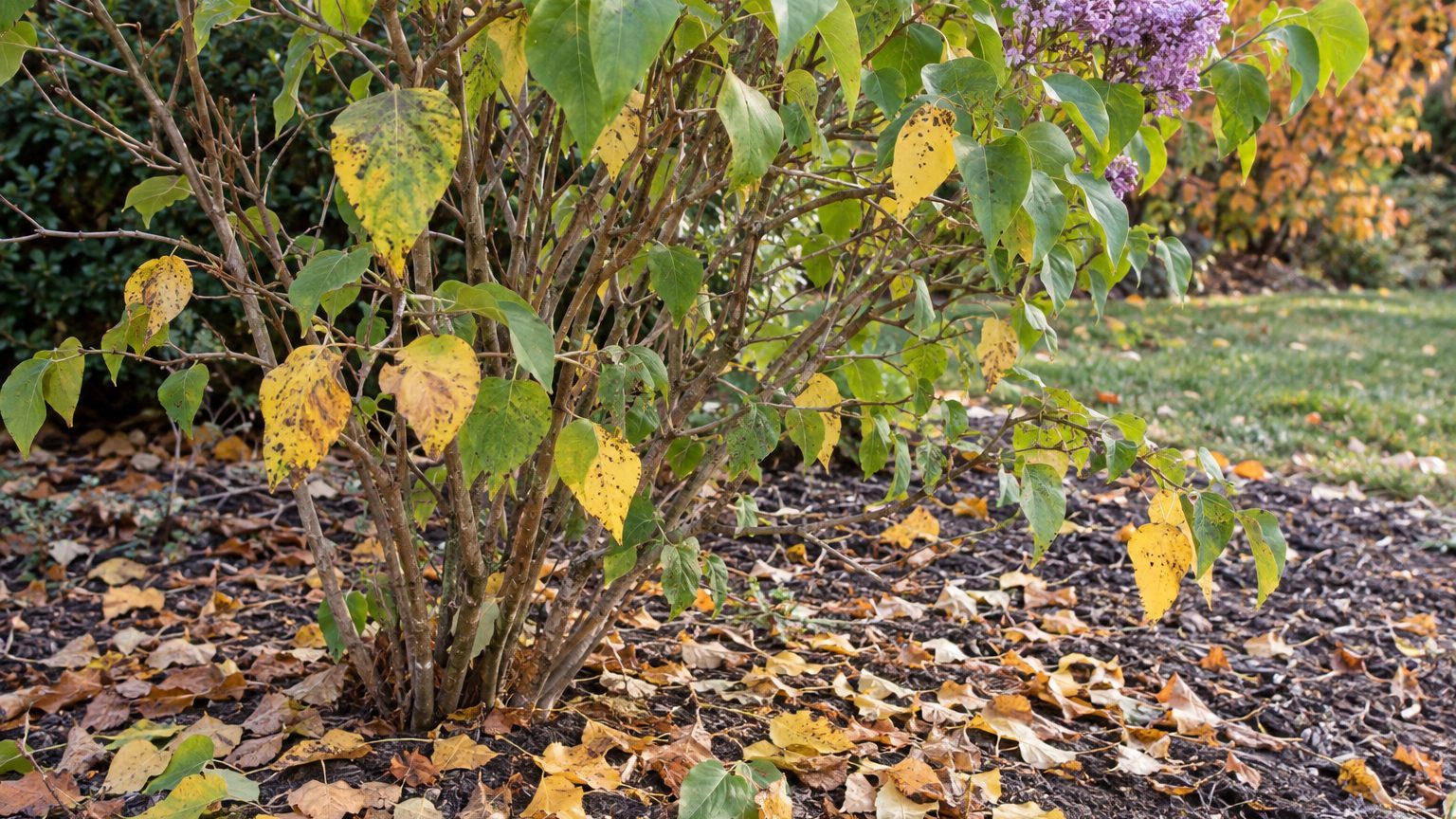
A lilac that sheds leaves in summer, with the branches going bare from the bottom while the shrub still looks half green, may be reacting to a leaf disease, leaf-mining pests, heat, dry soil, or a combination of these problems. Often a few of these act together. The leaves that fall are the ones too damaged to work or too hard for the plant to keep watered.
Lilac Losing Leaves: What You See

The sign that sets this problem apart is leaves dropping early while they are still partly green or freshly spotted.
- Brown spots appear along the leaf edges, then grow together until the leaf curls and falls.
- Leaves can darken and wilt after spotting in wet conditions.
- A white or gray coating dusts the leaf surface, and the damaged parts later crisp and look scorched after hot, dry spells.
- Browned, blotchy patches show inside the leaf where larvae have been feeding, and heavily affected leaves drop early.
- In Maryland, the lower branches can thin out and the whole shrub can look leggy and bedraggled after a hot summer.
Disease symptoms may stay quiet until summer heat stresses the plant, so the damage can seem to arrive all at once.
From the almanac
Lilacs in your state
The dates on this page depend on where you live. Your state's page carries its frost dates, its USDA zones and the year laid out month by month.
Northeast
Southeast
- Alabama
- Arkansas
- Delaware
- Florida
- Georgia
- Kentucky
- Louisiana
- Maryland
- Mississippi
- North Carolina
- South Carolina
- Tennessee
- Virginia
- West Virginia
Midwest
Southwest
West
Pacific Northwest
Canada
Lilac Losing Leaves or Something Else?
Several lilac troubles produce leaf loss, and the cause changes the cleanup. Heat scorch and age-related thinning can also pass for disease, so look at the leaf surface and at where on the shrub the loss begins.
Check an affected leaf closely, then step back and look at the whole shrub.
| Looks like | How to tell them apart |
|---|---|
| Powdery mildew | A white or gray coating you can see on the leaf surface, with crisp, burned-looking patches after hot, dry weather. |
| Leaf miner damage | Browned areas inside the leaf where larvae feed, and removing an infested leaf in season stops the larvae. |
| Heat stress | Shriveled leaves and dropping foliage after a very hot summer, with no spots or coating on the leaves. |
Bare lower branches on an old shrub, with sparse growth and little vigor, point to age rather than disease.
What Causes Lilac Losing Leaves, and Where It Is Worst
Fungal and bacterial leaf diseases are possible causes. In Vermont, lilac leaf blight starts as brown edge spots; the fungus overwinters on fallen leaves and infects emerging leaves in spring. Wet weather keeps spreading it, so more leaves become infected as the rain continues.
A bacterial blight produces leaf spots, darkening and wilting too, and it also loves wet conditions. Because it is not a fungus, fungicide will do no good. Powdery mildew, on the other hand, is a common fungal disease of lilacs, and heat and drought make its damage worse.
In Vermont and across the Northeast, blight shows up in wet weather in the spring and early summer. In Maryland, excessive summer heat shrivels the leaves and causes early drop. Old stems add to the trouble, since they lose vigor and attract wood-boring moth larvae. Warm winters do not help either, because many lilacs need a long chill to ripen their buds.
How to Treat Lilac Losing Leaves
Start by working out which problem you have, because the cleanup differs. Then work in this order.
- In Vermont, rake and destroy infected fallen leaves in autumn to reduce the fungus that can overwinter on them.
- Destroy the raked leaves instead of composting them, because this may help reduce overwintering leaf miner populations.
- Pick off and destroy leaves with leaf miner damage during the season, so that the larvae inside die with them.
- In Vermont, thin the shrub during winter to open the center to air and light and help the foliage dry faster after rain.
- Cut out old, sparse stems, so that the plant puts energy into younger, more vigorous wood.
- Skip fungicide if the spots point to the bacterial blight, since it will do no good, and ask your state extension service what is approved before spraying anything.
Over several years of defoliation a lilac can weaken, so repeated losses are worth acting on.
How to Prevent Lilac Losing Leaves Coming Back
Prevention follows the season, and most of it happens when the shrub is quiet.
- In Vermont, watch emerging leaves in wet spring weather, when the overwintering fungus infects them.
- Through summer, water the shrub during dry, hot spells so it has enough moisture to hold its leaves.
- Remove leaves showing leaf miner damage throughout the growing season to kill the larvae inside.
- In Vermont, rake and destroy infected fallen leaves in autumn to reduce overwintering fungus.
- In Vermont, thin the shrub during winter for better air circulation and light.
Regular renewal pruning also helps keep the shrub vigorous and free-flowering while reducing bare, leggy growth.
Where This Comes From
Rules and approved treatments differ by state, so check with your state’s cooperative extension service before treating.
Common Questions
Will My Lilac Die from Losing Its Leaves?
Early leaf drop does not necessarily kill a lilac. Several years of defoliation can weaken it, so cleanup and renewal pruning help it recover.
Can You Spray a Lilac for Leaf Spots?
It depends on the cause. Identify the cause before treating, because fungicide will do no good against bacterial blight. Your state extension service can tell you what is approved locally.
Do Warm Winters Hurt Lilacs?
Many lilacs need a long winter chill to mature their buds properly, unless they are bred for warmer zones. Mild winters are therefore less ideal for them.