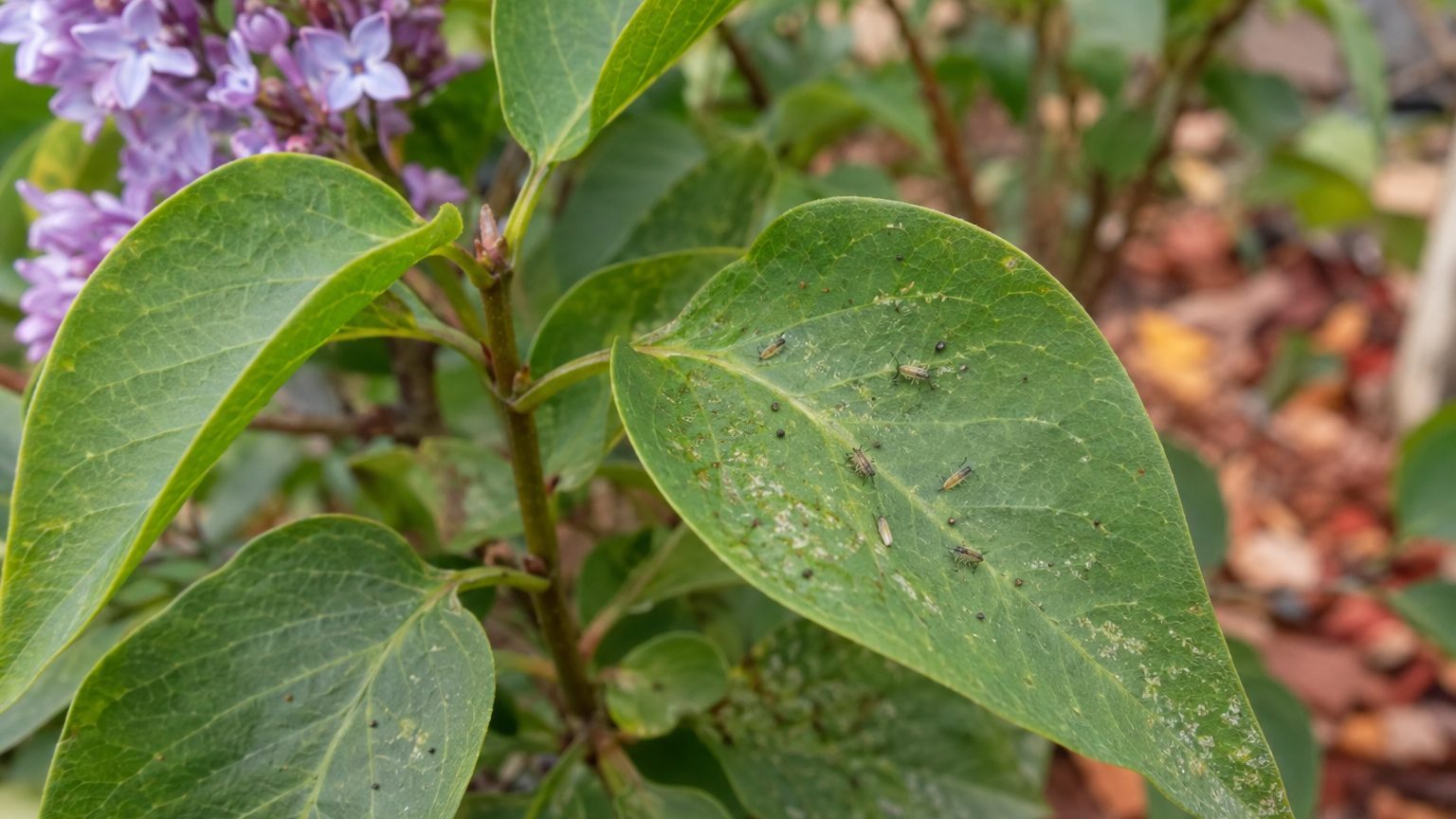
Silvery, speckled leaves on a lilac can point to tiny insects feeding on the surface. Thrips are slender and so small you will often notice the damage before the insect. Spotting that damage early, and knowing how to tell it from lookalikes, keeps this common lilac pest manageable.
Thrips: What You See

The leaves tell the story first, so start there and work toward the insect itself.
- Leaves show a silvery or bronzed stipple, fine pale flecks where the surface cells have been drained.
- Tiny black specks, the insects’ droppings, dot the undersides of damaged leaves.
- Leaf edges and new shoot tips curl, twist or stay stunted instead of opening flat.
- Flower buds may brown, shrivel or open ragged and discolored in spring.
- The insects themselves are slim, pale to dark, and quick to crawl or hop when a leaf is disturbed.
Damage tends to show on the newest growth, since that is where the soft tissue they prefer is found.
From the almanac
Lilacs in your state
The dates on this page depend on where you live. Your state's page carries its frost dates, its USDA zones and the year laid out month by month.
Northeast
Southeast
- Alabama
- Arkansas
- Delaware
- Florida
- Georgia
- Kentucky
- Louisiana
- Maryland
- Mississippi
- North Carolina
- South Carolina
- Tennessee
- Virginia
- West Virginia
Midwest
Southwest
West
Pacific Northwest
Canada
Thrips or Something Else?
Several other lilac troubles leave pale, dull foliage, and treating the wrong one wastes effort. Check the pattern on the leaf and then confirm it with a quick test before deciding anything.
Shake a damaged shoot over a sheet of white paper. Thrips show up as tiny slim specks that run about, while the other culprits look different.
| Looks like | How to tell them apart |
|---|---|
| Powdery mildew | A white, dusty coating sits on top of the leaf, often on shaded, crowded stems, and it wipes off with a thumb. Thrips damage cannot be rubbed away. |
| Spider mites | Fine stippling comes with delicate webbing under the leaf, and the specks on white paper are round and crawl slowly. Thrips leave dark droppings and no webbing. |
Leaf-chewing insects are another possibility. They leave holes or torn margins, while thrips only scrape and drain, so a leaf with a clean outline and silvery patches points away from them.
What Causes Thrips, and Where It Is Worst
Thrips arrive on their own. They drift in on warm air or move over from neighboring plants, then settle on soft new growth to feed and breed. A lilac does not have to be neglected to attract them, though a crowded shrub with dense, shaded stems gives them more hiding places and is harder to inspect.
Wherever lilacs grow, the same pest can show up in the growing season, and it feeds on many other plants nearby.
Natural enemies work in your favor. In South Dakota, extension advice notes that ladybugs and lacewings may already be present in the yard and help hold thrips populations in check. That is a good reason to look closely before reaching for any spray.
How to Treat Thrips
Work from the gentlest step to the firmest, and stop as soon as the pressure drops.
- Confirm the pest with the white paper test, so that you treat thrips and not mildew or mites.
- Rinse the shrub with a firm stream of water, which knocks insects off the foliage and slows their feeding.
- Prune out the worst of the distorted shoot tips and bag them, so that the insects feeding there leave the yard with the clippings.
- Leave ladybugs, lacewings and other beneficial insects alone, since they are already working on the problem.
- Call your state’s extension service before using any spray, because only they can tell you which products are approved where you live and when to apply them.
Cosmetic scarring on leaves does not heal, but new growth will come in clean once the insects are gone. Judge your progress by the new leaves, not the old ones.
How to Prevent Thrips Coming Back
Prevention for lilacs comes down to shrub structure and timing, with renewal pruning doing most of the work.
- In early spring, check new shoots as they open, because early damage is easiest to catch while the leaves are small.
- For a lilac, begin renewal pruning by cutting out the oldest stems at the base.
- When you prune, remove up to one third of the branches in a given year, so the shrub keeps enough growth to recover.
- Through summer, keep the center of the shrub open and watch the fresh growth that follows pruning.
Renewal pruning also helps lilac produce more flowers, keeps the shrub from outgrowing its spot, and makes any later shearing easier. Privet responds to the same technique.
Where This Comes From
Rules and approved products differ from state to state, so check with your state’s extension service before you act.
Common Questions
Do Thrips Kill a Lilac?
Thrips mostly spoil the look of the leaves and buds. A shrub that is otherwise healthy usually carries on, and the clean new growth is a sign that the pressure is easing.
Do Thrips Live on Other Plants Near Lilacs?
They feed on many garden plants, so insects can move between shrubs, flower beds and hedges. Looking over the plants beside your lilac gives a fuller picture of where they are coming from.
Should You Cut Off Damaged Leaves?
Leaves that are only speckled can stay, since they still photosynthesize. Cut off shoot tips that are badly twisted or stunted, and bag them rather than composting them.