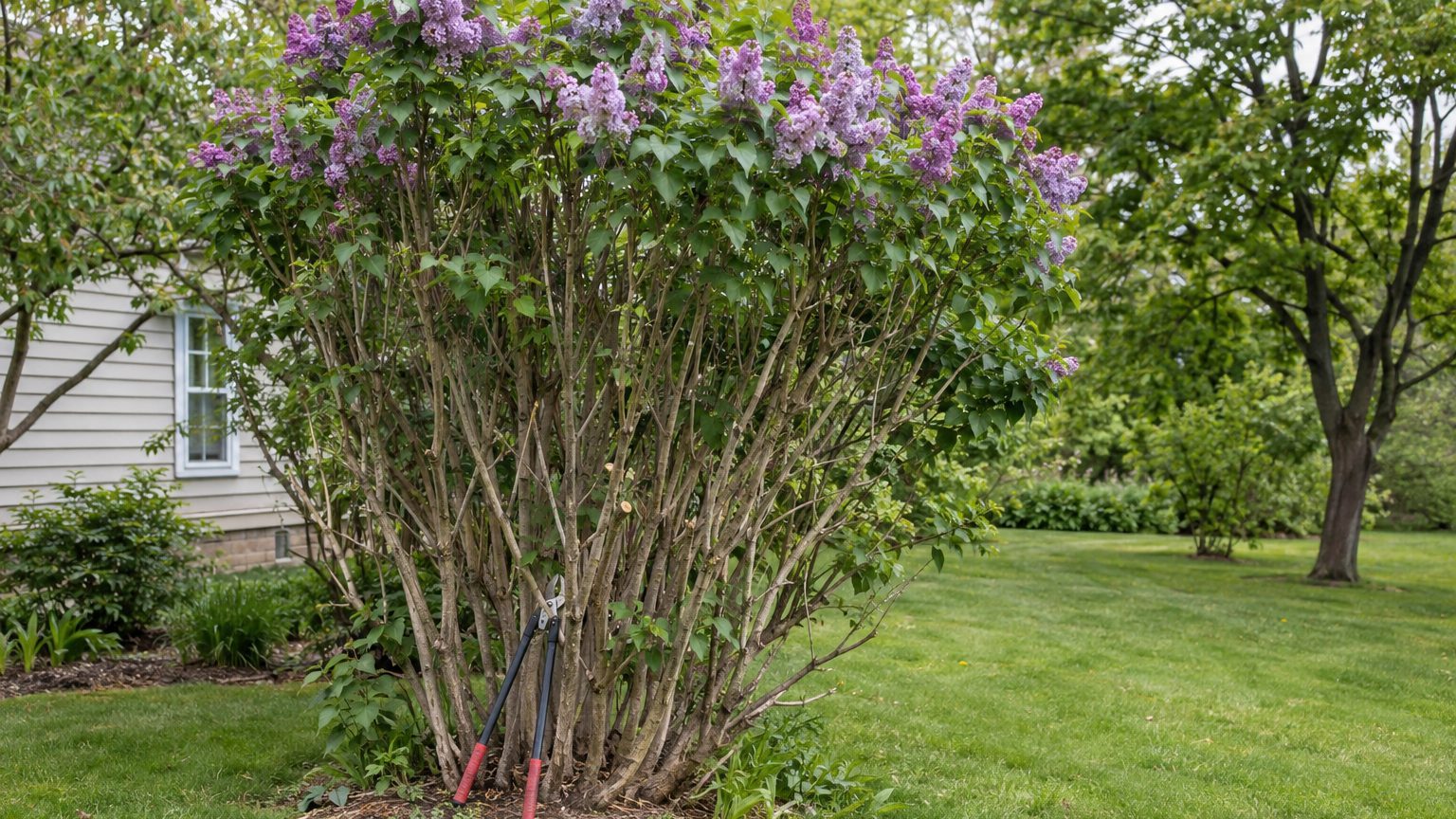
The fix is to renew the stems from the base. Whether you renew the shrub gradually or cut the whole plant down, it can respond with new growth.
Can You Save an Overgrown Lilac?
Yes, an overgrown lilac can be renewed. A lilac sends up new shoots from the base, so even a tall, tangled shrub with thick old trunks can be rebuilt. The usual choice is between removing the oldest stems in stages and cutting everything down at once.
What varies is how fast you want results and how much bloom you will give up along the way. Common lilac can be renewed gradually or cut back hard. The timing shifts with climate, so use your state page to choose when to make the cut.
The state selector just below this section leads to the page for your state, where the months for your area are laid out.
From the almanac
Lilacs in your state
The dates on this page depend on where you live. Your state's page carries its frost dates, its USDA zones and the year laid out month by month.
Northeast
Southeast
- Alabama
- Arkansas
- Delaware
- Florida
- Georgia
- Kentucky
- Louisiana
- Maryland
- Mississippi
- North Carolina
- South Carolina
- Tennessee
- Virginia
- West Virginia
Midwest
Southwest
West
Pacific Northwest
Canada
How to Renovate an Old Lilac

The gentler route spreads the cutting out so the shrub keeps some flowering wood, and these steps follow that order.
- Start by comparing the old, thick stems with the young ones.
- Cut the oldest, thickest stems off at ground level so light and air can reach the middle of the clump.
- Leave the young suckers standing, so that they grow up to replace the stems you removed.
- Clear out anything dead, broken or crossing, so the new framework is not crowded from the start.
- Continue the staged renewal later, removing another share of the oldest stems without clearing the whole clump at once.
In Minnesota, the plan runs over a 3-year period, and by the end most of the old wood has been replaced by younger stems. In Ohio, the guidance is to take the largest stems, those thicker than 2 inches across, in each round. Nebraska describes the result as a vigorous, attractive shrub within a few years.
Cutting to the ground is the faster way, and it costs you flowers. In Illinois, the advice for overgrown, unpruned shrubs is to cut every branch within 6 inches of the soil in one season. Virginia suggests leaving about 1.5 feet instead. In Nebraska, late winter in March or early April is the time for this cut. Expect few or no flowers the next spring in Virginia. Nebraska says flower development is delayed for about 3 years, and Iowa puts the wait at 3 to 5 years.
Renovation Method by Lilac Type
The guidance here depends less on the exact kind of lilac than on how far the shrub has gone. A common lilac with some young growth left suits the gradual approach. When selective pruning is too difficult, a Nebraska option is to cut the entire plant back.
| Lilac Type | What changes | Why it matters |
|---|---|---|
| Common lilac | Remove about one-third of the largest stems each year, or cut the whole plant to about 1.5 feet (Virginia) | The slow route keeps some bloom going, while the hard cut brings back a full set of young stems but skips flowers the next spring |
| Overgrown, unpruned lilac | Cut every branch within 6 inches of the ground in one season (Illinois) | A thicket with no younger wood to build on is easier to reset completely than to thin stem by stem |
For you, the choice comes down to how much you can reach and how long you are willing to wait for flowers. If you can walk into the clump and get a saw or loppers to the base of the old trunks, the stage-by-stage plan is the kinder one. If the stems are packed so tightly that you cannot, cutting low saves a lot of frustration.
Lilac Renovation Mistakes to Avoid
Cutting Everything Without a Plan
Taking a lilac to the ground on a whim can leave you with an empty bed and no flowers for a good while. In Ohio, a lilac may bloom sparsely or not at all for 1 or 2 years after hard pruning.
If flowers matter to you this spring, remove just a share of the old stems and save the full cut for a shrub that is beyond thinning.
Pulling Out the Young Suckers
Suckers look like weeds at the foot of the shrub, and it is tempting to clear them with the old wood. They are the stems that will replace what you remove. Minnesota advice is to leave young suckers in place as the old stems come out.
Keep the strongest, best-placed ones, and take out the rest only if the clump gets crowded again.
Stopping After the Renovation
A renewed lilac goes back to growing tall and dense if you leave it alone. The same 3-year pruning program that rebuilds an old shrub also keeps it in shape afterward, according to guidance from Nebraska.
Once the new stems are established, use the Nebraska 3-year pruning program to keep the shrub from rebuilding a heavy, woody center.
When to Renovate a Lilac in Your State
In Nebraska, make a hard renovation cut in March or early April. Once leaves unfold, the cut takes away stems that are already working.
- Your state’s lilac page gives the months that suit your area, so open it before you pick up the saw.
- Use your state page to choose the day, then cut the oldest stems at the base and leave the young shoots to grow.
Common Questions
How Tall Does an Unpruned Lilac Get?
Left to themselves, many lilacs reach a height of 18 feet with a similar spread, according to Montana guidance. That is why a shrub planted by a window can eventually cover it.
How Long Until a Renovated Lilac Looks Like a Shrub Again?
Nebraska says an old, overgrown lilac can become a vigorous, attractive shrub within a few years when it is renewed in stages. New shoots appear after the cut, and the shape fills out as they thicken.
Can a Very Old Lilac Be Cut to the Ground?
Yes. Washington guidance says overgrown lilacs can be cut completely to the ground. In Maryland, a large white lilac more than 20 years old was cut back to the ground when construction work required it. Plan on a gap in flowers while the new stems grow.