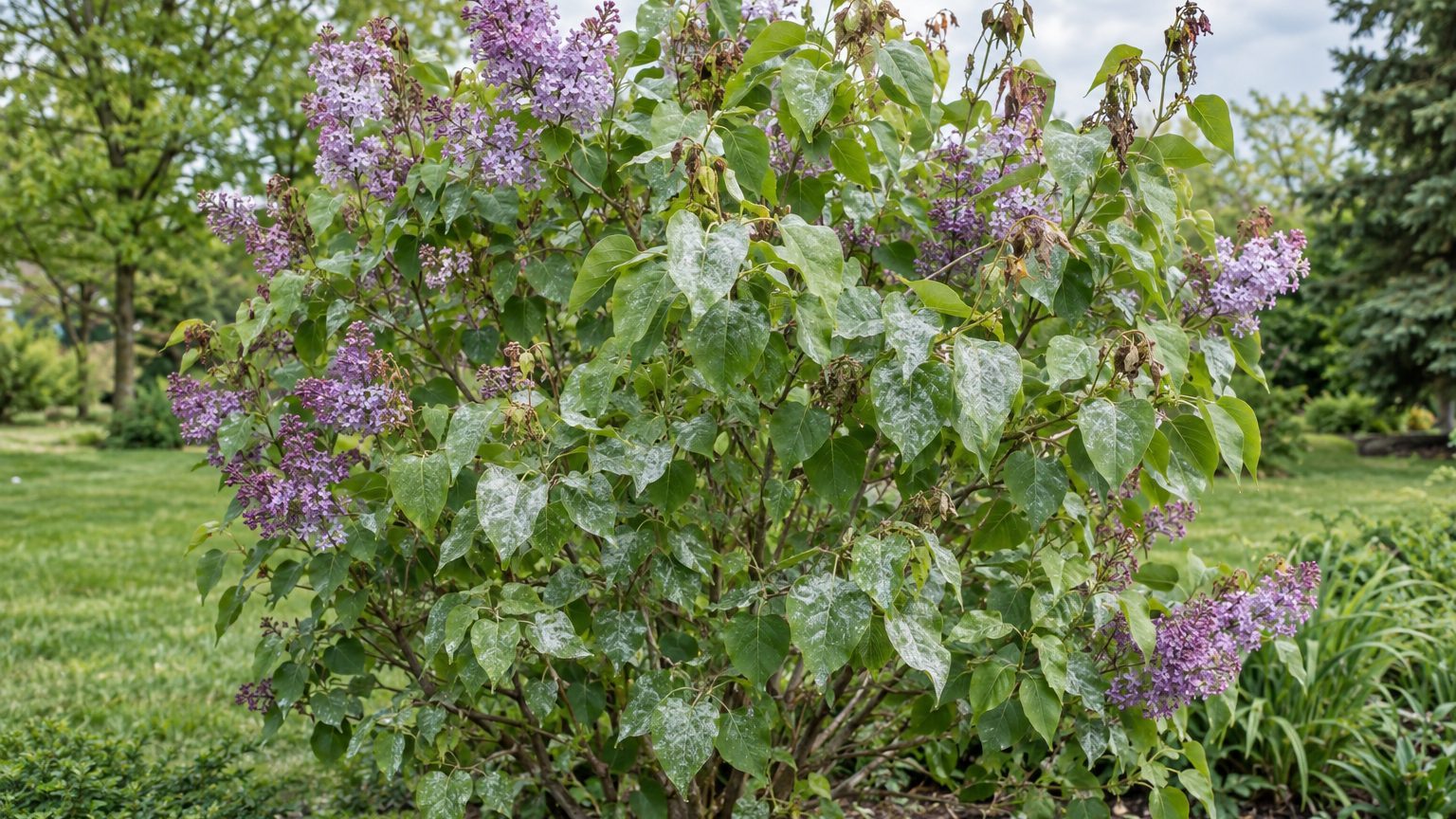
Brown spots with yellow halos on spring leaves, a shoot that wilts just as the buds open, a gray-white film on the foliage in late summer: each of these points to a different lilac problem. Powdery mildew, blight and leaf spots all show on the leaves and young shoots, and each calls for a different response from you.
How Do You Recognize a Lilac Disease?
Look at when the damage appears and what it does to the leaf or shoot. Spring problems tend to be spots and wilting, late-season problems tend to be a powdery coat, and weather and lilac type change how fast either one spreads.
In Wisconsin, cool, wet spring weather brings brown spots with yellow halos on leaves and leaf stalks. In Pennsylvania, the current year’s shoots and flower stalks turn girdled, wilted and brown in spring, which is the classic look of blight.
Wet weather can make disease more severe. In Maryland, rainy, mild springs promote disease, and in Washington symptoms can be more extensive in wetter areas. In Illinois, symptoms may not show until later in the season, when summer heat adds stress to the plant.
The state selector just below this section leads to the page for your state.
From the almanac
Lilacs in your state
The dates on this page depend on where you live. Your state's page carries its frost dates, its USDA zones and the year laid out month by month.
Northeast
Southeast
- Alabama
- Arkansas
- Delaware
- Florida
- Georgia
- Kentucky
- Louisiana
- Maryland
- Mississippi
- North Carolina
- South Carolina
- Tennessee
- Virginia
- West Virginia
Midwest
Southwest
West
Pacific Northwest
Canada
How to Treat Lilac Diseases

Start with the shoots and the tools, then adjust watering and feeding, and bring in a spray only at the right moment.
- Cut out diseased shoots and branches, so that the infection leaves the plant instead of spreading from dead tissue. In Wisconsin, the advice is to cut 10–12 inches below the visibly infected area.
- Disinfect your pruning tools between each cut so that you do not carry the infection from one branch to the next.
- Bag and destroy the removed shoots rather than leaving them under the shrub, since leftover diseased tissue keeps the problem alive.
- Water at the base and keep sprinklers off the leaves, because wet foliage invites infection. Gardeners in Washington and Montana are given this same advice.
- Hold back on nitrogen fertilizer, especially late in the season and on young plants, since excess nitrogen favors disease development, as Oregon specialists point out.
- Apply a protective spray at the right time. In Oregon and Pennsylvania, a preventive treatment in early spring each year, before the buds open, can help prevent blight. In Minnesota, lilacs showing signs of this disease may be treated with an appropriate spray.
Timing matters. In Iowa, fungicide treatments should not be considered late into the summer and fall. Skip wound paints and sealants after pruning, as Oregon advises, because they do not help the cut heal.
Lilac Diseases by Lilac Type
Lilac diseases are shaped more by weather, site and care than by lilac type. Weather, site and care still matter for every lilac type.
Choosing a resistant cultivar does help, as Wisconsin advice says, and the table sums up what shifts the odds on any lilac.
| Lilac Type | What changes | Why it matters |
|---|---|---|
| Any lilac in a wet climate | Symptoms can be more extensive in wetter areas, as seen in Washington | Spray timing and airflow count for more where rain is frequent |
| Resistant cultivars | Wisconsin advice lists them first among prevention steps | Fewer problems begin, so fewer treatments are needed |
| Young plants | Oregon advice warns against overfertilizing them | Soft, nitrogen-fed growth favors blight |
For you, that means the choice at the nursery counts, but so do the site and the habits that come after planting. Full sun and room between plants help air move through the shrub. A cultivar labeled resistant still benefits from the same care, and a lilac of any type does better when its foliage dries quickly and the plant is protected from injury.
Lilac Disease Mistakes to Avoid
Spraying Late in the Season
Powdery coatings and leaf spots in late summer look alarming, so many gardeners reach for a spray. In Iowa, fungicide is not recommended late into summer and fall. The leaves are near the end of their season anyway, so cleaning up fallen debris and planning an early spring approach is the better move.
Wetting the Leaves
Overhead sprinklers keep foliage wet, and wet foliage favors disease. Water at the base of the shrub, and adjust any irrigation heads that spray the leaves, as Montana advice says. Dry leaves give the problem much less to work with.
Feeding Too Much Nitrogen
A heavy dose of fertilizer feels like care, but extra nitrogen favors disease development, especially on young plants and late in the season. Feed lightly and early.
Lilac Diseases in Your State
Signs that call for action include spotted leaves in a wet spring, wilting shoots at bud break, or a pale coating later in the season. Timing for spraying and pruning varies with local weather.
- Open your state page to see the months that apply where you live.
- Check it again when wet weather settles in, so you can act on spotted or wilting growth right away.
Common Questions
Can a Lilac Recover from Blight?
It can recover when infected shoots are cut out promptly and the plant is kept dry and lightly fed. In Oregon, blight is worst in cool, wet springs, especially when rain follows a late frost or winter injury.
Does Frost Make Lilac Diseases Worse?
Yes. In Illinois, late spring frosts can damage tender leaf tissue and let leaf pathogens in. Avoiding other injuries to the plant also lowers the chance of infection, as Washington advice notes.
Where Should You Plant a Lilac to Avoid Disease?
Choose a site with full sun and give plants enough space for good air circulation. Wisconsin advice treats these choices, along with resistant cultivars, as prevention that works better than treating problems later.