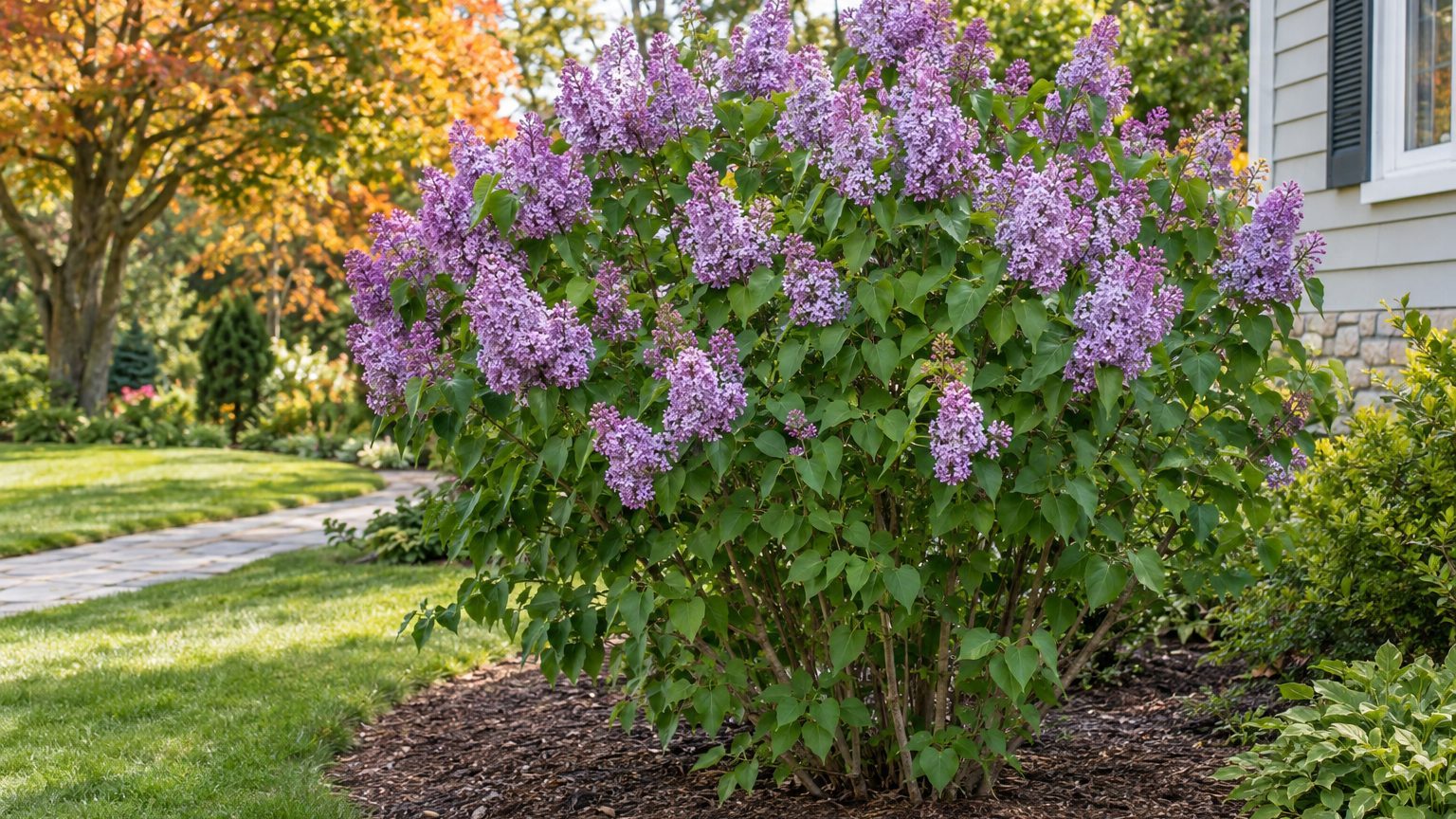
A lilac in full bloom stops people on the sidewalk, but the show was settled the summer before, when the shrub set its buds. The type you plant, the winter chill it gets and the timing of pruning decide whether a lilac flowers well across the country, from Maine to the Pacific Northwest.
Lilac Care Calendar by Season
A lilac asks for very little, but it asks at specific moments, and the order of its year explains most of what goes wrong.
- In early spring, buds swell and new leaves unfurl, so watch the forecast for a late frost, because open buds are the tender part of the shrub.
- Once the flowers open, leave the shears in the shed and let the clusters finish, since the winter chill has already done its work on those buds.
- Right after the flowers fade, prune a lilac that does not rebloom, because the shrub starts setting next year’s buds soon afterward and a later cut removes them. Prune a reblooming lilac right after it finishes blooming.
- Through summer, the lilac quietly forms next spring’s buds, so it needs steady moisture and a light hand with nitrogen fertilizer.
- After the leaves drop in fall, rake up any that were spotted or coated in mildew, so the problem does not wait out the winter at the base of the shrub.
- In winter, leave the lilac alone, because the cold of the season is what matures the buds for spring.
The state selector just beneath this section leads to the page for your state, where the months for each of these jobs are spelled out.
From the almanac
Lilacs in your state
The dates on this page depend on where you live. Your state's page carries its frost dates, its USDA zones and the year laid out month by month.
Northeast
Southeast
- Alabama
- Arkansas
- Delaware
- Florida
- Georgia
- Kentucky
- Louisiana
- Maryland
- Mississippi
- North Carolina
- South Carolina
- Tennessee
- Virginia
- West Virginia
Midwest
Southwest
West
Pacific Northwest
Canada
Types of Lilacs and How to Tell Them Apart
Bloom time sorts lilacs into families faster than leaf or flower shape does. Common lilac sets the pace, and every other type is early or late compared with it.
Each family also has its own comfort zone for winter cold and summer heat, which matters more than color when you choose one.
| Lilac type | When it blooms | What it needs |
|---|---|---|
| Common lilac (Syringa vulgaris) | Spring, the benchmark for the other types | A long winter chill to mature the buds, plus good air circulation |
| Hyacinthiflora hybrids | Mid to late April in Iowa | In Montana, a site where May frosts are less frequent |
| Southern lilacs | Early in the season | Mild-winter yards, and less fragrance is part of the deal |
Hyacinthiflora hybrids look like French hybrids but open earlier, by seven to 14 days in Montana. Miss Kim is a vigorous, upright shrub that reaches five to seven feet in Montana, and it is a common choice for a hedge or a corner.
Late bloomers such as Miss Canada, James Macfarlane, Donald Wyman and Royalty usually flower in the second or third week of June in Alaska, well after common lilac. Japanese tree lilac is another late type, with creamy white clusters in early summer that last about two weeks in Florida. Its scent is closer to privet than to spring lilac.
Descanso hybrids were bred in Southern California for mild winters. Angel White, Blue Boy and California Rose are examples, and Arkansas gardeners are encouraged to try them. Reblooming lilacs follow the same rule as nearly all lilacs: they need a spell of cold weather to flower well.
Best Lilacs by Region and Hardiness Zone
A lilac does best where winter is cold enough to ripen its buds and summer is not so hot and damp that the leaves suffer, which draws the map of success fairly clearly.
- Upper Midwest and northern plains: Minnesota, Wisconsin and South Dakota sit in the lilac’s home range. In Iowa, lilacs are adapted to zones 3, 4, 5 and milder pockets of zone 2.
- Alaska and the far north: Sensation is rated winter hardy to Zone 3 in Alaska, which rules it out around North Pole and the colder parts of Fairbanks. Late bloomers flower after common lilac there.
- Northern New England and New York: Maine, New Hampshire and New York give lilacs the cold they want, since in Connecticut the chill of winter is described as essential to bud development and maturation.
- Mid-Atlantic and the upper South: In Maryland, warmer winters are a growing concern, because common lilac flower buds need a period of winter chill to open fully. Species in Virginia flower from April through June, so a mix stretches the season.
- North Carolina and Arkansas: Lilacs need a long winter chill to mature their buds here. Low-chill cultivars exist, but even they do better with an extended cold rest.
- Rocky Mountain states: Colorado, Idaho and Montana suit hardy shrubs, while in Montana, early bloomers such as Hyacinthiflora hybrids belong where May frosts are less frequent.
- Deep South and the warm-winter states: Alabama, Georgia, Arizona and California test common lilac. In Arkansas, heat-tolerance claims often fall short in the central and southern parts, and powdery mildew follows. Southern lilacs and Descanso hybrids are the better bets.
Zone numbers are only a starting point, so your state page narrows the choice for your own yard.
Common Lilac Problems and What Causes Them
No Flowers

A healthy, leafy shrub that skips its flowers has usually been cut at the wrong time or has missed its winter rest. In Montana, flower buds form in June and July on almost all species. In Oregon, pruning in winter removes those buds and the following spring’s blooms.
If the cut timing was right, think about the climate. Mild winters in places like North Carolina leave buds that never fully mature.
White Powdery Leaves

A dusty white film on the leaves, mostly on crowded inner growth in warm, humid weather, points to powdery mildew. It is common where air barely moves through the shrub.
In Florida, remove and destroy diseased shoots and go easy on fertilizer. Thinning stems right after bloom opens up the shrub.
Dead or Broken Branches
Severely infested branches may break off. Ask a local extension service to identify the pest before deciding how to treat it.
Suckers at the Base
Slender shoots rising from the roots around the trunk are suckers. They draw energy from the main plant and crowd the center. Cut them at ground level, ideally right after bloom, and leave a few if you want to renew an aging shrub.
Lilac Care Guides by State
Months for blooming and pruning shift from state to state, and separate pages cover them for your own yard. Use the state selector near the top of the page to reach them.
- When Do Lilacs Bloom in Your State gives the flowering window to plan around, so check it in late winter.
- When to Prune Lilacs in Your State gives the pruning window, and the day to go is as the last flowers fade, because the pruning comes right after bloom.
Common Questions
How Much Sun Do Lilacs Need?
In Iowa, lilacs are said to thrive in sunny sites with good air circulation. A shaded corner with still air tends to give you fewer flowers and more mildew.
Should You Spray for Mildew Late in the Season?
In Iowa, check with your county extension office about fungicide timing. By then, focus on cleanup rather than spraying.
Can You Plant a Lilac in Fall?
Planting time depends on local climate and soil conditions, so use the guide for your state.