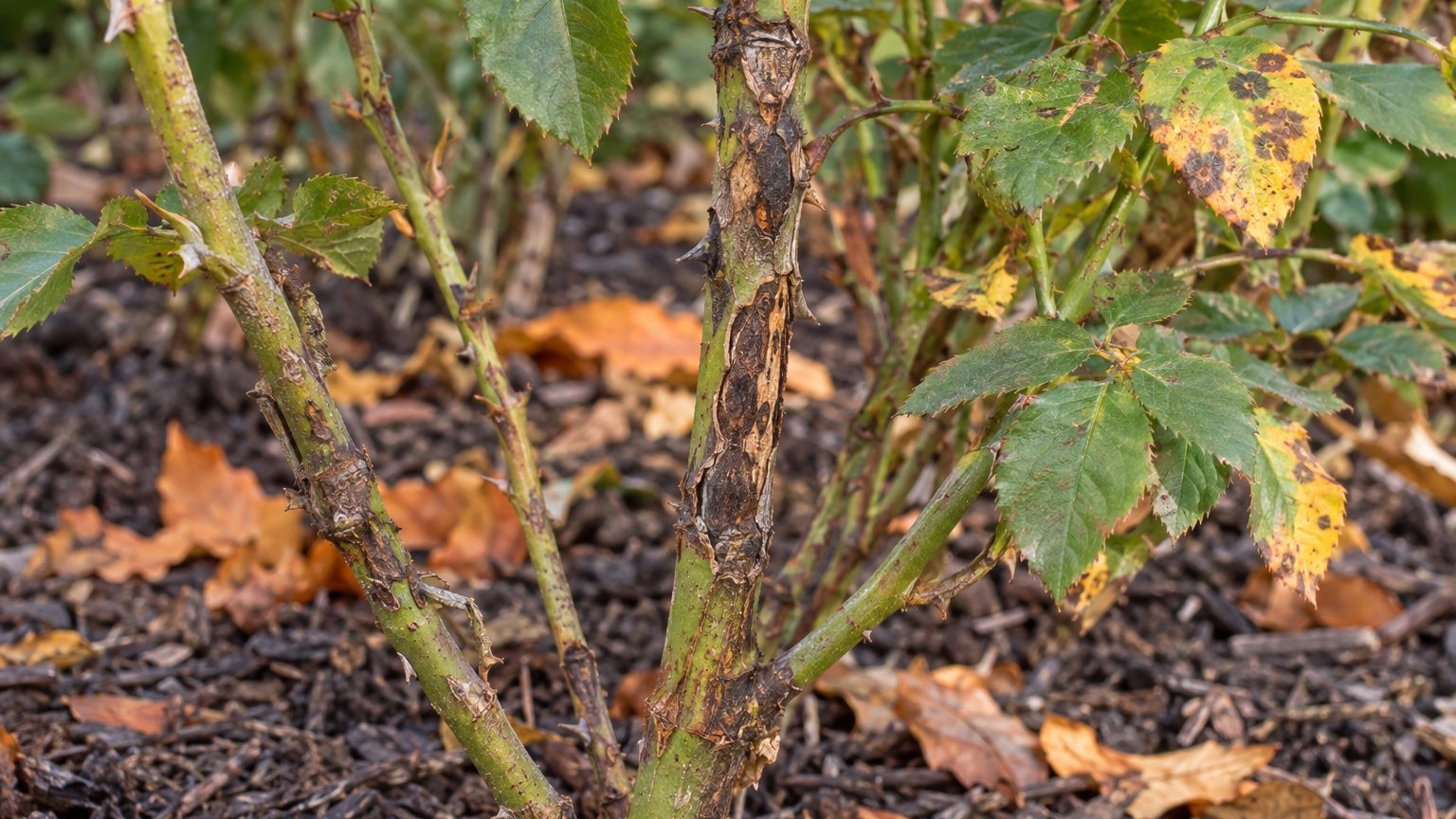
A rose cane that leafs out fine in spring, then wilts and dries while the canes beside it stay green, is a common sight in a rose bed. The cause is a fungal canker that has settled into one stem. Cutting it out cleanly, with sterilized shears, is the main remedy.
Stem Canker and Dieback: What You See

The clearest sign is one dead branch on an otherwise healthy rose, and the stem itself tells you the rest.
- A single cane dies back while the rest of the plant looks healthy.
- Light colored blotches or patches appear along the dead stem, often ringed with a reddish purple border.
- Young cankers look slightly darker than the healthy tissue beside them and sit slightly sunken.
- Some patches show flaky, loose or cracked surface tissue.
- Tiny black bumps dot the dead area, and these are the fungus’s fruiting structures.
Color varies from light brown to dark purple, so go by the dead cane and the blotch together rather than by shade alone.
From the almanac
Roses in your state
The dates on this page depend on where you live. Your state's page carries its frost dates, its USDA zones and the year laid out month by month.
Northeast
Southeast
- Alabama
- Arkansas
- Delaware
- Florida
- Georgia
- Kentucky
- Louisiana
- Maryland
- Mississippi
- North Carolina
- South Carolina
- Tennessee
- Virginia
- West Virginia
Midwest
Southwest
West
Pacific Northwest
Canada
Stem Canker and Dieback or Something Else?
Several problems leave a rose with dead or spotted canes. Matching the spot to where it sits on the cane, and checking for the black dots, sorts most of them out.
A discolored or sunken area with black dots helps distinguish canker from other causes of cane dieback.
| Looks like | How to tell them apart |
|---|---|
| Winter injury | Winter injury can wound a cane and allow canker to develop later, so look for a discolored or sunken area with black dots before calling it canker. Winter injury can also open the door for canker later. |
| Black spot | Spots show up on the leaves, not on the cane, and the plant loses foliage rather than a single stem. A plant weakened by black spot can pick up canker afterward. |
Powdery mildew, which coats young shoots and leaves in white film, can also leave a plant weak enough for canker to follow, though the mildew itself stays on the surface.
What Causes Stem Canker and Dieback, and Where It Is Worst
Several fungi cause it, among them Botryosphaeria, Leptosphaeria, Coniothyrium and Cryptosporella. They enter through wounds. In South Carolina, the wounds come from winter injury, improper pruning, wind, hail damage or flower cutting.
The disease follows stress. Roses weakened by black spot, poor nutrition or winter injury are the ones that get it, and cankers are more common on stressed plants in marginal sites or poorly maintained landscapes. No region is singled out, so it can turn up in any bed.
Left alone, a canker keeps growing until it circles the cane and kills it. It can also reach the crown at the base and spread to other canes, or kill the whole plant. Roses are susceptible to many stem canker fungi, so buying clean stock matters too: do not plant stock that already has cankers.
How to Treat Stem Canker and Dieback
Several kinds of canker exist, but you do not need to identify the fungus, since the treatment is the same for all of them: prune out the infected canes.
- Find the canker and trace the dead stretch, so that you know where healthy tissue begins.
- Disinfect your shears before each cut with 70 percent rubbing alcohol, or with household bleach mixed 1 part to 9 parts water, so that the fungus does not travel from cane to cane.
- Cut back to a strongly growing shoot or branch at least 2 to 3 inches below the infected portion, so that no diseased tissue stays behind.
- Make the cut immediately above a bud, so that the cane regrows cleanly instead of leaving a dying stub.
- Clean up all debris, including old mulch, and replace it with fresh mulch pulled back from the stems, so that spores are not left sitting at the base.
No fungicide controls canker, so pruning does the real work. Before using any spray, check that it is approved where you live and suitable for roses.
How to Prevent Stem Canker and Dieback Coming Back
Because the fungus needs a wound or a weakened plant, prevention means avoiding both across the year.
- Check canes for cracks or frost damage, because winter injury leaves wounds where the fungus can enter.
- When you prune, cut cleanly above a bud and disinfect the shears before every cut, since ragged pruning cuts invite infection.
- Through the growing season, watch for black spot and powdery mildew and deal with them early, because a weakened rose is the easier target.
- When you cut flowers, make clean cuts rather than tearing stems, since flower cutting is one way the fungus gets in.
- Clear fallen debris and refresh the mulch, keeping it back from the stems.
If a bed holds 20 roses, they may be too crowded, and removing every other one may space them out for better air circulation.
Where This Comes From
This guidance reflects rose problems described in Minnesota, Maryland and South Carolina. Check local guidance for timing and treatments approved in your area.
Common Questions
Can a Rose Recover from Stem Canker?
The rose can recover when the infected canes are pruned out. Left in place, the canker can grow until it encircles the cane and kills it, and it can reach the crown.
Does Stem Canker Spread to Other Roses?
Cankers can spread to other canes on the same plant, and contaminated shears may carry the fungus between roses. Disinfecting the shears between cuts helps keep the fungus from moving along with you.
Is It Safe to Compost the Pruned Canes?
Remove the infected canes and all other debris from around the plant. Check local disposal guidance before adding infected canes to a compost pile.