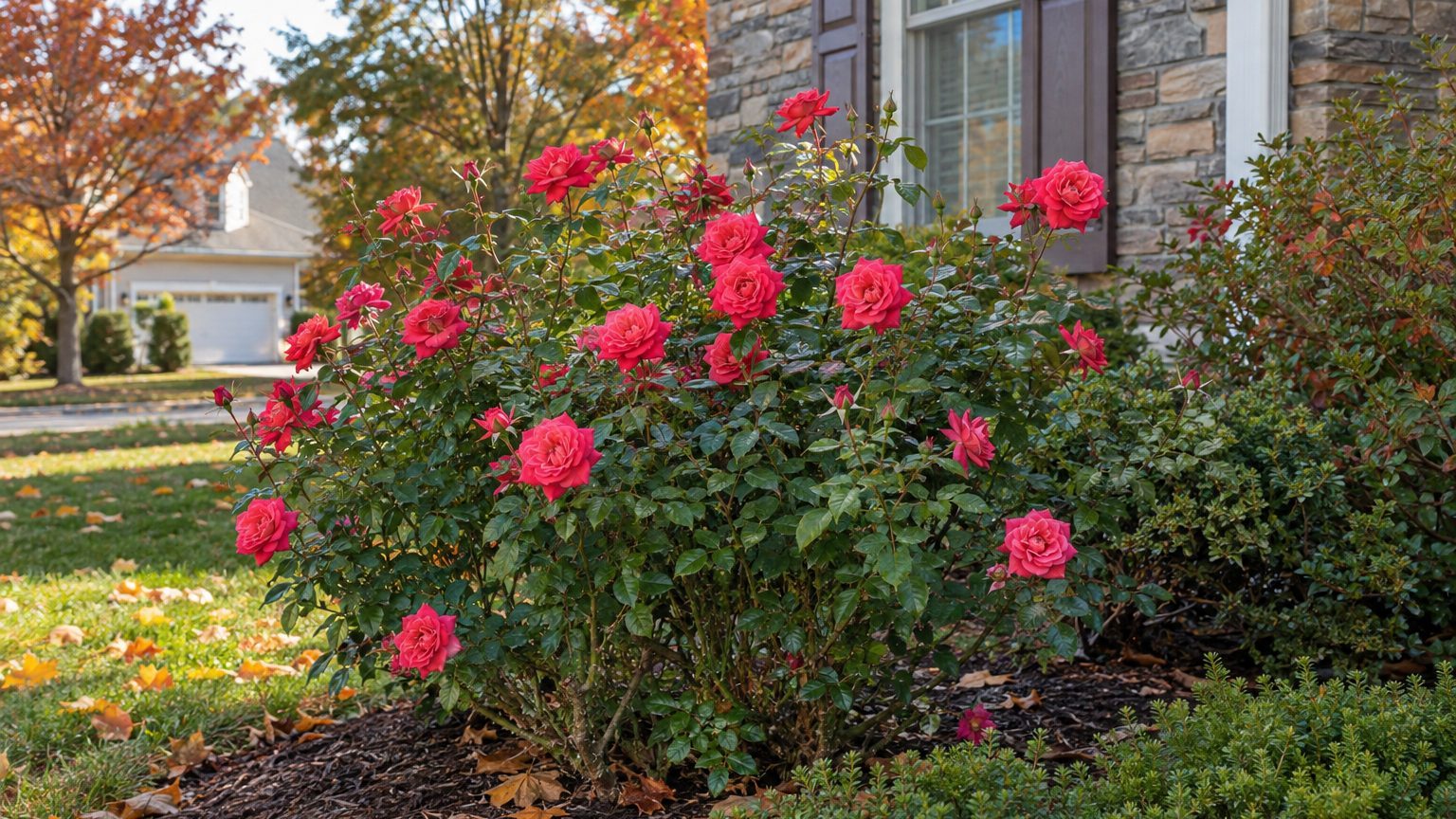
A fresh layer of bark or compost helps during the growing season, while winter protection varies with climate and rose type. Mulching roses covers both jobs, and the material, depth and timing shift with where you garden and what kind of rose you grow.
What Should You Use to Mulch Roses?
Organic material is the general rule: shredded bark, coarse compost, leaves, straw or hay. Through the growing season, a loose layer over the root zone holds moisture and keeps weeds down. In cold regions, a second, much deeper layer goes on later to shield the canes and the graft at the base.
Depth varies by climate. In Illinois, a mulch layer of about 2-3 inches is recommended. In Oregon, 2 to 4 inches around each bush is the guide for holding in moisture, and in the low desert of Arizona, gardeners layer 3–4 inches.
Winter protection follows a different logic. In Illinois, after the soil has frozen, leaves, hay or evergreen branches go on top, and in Pennsylvania a mound of well-draining compost, potting mix, clean soil or aged manure is the choice for colder areas. Repeat-blooming and once-blooming roses both benefit, though they are handled differently later.
From the almanac
Roses in your state
The dates on this page depend on where you live. Your state's page carries its frost dates, its USDA zones and the year laid out month by month.
Northeast
Southeast
- Alabama
- Arkansas
- Delaware
- Florida
- Georgia
- Kentucky
- Louisiana
- Maryland
- Mississippi
- North Carolina
- South Carolina
- Tennessee
- Virginia
- West Virginia
Midwest
Southwest
West
Pacific Northwest
Canada
How to Mulch Roses Step by Step
The work runs in a natural order through the year, starting with the soil and ending with the uncovering the following spring.
- Water deeply first, since in Florida 1 to 2 inches per week builds roots and the mulch then helps keep that moisture in the soil.
- Clear weeds and old, matted debris from around the plant so the new layer does not seal pests or disease against the canes.
- Spread an organic layer about 2-3 inches deep in Illinois, so the soil stays evenly moist without smothering the roots.
- In Missouri, mound soil or compost over the base about 10 to 12 inches high, so the bud union stays insulated.
- Pile straw or leaves over the mound, in Iowa 1 to 2 feet, so the cover shields the canes from drying winter wind.
- Pull the cover back in very early spring in Pennsylvania once lows are not forecast to fall below 20°F, so new growth is not smothered or blanched.
In Pennsylvania, begin removing the mound gently when winter lows are not forecast to dip below 20°F. In most parts of Oklahoma, uncover all rose canes by March 1.
How Mulching Changes by Rose Type
Whether a rose blooms again through summer or only once decides what you do around the mulch. Repeat bloomers flower on new wood, while once-bloomers carry the buds on last year’s canes.
That difference shows up most when you uncover plants and reach for the pruners.
| Rose type | What changes | Why it matters |
|---|---|---|
| Repeat-blooming roses | Prune after the winter cover comes off, following the buds | New wood carries the flowers, so cold-damaged canes can be cut back |
| Once-blooming roses | Keep the winter cover but hold off on spring pruning | Last year’s wood carries the buds, so cutting early removes the flowers |
| Climbing hybrid teas in Oklahoma | Cold-sensitive canes are taken off the trellis, laid down and covered eight to 10 inches deep | A climber’s canes stand up high and are not buried in a mound |
The appropriate mulch layer depends on the climate, soil and rose type. Winter cover also depends on local cold, so match the mound to guidance for your area. For a once-blooming rose, mulch freely, but leave the pruning until the flowers fade.
Common Mulching Mistakes
Piling Mulch Too Deep

More mulch is not better. In Alabama, about 2 inches is the guide, and never more than 3 inches. A heavy blanket can hold too much water against the roots and crowd out air. Pull back the excess with a rake and top up lightly when the layer thins.
Mulch Touching the Canes
Mulch heaped against the base keeps the stems damp and invites rot. In Arizona, keep mulch 4 inches away from the base of the plant. Leave a small ring of bare soil around the canes and refresh the mulch outward from there.
Uncovering Too Early
A warm spell in late winter tempts you to strip the mound, and then a hard freeze catches the soft new shoots. In Pennsylvania, the mound comes off when lows are not forecast to dip below 20°F. Take it down gradually and keep covering material nearby for a sudden cold night.
When Should You Mulch Roses?
Watch the plant and the soil. Use the rose calendar for your state to time spring mulch. In Illinois, add winter cover after the soil has frozen; in Pennsylvania, begin removing it in very early spring when winter lows are not forecast to dip below 20°F.
- Each state page lists the months for spring mulch, so check yours before the buds break.
- The same page gives the months for the winter mound and for uncovering in spring.
Common Questions
Can You Use Wood Bark or Compost to Mulch Roses?
Yes. In Oregon, a 2- to 5-inch layer of organic mulch such as wood bark or coarse compost reduces soil moisture evaporation.
Should You Prune Roses Before Mounding Them for Winter?
In Kansas, roses are pruned to 36 inches and weak or thin canes are removed before the mound goes on. For repeat-blooming roses, hard pruning waits until spring; prune once-blooming roses after they flower.
How Do You Keep Winter Mulch from Blowing Away?
In Iowa, wire mesh fencing, or a small amount of soil over the straw or leaves, holds the material in place. Anchor the cover as soon as it is piled on, since wind tends to strip loose leaves and straw from the mound.