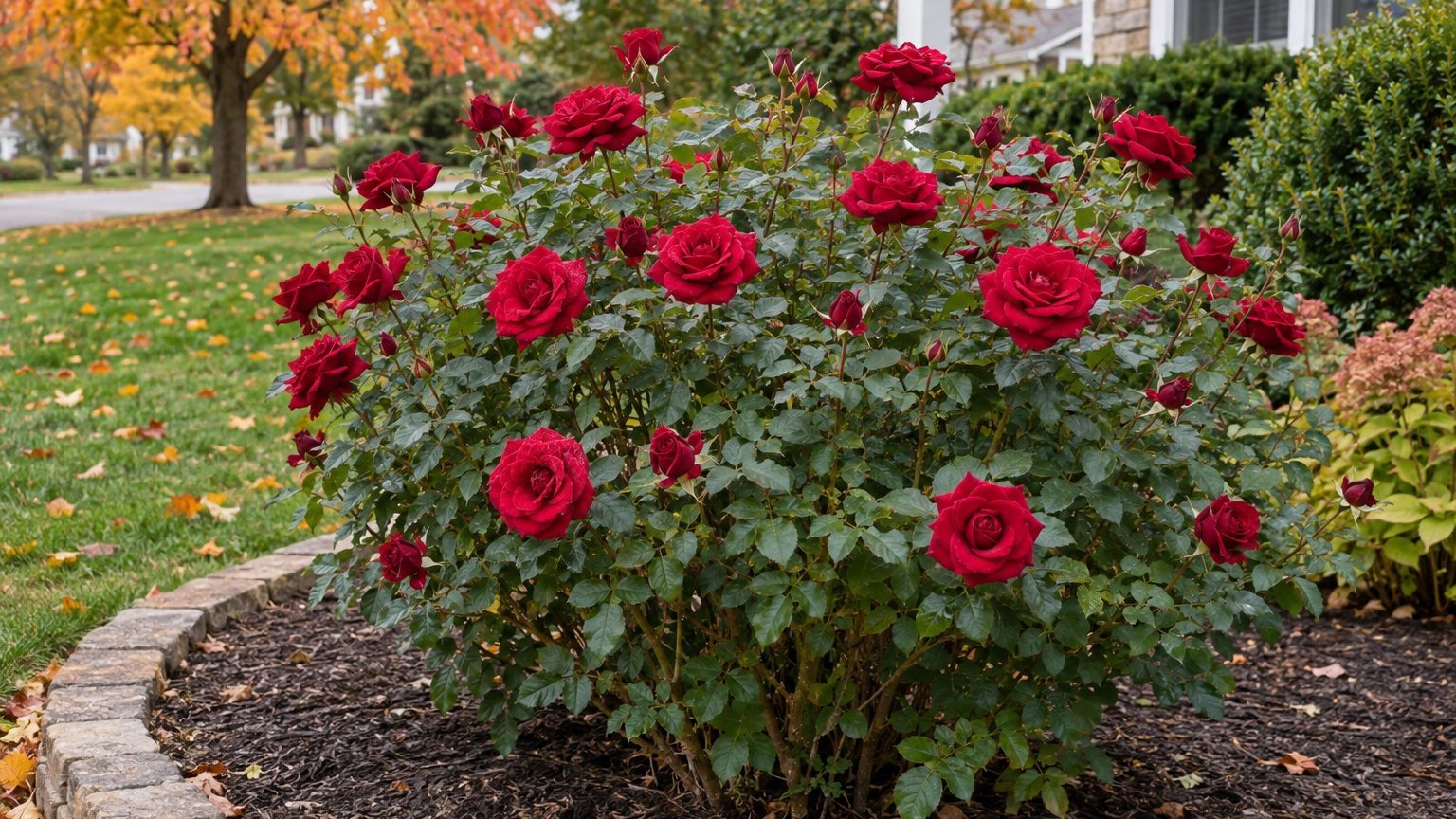
A tall, upright rose with bright red blooms that scent a front walk is what Mr. Lincoln brings to a yard. This hybrid tea grows upright and bushy, with repeat bloom from summer to fall.
What Is the Mr. Lincoln Rose?
Mr. Lincoln is a hybrid tea rose in the rose family, named in honor of President Abraham Lincoln. It grows as an upright, bushy shrub, not a sprawler or a climber, so it suits a bed better than a fence.
Height surprises people used to compact roses. This one reaches 3 to 7 feet tall and stays slim, with a 2- to 3-foot spread, so it takes up more sky than ground.
The flowers set it apart. They are bright red, velvety, fragrant and fully double, with a high center, and each bloom is 4-5 inches across. The plant repeats its flowering from summer to fall.
From the almanac
Roses in your state
The dates on this page depend on where you live. Your state's page carries its frost dates, its USDA zones and the year laid out month by month.
Northeast
Southeast
- Alabama
- Arkansas
- Delaware
- Florida
- Georgia
- Kentucky
- Louisiana
- Maryland
- Mississippi
- North Carolina
- South Carolina
- Tennessee
- Virginia
- West Virginia
Midwest
Southwest
West
Pacific Northwest
Canada
Where Does the Mr. Lincoln Rose Grow Best?
Mr. Lincoln is rated for USDA zones 5a, 5b, 6a, 6b, 7a, 7b, 8a, 8b, 9a, and 9b, and it is described as heat-resistant. Its limits show up at the cold and the hot ends of that band.
- Upper Midwest: The coldest zone in the stated range is 5a, so check your exact hardiness zone before planting.
- Mid-South and Southeast: The rose is heat-resistant, but check your exact hardiness zone before planting.
- Gulf Coast and Florida: Check your exact hardiness zone before planting near the warm end of the rose’s range.
The state selector just below this section leads to the page for your state, where the timing is worked out for where you live.
How to Care for the Mr. Lincoln Rose Through the Year
Waking Up

Use your state page to check local care timing as winter ends. Mr. Lincoln repeats its blooms from summer to fall.
Pruning
Prune in late winter to early spring. Cut out dead, diseased and crossed canes.
Flowering
Blooms repeat from summer to fall, so the work is steady, not a single burst.
Summer
This rose is heat-resistant.
Autumn
Flowers keep coming into fall, so leave the shears alone and let the late blooms finish.
Winter
Check your state page for winter-care advice at the cold end of the rose’s range.
Mr. Lincoln Rose Diseases and Weak Points
Mr. Lincoln is described as disease-resistant and heat-resistant. Resistance does not mean immunity.
| Threat | How Mr. Lincoln handles it |
|---|---|
| Disease | Resistant |
| Heat | Resistant |
The weak points are mostly about place and shape. Crossed canes should be removed during pruning.
Is the Mr. Lincoln Rose Right for Your Yard?
It suits a gardener with room for a tall, narrow plant who is willing to prune it. It is a poor fit for a low border or a spot where winters fall below its range.
- Choose it for a bed where height is welcome and the fragrant red flowers can be seen from a path or window.
- Skip it where winters run colder than its zones, or where you need a short, spreading shrub.
- Open your state’s page on this site, reached through the state selector, to confirm local pruning timing.
Common Questions
Do Mr. Lincoln Roses Fade in the Sun?
The velvety red flowers are described as not fading, even as the plant repeats its blooming through the season. The plant is heat-resistant and repeats its blooms from summer to fall.
Is Mr. Lincoln a Good Rose for Cutting?
The high-centered flowers sit on long stems, and they are fragrant, which makes them a natural choice for a vase.
Is Mr. Lincoln a Climbing Rose?
No. It is a hybrid tea with an upright, bushy habit, so it stands on its own in a bed without a trellis. Grow it where its height will not shade smaller plants.