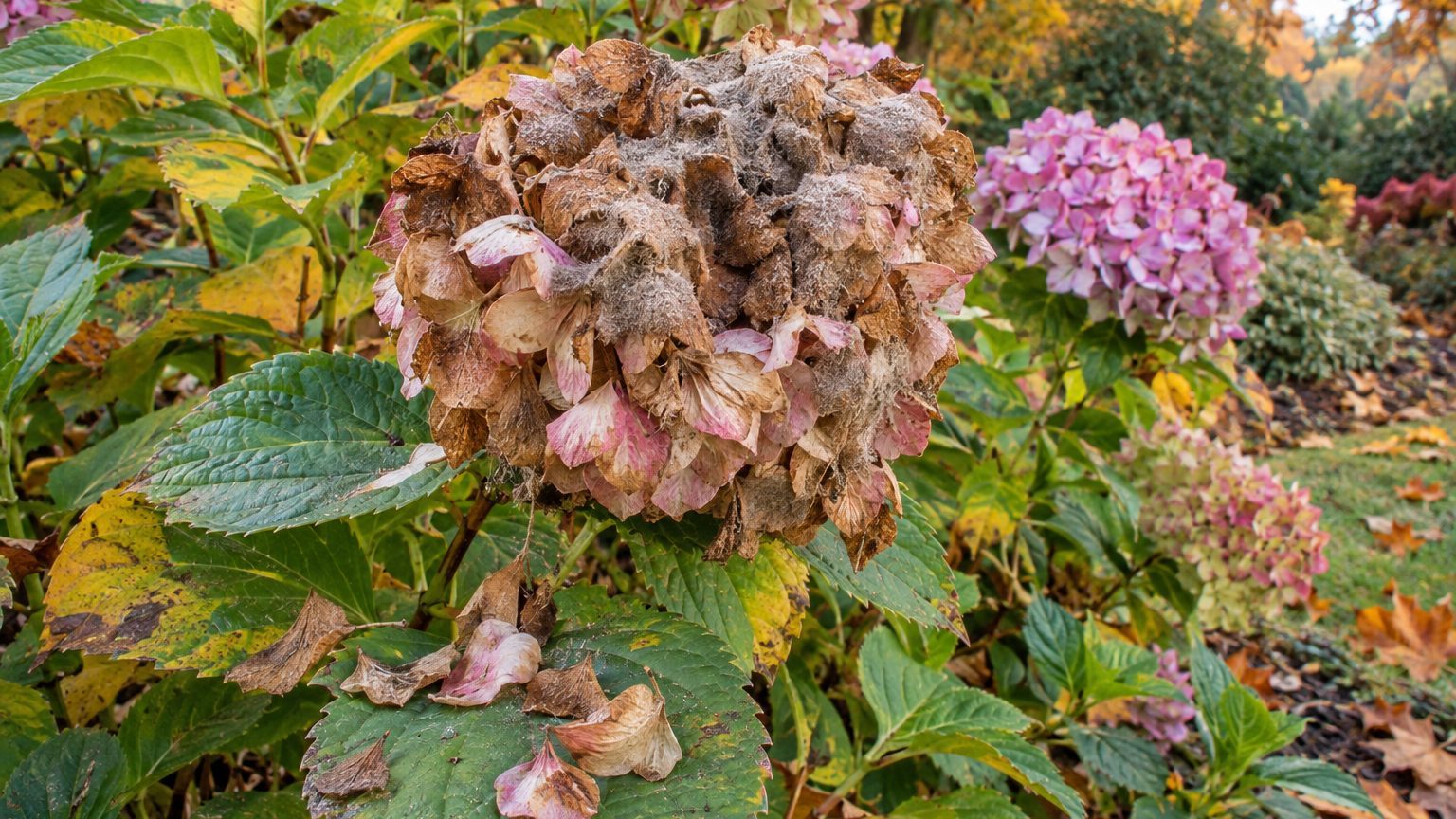
Botrytis blight is gray mold. A fungus turns damaged or aging hydrangea flowers, buds and leaves to brown mush under a fuzzy gray coat, mostly in cool, damp, still weather.
The fix is cutting out the sick tissue on a dry day, moving air through the shrub and watering at the soil. Which cuts are safe depends on your hydrangea type and zone.
Botrytis Blight: What You See

NC State Extension Gardener Plant Toolbox lists leaf spot, bacterial wilt and powdery mildew on hydrangeas, plus rust and bud blight on panicle types. The gray mold pattern below is what gardeners call botrytis blight.
- Fuzzy gray or tan mold coating flower heads, especially old blooms packed tight.
- Brown, water-soaked blotches on petals that spread until the whole cluster turns papery.
- Flower buds that brown and never open after a cool, wet spell.
- Brown patches on leaves and soft stem tips that touch dead blooms.
- A puff of gray dust when you brush an infected head on a dry day.
It appears as blooms open and again as they age, and foliage that stays wet overnight is the pattern to watch.
From the almanac
Hydrangeas in your state
The dates on this page depend on where you live. Your state's page carries its frost dates, its USDA zones and the year laid out month by month.
Northeast
Southeast
- Alabama
- Arkansas
- Delaware
- Florida
- Georgia
- Kentucky
- Louisiana
- Maryland
- Mississippi
- North Carolina
- South Carolina
- Tennessee
- Virginia
- West Virginia
Midwest
Southwest
West
Pacific Northwest
Canada
Botrytis Blight or Something Else?
Several hydrangea diseases leave brown marks, so where the damage sits matters more than its color. NC State Extension Gardener Plant Toolbox names leaf spot, powdery mildew and rust among them, with rust listed on panicle types.
Gray mold has a soft, fuzzy coat that puffs dust, and it favors flowers and buds. Run a dry finger over the spot and note the color of what comes off.
| Looks like | The sign that tells them apart |
|---|---|
| Leaf spot | Spots with a defined edge that stay on the leaf blade and never grow a fuzzy gray coat. |
| Powdery mildew | A white film that wipes off, not a gray one that puffs into dust. |
| Rust (panicle) | Small orange or rusty pustules, mostly on the underside of the leaf. |
The full leaf-spot picture is in Cercospora Leaf Spot on Hydrangeas: Signs, Treatment and Prevention. A shrub that wilts while its flowers look fine points to the roots, covered in Armillaria Root Rot on Hydrangeas: Signs, Treatment and Prevention. The rest sit in Hydrangea Diseases.
What Causes Botrytis Blight, and Where It Is Worst
The cause is a fungus that thrives where air is still and plant surfaces stay wet, and NC State Extension Gardener Plant Toolbox gives panicle hydrangea zones 3a to 8b and bigleaf 6a to 11b. It does not map this disease, so the regions below follow climate and type.
- Great Lakes and the North (Michigan, Minnesota, Wisconsin): panicle and smooth types dominate, and cool, damp late-summer weather keeps old blooms wet.
- The South (Georgia, Texas, the Carolinas): humid nights and dense shade planting hold moisture on bigleaf flowers.
- Pacific Northwest (Washington, Oregon): long, wet springs and falls give the mold plenty of time.
- Dry interior West (Arizona, Nevada): low humidity makes gray mold rare unless irrigation wets the blooms.
Your state’s page on this site sets the timing and the type advice for your zone.
How to Treat Botrytis Blight
Start this week, on a dry morning, and work in this order.
- Remove infected flowers and stem tips: cut just below the gray or brown tissue into healthy green, and bag everything.
- Cut no deeper on old-wood types: NC State Extension Gardener Plant Toolbox says bigleaf forms buds the previous summer, so hacking back removes next year’s flowers.
- Clean your pruners between cuts: wipe the blades so you do not carry spores from one stem to the next.
- Rake fallen petals and leaves: mold overwinters on debris, and it belongs in the trash, not the compost pile.
- Water at the base, in the morning: leaves and blooms should be dry well before evening.
- Ask your state extension service about fungicides: only it knows what is registered for hydrangeas where you live.
Panicle hydrangeas bloom on the current season’s growth, so they tolerate harder cutting than bigleaf. Confirm your type before you pick up the shears.
How to Prevent Botrytis Blight Coming Back
NC State Extension Gardener Plant Toolbox notes that bigleaf and panicle are both shallow-rooted and benefit from mulch, which is the first job of the year.
- Early spring: lay mulch over the roots so rain does not splash spores from the soil onto low leaves.
- Late winter, panicle and smooth types: cut back hard, since they flower on new wood, and open the center for air.
- Bloom season: water at the soil line in the morning, never over the flowers.
- Midsummer: pull weeds and thin crowded neighbors so air moves around the shrub.
- After bloom and in fall: remove spent, moldy heads and clear the ground beneath.
- After leaf drop: cut hollow stems to 12 to 24 inches, and leave healthy ones standing for nesting bees.
Bag any stem that carried mold, however tall you leave the rest.
Where this comes from
The plant facts here come from the NC State Extension Gardener Plant Toolbox, which lists bud blight on panicle hydrangea but does not describe gray mold symptoms. The symptom descriptions and steps reflect general horticultural practice.
Before you spray anything, check with your state’s extension service. It can confirm the diagnosis and tell you what is approved in your state.
Common questions
Will botrytis blight kill my hydrangea?

It mostly ruins flowers, buds and soft new growth rather than the woody shrub. If the whole plant wilts while the blooms look fine, look at the roots instead.
Can I cut off blighted flowers on a bigleaf hydrangea?
Yes, but take only the infected head and a little stem. Bigleaf sets next year’s buds on old wood, so deep cuts cost you blooms.
Does my hydrangea type change the plan?
It does. Panicle flowers on new growth and takes hard late-winter cutting, while bigleaf, oakleaf, mountain and climbing types flower on old wood. Cleanup and airflow apply to all of them.