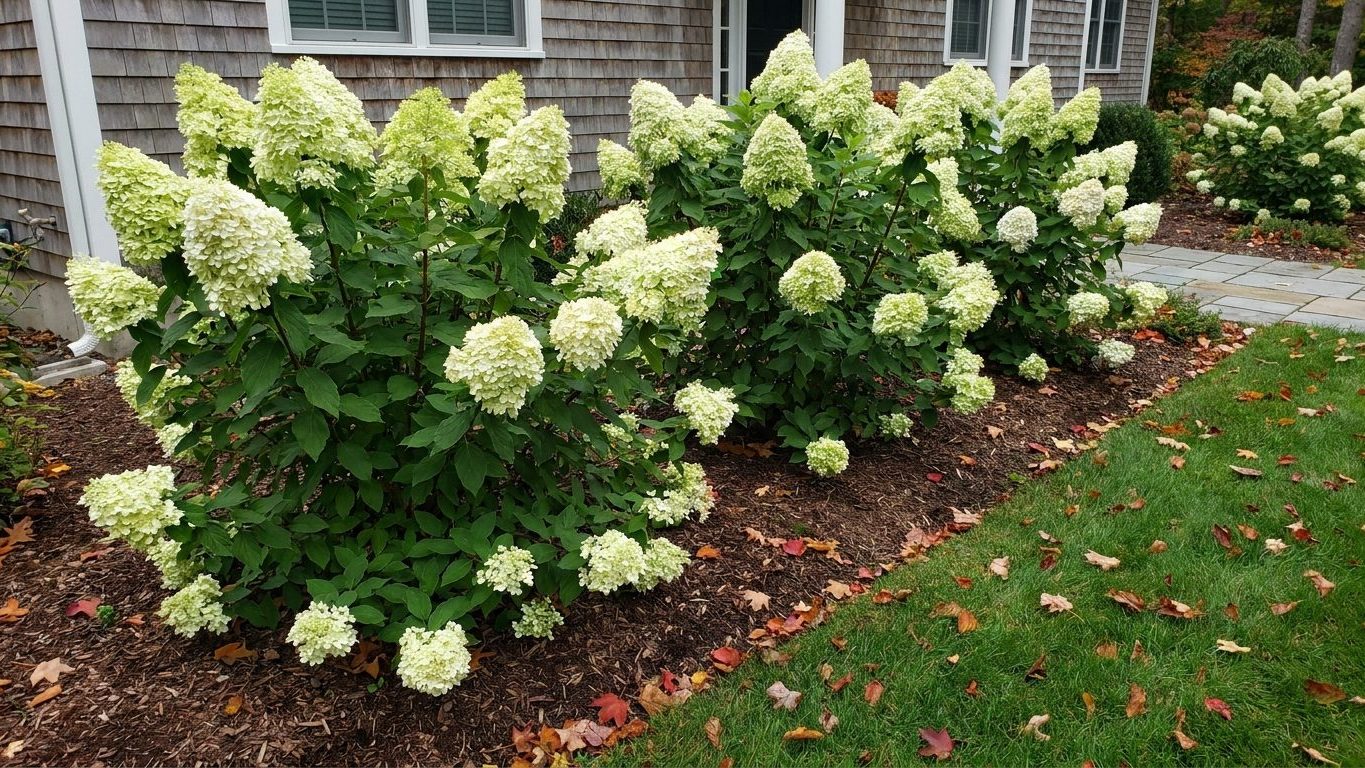
New Hampshire runs USDA zone 3b to 6a, cold enough that a bigleaf hydrangea often loses its flower buds over winter and needs a sheltered spot to bloom at all. Panicle and smooth hydrangeas, which flower on new wood, are the safer statewide bet. Everything else, from planting day to the last cut of fall, follows the state’s frost calendar.
Hydrangeas Care Calendar for New Hampshire

NOAA NCEI’s 1991-2020 Climate Normals put Concord’s last spring frost at April 16 to April 27 and first fall frost at October 13 to October 26, with the state spanning USDA zone 3b to 6a, a short frost-free run for a bigleaf hydrangea’s buds.
- Dormancy: the safe window to move or divide a plant is late fall through early spring, while it holds no leaves.
- Planting: set new hydrangeas in the ground two to three weeks after the last spring frost, once the soil has warmed.
- Early growth: buds break within a month of planting, and a late frost this early can still nip soft new shoots.
- Feeding: a light spring feeding, timed to new growth rather than the calendar, carries the plant into its bloom push.
- Pruning: cut old-wood bloomers right after their flowers fade, and prune new-wood types in late winter before growth starts.
- Mulching and cutback: pile mulch over the root zone two to three weeks before the first fall frost to give the roots insulation.
New Hampshire — the year and the numbers
- State
- New Hampshire
- USDA zones
- 3b-6a
- Last spring frost
- April 16 to April 27
- First fall frost
- October 13 to October 26
- Annual rain
- 40 in
- Lawn zone
- cool-season
- Source
- NOAA NCEI U.S. Climate Normals 1991-2020, 32F freeze probabilities · Manchester
Best Hydrangeas for New Hampshire
New Hampshire’s USDA zone 3b to 6a, per the USDA Plant Hardiness Zone Map, rules out little for hydrangeas but forces a choice about which wood carries the flowers.
Types that rebuild their flower buds on the current season’s growth shrug off a hard winter. Types that carry buds on last year’s wood are the ones that disappoint after a late frost or a cold snap.
| Kind | Verdict here | Why |
|---|---|---|
| Panicle | Reliable statewide | Blooms on new wood, so winter cold cannot erase the flowers |
| Smooth | Reliable statewide | Native to the eastern US, dies back and rebuilds its blooms each year |
| Bigleaf | Marginal, needs shelter | Buds mostly on old wood, so a hard winter or late frost can strip them before they open |
| Oakleaf | Marginal in the coldest spots | Old-wood bloomer, best against a warm south-facing wall |
| Climbing | Slow but hardy | Takes years to bloom, but tolerates the state’s winters once established |
Mountain hydrangea and lacecap forms turn up in nursery catalogs too, but the other kinds are on their own pages once you know which wood they bloom on.
When to Plant, Prune and Feed Hydrangeas in New Hampshire
Concord’s last spring frost lands between April 16 and April 27 and the first fall frost between October 13 and October 26, according to NOAA NCEI’s 1991-2020 Climate Normals, and every hydrangea task here counts forward or back from those two dates.
Planting waits for the soil to warm, pruning follows the bloom or the calendar depending on the type, and feeding rides along with spring growth rather than a fixed date.
| Task | Window here | Counted from |
|---|---|---|
| Planting | Late April into May, once soil has warmed | Two to three weeks after the last spring frost (April 16 to 27) |
| Pruning | Right after bloom for old-wood types, late winter for new-wood types | Tied to bloom time, or four to six weeks before the last spring frost |
| Feeding | Early spring, as buds break | Around the last spring frost window |
The state’s own month-by-month calendar lays out all twelve months in order, this is just the three dates that actually move the needle.
Hydrangeas Problems in New Hampshire and What Causes Them
No blooms on an otherwise healthy shrub
This is almost always old wood lost to winter. The USDA Plant Hardiness Zone Map puts parts of New Hampshire as cold as zone 3b, cold enough to freeze a bigleaf or oakleaf’s flower buds before spring even starts. Swap in a new-wood type or wrap the base each fall.
New growth blackened after a spring cold snap
A frost landing past the state’s usual last-frost window, or a late one pushing beyond April 27 in a cold pocket, catches soft new shoots off guard. The shrub usually recovers from the roots, but that season’s first flush of buds often goes with it.
Stems dying back to the ground each winter
At the coldest end of that same range, even a hardy panicle or smooth hydrangea can lose its top growth to an extreme low. That is normal for these two kinds, since both rebuild and bloom on new wood anyway.
New Hampshire North to South: How the Dates Shift
The frost dates and zone above belong to Concord, and the rest of the state spreads out from there in every direction.
- The North Country and White Mountains (higher elevation, shorter growing season): frost lingers later in spring and returns earlier in fall, so nudge every window in this guide inward by a week or two.
- The Lakes Region and central valleys (mid-state, mixed terrain): closest to Concord’s own numbers, though a low spot near water can still hold frost longer than the surrounding hills.
- The Seacoast and the southern border (lowest elevation, ocean-moderated): the mildest corner of the state, with the widest cushion between the last spring frost and the first fall frost.
Check the frost dates for your own county against the numbers above before setting any of these windows in stone.
New Hampshire Extension Offices and County Contacts
New Hampshire’s hydrangea questions eventually need a local answer, and that starts with UNH Extension, the state’s land-grant service for home gardeners.
- Your state page: the frost dates and pruning window for where you live, gathered above.
- Which ones hold up here: a deeper look at bigleaf, panicle, smooth and oakleaf hydrangeas across the state’s zones.
- What goes wrong here: the pests and diseases that follow the state’s soil and moisture, covered on its own page.
Reach the UNH Extension office nearest you before making a big pruning cut this month.
Common questions
Can bigleaf hydrangea bloom reliably in New Hampshire?
Only with help. In a zone that dips to 3b, its old-wood flower buds are exposed to winter cold and late frost, so a sheltered site and a fall mulch or wrap noticeably improve the odds.
What is the best time to plant a hydrangea in New Hampshire?
Two to three weeks after the last spring frost, once the soil has warmed, gives the roots the longest run before the first fall frost arrives.
Which hydrangea is easiest for a New Hampshire yard?
Panicle and smooth hydrangeas, both of which flower on new wood, are the least fussy choices statewide since winter cold cannot erase a bud that has not grown yet.