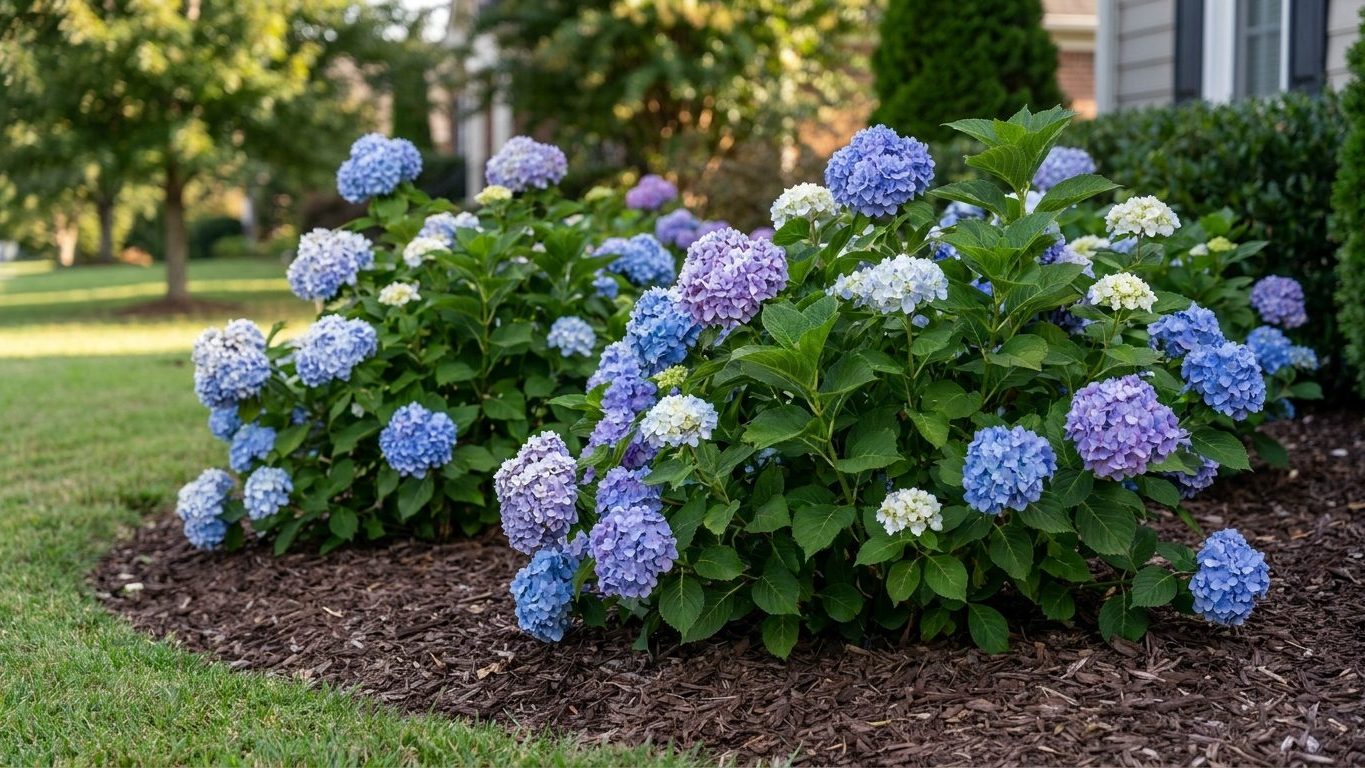
Tennessee runs from zone 5b on the Cumberland Plateau to zone 8a along the Memphis bluff, and that spread decides which hydrangea holds up and when you can safely plant one. Nashville’s frost dates set the baseline calendar for most of the state, but the far east and the high country lag behind it by weeks. Zone alone won’t tell you what to grow. The freeze dates will.
Hydrangeas Care Calendar for Tennessee

Nashville’s last spring freeze falls between March 31 and April 12, and its first fall freeze lands between October 28 and November 8, per NOAA NCEI 1991-2020 Climate Normals for station USW00013897. The USDA puts Tennessee across zones 5b to 8a, wide enough that Memphis and the Cumberland Plateau garden on different calendars.
- Dormancy: from late fall through late winter is the one stretch to move or divide a hydrangea without disturbing live roots.
- Planting: set new shrubs in the ground two to three weeks after the last spring freeze, once soil has warmed.
- Bud break: leaves emerge within a few weeks of planting, and a late cold snap before the freeze window closes can still nip young growth.
- Bloom set: old-wood bloomers set next year’s flower buds by late summer, so pruning after that point costs you the show.
- Deadheading: spent blooms can come off through summer without touching next year’s buds if you cut just below the flower head.
- Fall prep: mulch two to three inches deep goes down a few weeks before the first fall freeze to buffer root temperatures.
- Winter protection: after the first freeze passes, a loose burlap wrap protects exposed buds through the coldest stretch.
Every step above counts forward or back from those two freeze dates, not from a date on the wall calendar.
Tennessee — the year and the numbers
- State
- Tennessee
- USDA zones
- 5b-8a
- Last spring frost
- March 31 to April 12
- First fall frost
- October 28 to November 8
- Annual rain
- 51 in
- Lawn zone
- transition-season
- Source
- NOAA NCEI 1991-2020 Climate Normals, 32F freeze probabilities · Nashville
Best Hydrangeas for Tennessee
Not every kind handles Tennessee’s mix of a cold snap in early April and a humid, 90-degree summer stretch. The state’s zone 5b to 8a range, drawn from the USDA Plant Hardiness Zone Map, rules some kinds in and others out depending on where you garden.
Old-wood bloomers carry the most risk statewide, since a warm February followed by a hard April freeze can wipe out a season of flowers. New-wood types and native species shrug off that same swing.
| Kind | Flowers on | Verdict here | Why |
|---|---|---|---|
| Bigleaf (mophead) | Old wood | Mixed | Buds can freeze out in a hard April cold snap |
| Panicle | New wood | Reliable | Blooms even after winter dieback across the whole state |
| Smooth (Annabelle type) | New wood | Reliable | Native to the region and unfazed by a late freeze |
| Oakleaf | Old wood | Reliable | Native to the Southeast, tolerates the summer heat and humidity |
| Climbing | Old wood | Slow to establish | Takes years to bloom, better suited to milder pockets |
Mountain and lacecap types are close cousins of bigleaf and carry the same old-wood risk, so they’re covered on their own page rather than repeated here.
When to Plant, Prune and Feed Hydrangeas in Tennessee
The three windows that matter most all count off the same two freeze dates from NOAA NCEI 1991-2020 Climate Normals. Get the counting wrong and you either plant into cold soil or prune off next year’s flowers.
Old-wood and new-wood bloomers don’t share a pruning calendar, which is the single mix-up that costs the most blooms in Tennessee yards.
| Task | Window here | Counted from |
|---|---|---|
| Planting | Two to three weeks after the last spring freeze | Last spring freeze, March 31 to April 12 |
| Pruning old-wood types | Right after flowers fade, before late summer | Bloom drop, not the freeze date |
| Feeding | Four to six weeks after the last spring freeze | Last spring freeze, March 31 to April 12 |
Panicle and smooth types forgive a mistimed prune since they bloom on new wood regardless, but the calendar above still keeps them on schedule.
Hydrangeas Problems in Tennessee and What Causes Them
No blooms despite a healthy shrub

Old-wood bloomers set next year’s flowers by late summer, and a warm stretch in early spring can push buds out ahead of the last freeze, killing them before they open. Wait to prune until new leaves show, and check the pest-and-disease page for other causes of a bare shrub.
Leaves scorched by afternoon sun
Middle and West Tennessee summers push past 90°F with high humidity, and bigleaf leaves in full afternoon sun scorch at the edges by midsummer. Plant on the east side of a structure or under high shade, and mulch to keep the roots cool.
Wilting shrub in damp clay soil
Heavy clay soil common across Middle Tennessee holds water around the roots long after a summer storm, and a shrub planted in a low spot wilts even when the ground is soaked. Raise the bed a few inches and work in compost before you plant.
Tennessee North to South: How the Dates Shift
The freeze dates above are Nashville’s, and they shift as you move across Tennessee’s elevation and latitude.
- East Tennessee and the Cumberland Plateau: higher elevation cools the air earlier in fall and holds it longer in spring, so buds break later and new-wood types recover more reliably after a hard winter.
- Middle Tennessee (Nashville and the Highland Rim): the Nashville freeze dates apply most directly here.
- West Tennessee and the Memphis Bluff: lower elevation and a more southern position push the growing season a little earlier and later, giving bigleaf types a better shot at keeping their old-wood buds through winter.
Check with your county extension office if you sit near one of these edges, since elevation and latitude both move the calendar in ways a single state-level date range cannot capture.
Tennessee Extension Offices and County Contacts
The 5b to 8a range for Tennessee is a starting point, not a final answer for your yard. The University of Tennessee Extension and your county office confirm local conditions and pest pressure where you actually garden.
- UT Extension: the statewide office lists county contacts and publications for home gardeners.
- Your county office: soil testing and local pest alerts specific to your part of the state.
- This month’s task: check the calendar above and match it to the closest freeze date for your county.
Common Questions
Can I grow bigleaf hydrangeas in Tennessee?
Yes, but the old-wood buds carry real risk statewide. A warm spell followed by a hard freeze between March 31 and April 12 in Nashville can kill flower buds before they open, especially on the Cumberland Plateau where cold lingers longer.
When should I prune hydrangeas in Tennessee?
It depends on the type. Old-wood bloomers get pruned right after flowering fades, while new-wood types like panicle and smooth take a late-winter cut before the last spring freeze arrives.
What USDA zone is Tennessee for hydrangeas?
The USDA Plant Hardiness Zone Map places the state across zones 5b to 8a, with the Cumberland Plateau on the cold end and the Memphis bluff on the warm end of that range.