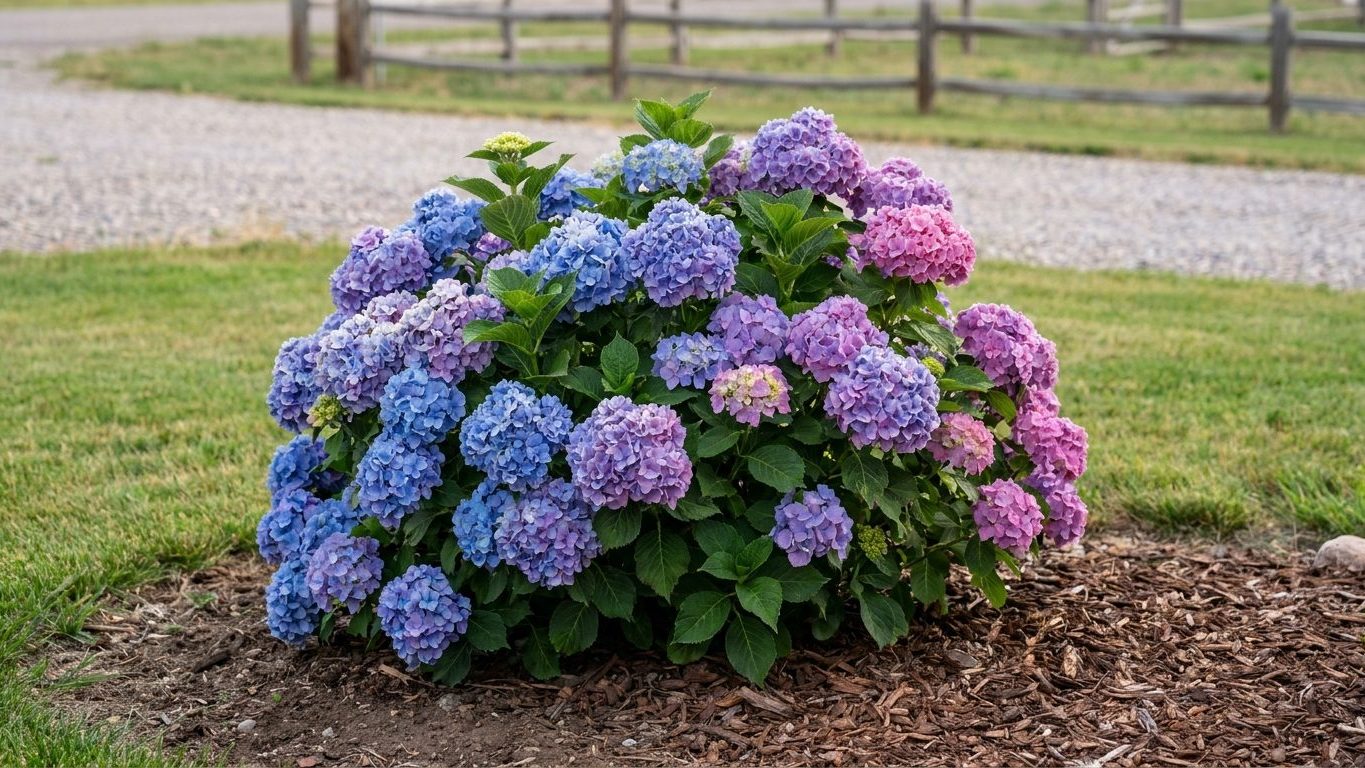
Panicle and smooth hydrangeas are the safe bet in Wyoming, planted after the last spring frost clears and fed through a frost-free stretch that runs roughly four and a half months around Cheyenne. Bigleaf types need heavy winter shelter to survive here at all. Get the frost dates right, and everything else on the calendar follows from them.
Hydrangeas Care Calendar for Wyoming

NOAA NCEI 1991-2020 Climate Normals for station USW00024018 put Cheyenne’s last spring frost between May 7 and May 18, with the first fall frost landing September 24 to October 5, and that gap decides when a hydrangea can safely live outdoors here.
- Dormancy: late winter, before buds swell, is the one window to move or divide a plant without disturbing its roots.
- Planting: after May 18, once soil has warmed and frost risk has passed, is the safer date to set new hydrangeas in the ground.
- Bud break: two to three weeks after the last frost, new leaves push out and need cover if a cold night sneaks back in.
- Bloom watch: through midsummer, panicle and smooth types color up while bigleaf buds stay the most exposed to any leftover chill.
- Midsummer feeding: six to eight weeks after planting, a first light feeding supports root growth before the heat of the season sets in.
- Fall prep: three to four weeks before October 5, mulching deep protects roots and crowns ahead of the freeze.
Above 6,000 feet the frost-free season can shrink to roughly 130 days, and frost is possible in any month, so treat these windows as a starting point rather than a guarantee.
Wyoming — the year and the numbers
- State
- Wyoming
- USDA zones
- 3a-6a
- Last spring frost
- May 7 to May 18
- First fall frost
- September 24 to October 5
- Annual rain
- 15 in
- Lawn zone
- cool-season
- Source
- NOAA NCEI 1991-2020 Climate Normals, 32F freeze probabilities · Cheyenne
Best Hydrangeas for Wyoming
The USDA Plant Hardiness Zone Map puts Wyoming at 3a to 6a, one of the coldest ranges in the Lower 48, and that single fact rules out most of the hydrangeas stacked on big-box garden center carts.
Blooming on old wood is the deciding factor. A shrub that sets next year’s flower buds in fall loses them the moment a hard freeze arrives, while a shrub that blooms on new wood each spring simply starts over.
| Kind | Verdict here | Why |
|---|---|---|
| Panicle hydrangea | Reliable | Blooms on new wood, tolerates the coldest pockets of the state’s range |
| Smooth hydrangea | Reliable | Native to cold climates, rebuilds its bloom on new wood each year |
| Bigleaf hydrangea | Risky without shelter | Blooms mostly on old wood, buds rarely survive winters this cold |
| Oakleaf hydrangea | Borderline | Needs a sheltered, south-facing spot to make it through winter |
| Climbing hydrangea | Borderline | Slow to establish, wants protection from wind and low winter sun |
Mountain hydrangea and other niche types are less common in local nurseries, and the other kinds are on their own pages with the specifics on siting and winter cover.
When to Plant, Prune and Feed Hydrangeas in Wyoming
NOAA NCEI 1991-2020 Climate Normals place Cheyenne’s last spring frost between May 7 and May 18, and every planting, pruning, and feeding date here counts forward or back from that range.
The state’s 3a to 6a hardiness range also decides pruning strategy, since old-wood bloomers and new-wood bloomers face very different odds of winter bud kill and need to be cut on different schedules.
| Task | Window here | Counted from |
|---|---|---|
| Planting | May 18 through mid-June | Two to four weeks after the last spring frost ends |
| Pruning, new-wood types | Late March to mid-April | Four to six weeks before the last frost window opens |
| Pruning, old-wood types | Right after bloom fades, midsummer | Before next year’s buds set, not tied to a frost date |
| Feeding | Early June | About three weeks after planting or bud break |
Missing the spring pruning window on a new-wood bloomer usually just delays bloom by a few weeks, but cutting an old-wood type at the wrong time can erase the whole season.
Hydrangeas Problems in Wyoming and What Causes Them
Buds killed by a late frost
NOAA NCEI’s climate normals close the spring frost window around May 18, and a cold night after that date catches tender new growth off guard, with bigleaf types losing the whole season’s flowers. Cover plants overnight when frost threatens, and see the pest and disease page for what follows.
No blooms despite a healthy shrub

A shrub that leafs out fine but never flowers is usually winter kill, not disease. Zone 3a to 6a winters snap off the old-wood buds formed the previous fall, so growth restarts each spring from the base with nothing left to bloom. A new-wood type solves this for good.
Leaf edges browned by wind and cold
Dry winter wind at elevation pulls moisture out of stems faster than roots in frozen ground can replace it, leaving leaf margins scorched once growth resumes. A windbreak or a spot against a wall cuts the damage, and deep mulch keeps root zones from swinging as wide.
Wyoming North to South: How the Dates Shift
Elevation moves these dates more than latitude does in Wyoming, and it moves them in both directions depending on where a yard sits.
- The high plains around Cheyenne (lower elevation, milder end of the state’s zone range): frost dates track closest to the May 7-18 and September 24-October 5 window, giving the longest safe stretch in the state.
- Mountain valleys and the Jackson area (higher elevation, cold end of the zone range): frost can arrive weeks earlier in fall and linger weeks later in spring, shrinking the safe window well below the state’s average.
- Basins and river valleys in between (mid elevation): dates fall somewhere between the two extremes, with cold air pooling overnight even in the middle of summer.
Check the state-by-state guide for how Wyoming’s range compares to neighboring states before picking a variety based on a national hardiness map alone.
Wyoming Extension Offices and County Contacts
University of Wyoming Extension is the state’s land-grant service, and a local county office can narrow these dates to your exact elevation and soil.
- Your state page: the frost dates and zone range for Wyoming as a whole.
- Which ones hold up here: a closer look at bigleaf, panicle, smooth, and oakleaf choices for this climate.
- What goes wrong here: pests, disease, and winter damage specific to Wyoming hydrangeas.
With the fall frost window at Cheyenne closing between September 24 and October 5, this month’s job is mulching beds and bringing potted hydrangeas in before that first cold night arrives, and a call to University of Wyoming Extension can confirm what’s already happening in your county.
Common questions
Can hydrangeas survive Wyoming winters without protection?
Panicle and smooth types generally can, since they bloom on new wood and simply regrow after a hard freeze. Bigleaf types rarely survive Wyoming’s zone 3a to 6a winters without heavy mulch or a sheltered wall to cut wind and cold.
What is the best hydrangea for Wyoming’s short growing season?
Panicle hydrangea handles the state’s cold end of the zone range and the roughly four and a half month frost-free run around Cheyenne with the least fuss, since it blooms on new wood grown after the last frost passes.
When should I plant hydrangeas in Wyoming?
Plant after the last spring frost clears, which NOAA climate normals place between May 7 and May 18 near Cheyenne, and finish before early summer heat sets in so roots have time to establish.