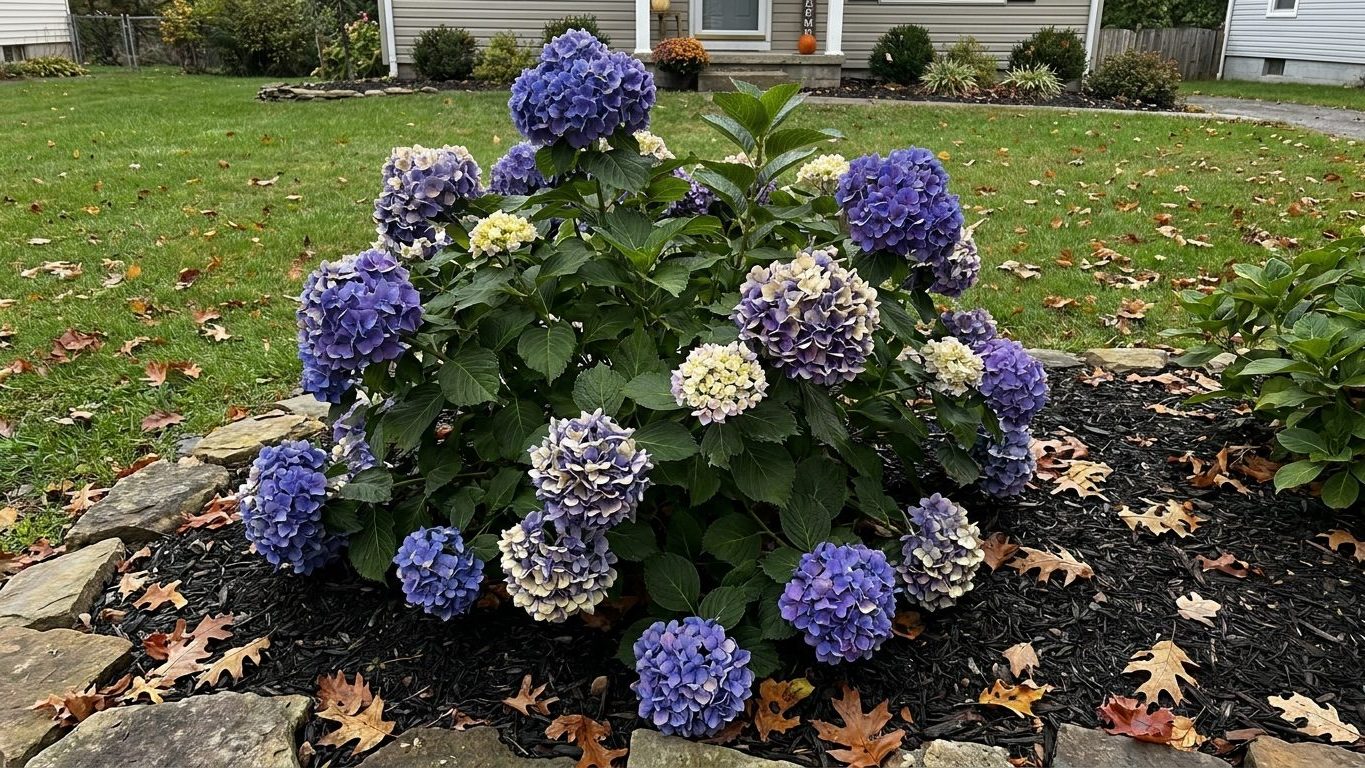
Hydrangeas grow across most of West Virginia, but the state’s USDA zones stretch from 5a in the highlands to 7a along the river valleys, so bloom time and winter survival depend heavily on where you live. Panicle and smooth types shrug off the cold. Bigleaf varieties need a sheltered spot and a mild winter to set buds reliably.
Hydrangeas Care Calendar for West Virginia

In Charleston, the last spring frost falls between April 9 and April 23, and the first fall frost arrives between October 18 and November 1, according to NOAA NCEI’s 1991-2020 Climate Normals. That stretch sets the growing season, and the state’s USDA zones run from 5a to 7a, deciding which hydrangea wood survives winter.
- Dormancy: from late fall through late winter, before the April 9 to April 23 thaw, is the one stretch to move or divide a hydrangea with roots undisturbed.
- Planting: wait two to three weeks after the last frost window closes so new roots never meet a surprise freeze.
- Bud break: right as the April 9 to April 23 window ends, watch bigleaf plants closely, since a late cold snap can kill buds already forming.
- Summer growth: between the spring and fall frost windows, water deeply once a week instead of sprinkling daily.
- Late pruning cutoff: stop cutting back panicle and smooth types by late summer, well ahead of the October window, so new growth hardens off.
- Frost prep: as the October 18 to November 1 window nears, mulch the base of bigleaf plants to shield next year’s buds.
- Winter rest: once frost settles in after November 1, let the plant go dormant and skip fertilizer until spring.
That rhythm repeats every year here, anchored to Charleston’s frost dates rather than the calendar on the wall.
West Virginia — the year and the numbers
- State
- West Virginia
- USDA zones
- 5a-7a
- Last spring frost
- April 9 to April 23
- First fall frost
- October 18 to November 1
- Annual rain
- 46 in
- Lawn zone
- cool-season
- Source
- NOAA NCEI 1991-2020 Climate Normals, 32F freeze probabilities · Charleston
Best Hydrangeas for West Virginia
West Virginia’s USDA zones run from 5a to 7a, according to the USDA Plant Hardiness Zone Map, with the higher, colder ground pulling toward 5a and the river valleys near 7a.
What matters more than the zone number is where a plant sets its flower buds. New-wood bloomers shrug off a hard winter. Old-wood bloomers can lose the whole season to one late freeze.
| Kind | Verdict here | Why |
|---|---|---|
| Panicle hydrangea | Reliable statewide | Blooms on new wood, so a hard winter never costs a season of flowers |
| Smooth hydrangea | Reliable statewide | Also a new-wood bloomer, tolerant of the state’s coldest pockets |
| Bigleaf hydrangea | Site-dependent | Blooms on old wood, so buds set the prior fall can die back where zone 5a pockets run coldest |
| Oakleaf hydrangea | Good in a sheltered spot | Old-wood bloomer, wants a warm corner away from the coldest ridges |
Reblooming cultivars and lacecap forms get their own page. What changes here is simple: how far a yard sits from Charleston’s mild valley toward a ridge two zones colder.
When to Plant, Prune and Feed Hydrangeas in West Virginia
Charleston’s last spring frost lands between April 9 and April 23, per NOAA NCEI’s Climate Normals, and that date anchors when it’s safe to plant a young hydrangea outdoors.
Pruning timing splits by bloom type. New-wood bloomers get cut back before growth starts, old-wood bloomers get cut right after the flowers fade.
| Task | Window here | Counted from |
|---|---|---|
| Planting | Two to three weeks after the thaw | April 9 to April 23 last frost |
| Pruning new-wood types | Late winter, before growth starts | Before the April 9 to April 23 window |
| Last feeding of the year | Stop by mid-August | Six to ten weeks before October 18 to November 1 |
Old-wood bloomers like bigleaf and oakleaf get pruned right after the flowers drop, not on a frost-counted date. The month-by-month calendar page covers the rest of the year in full.
Hydrangeas Problems in West Virginia and What Causes Them
No flowers on a healthy shrub

Bigleaf hydrangeas set next year’s buds the previous fall, so a spring freeze after the April 9 to April 23 window that NOAA NCEI’s Climate Normals mark for Charleston kills the flower buds while the leaves return fine. Move the plant to a sheltered wall, or switch to a reblooming cultivar covered on the “which ones hold up here” page.
Buds killed over a mild-looking winter
A single hard freeze in an otherwise mild stretch can still reach the buds on old-wood types, especially where the ground sits above the river valleys and runs closer to zone 5a. Mulch heavily by the October window and skip any fall pruning that strips protective growth.
Tender new growth burned by an early fall frost
Fertilizing or pruning too late in summer pushes soft new growth that has no time to harden before the first fall frost arrives, and that growth blackens overnight. Stop feeding by mid-August and let the plant slow down on its own.
West Virginia North to South: How the Dates Shift
West Virginia’s frost dates and zone range come from one Charleston station, but the terrain runs from river bottom to ridge in a few miles, and that changes when a hydrangea is safe to plant.
- Eastern mountains and highlands (Pocahontas, Randolph, Tucker counties): the coldest ground in the state, pulling toward the 5a end of the range, with frost lingering later into spring and arriving earlier in fall than Charleston’s dates suggest.
- Ohio River Valley and the Northern Panhandle (Wheeling, Parkersburg, Huntington): lower elevation keeps this stretch closer to the milder end of the state’s zone range, with a longer frost-free run than the mountains.
- Kanawha Valley and south central corridor (Charleston, Beckley, the coalfields): this is the reference stretch the state’s dates describe, mild river-bottom pockets sitting close to colder ridgelines.
- Eastern Panhandle (Martinsburg, Berkeley Springs, Harpers Ferry): a drier air pattern than the mountains just west, though frost still beats the river valleys to the ground.
Wherever home sits between ridge and river, treat Charleston’s dates as the middle of the range, not the whole of it.
West Virginia Extension Offices and County Contacts
Charleston’s frost dates are a starting point, not a guarantee for every yard, and county extension offices know their own hollows and ridgelines better than any statewide chart.
- WVU Extension: the West Virginia University Extension Service connects to county offices with the state’s official planting and pruning advice.
- Your county office: ask about frost patterns specific to your hollow, ridge, or valley before setting a planting date.
- The month-by-month calendar: the state’s twelve-month page breaks each of these windows down further.
This month, ease off feeding and start letting hydrangeas drift toward dormancy before the first frost window opens.
Common questions
Can hydrangeas survive West Virginia winters?
Panicle and smooth types handle the state’s 5a to 7a zone range without much fuss. Bigleaf types survive too, but they need a sheltered spot and a mild winter to keep their old-wood flower buds intact.
When is the best time to plant hydrangeas in West Virginia?
Aim for two to three weeks after the last spring frost, once Charleston’s April 9 to April 23 window has passed, or in early fall well ahead of the October 18 to November 1 first frost.
Why didn’t my hydrangea bloom this year?
The most common cause is old-wood bud loss from a late spring freeze or a winter cold snap, especially at higher elevation. The problems page above covers the fix in more detail.