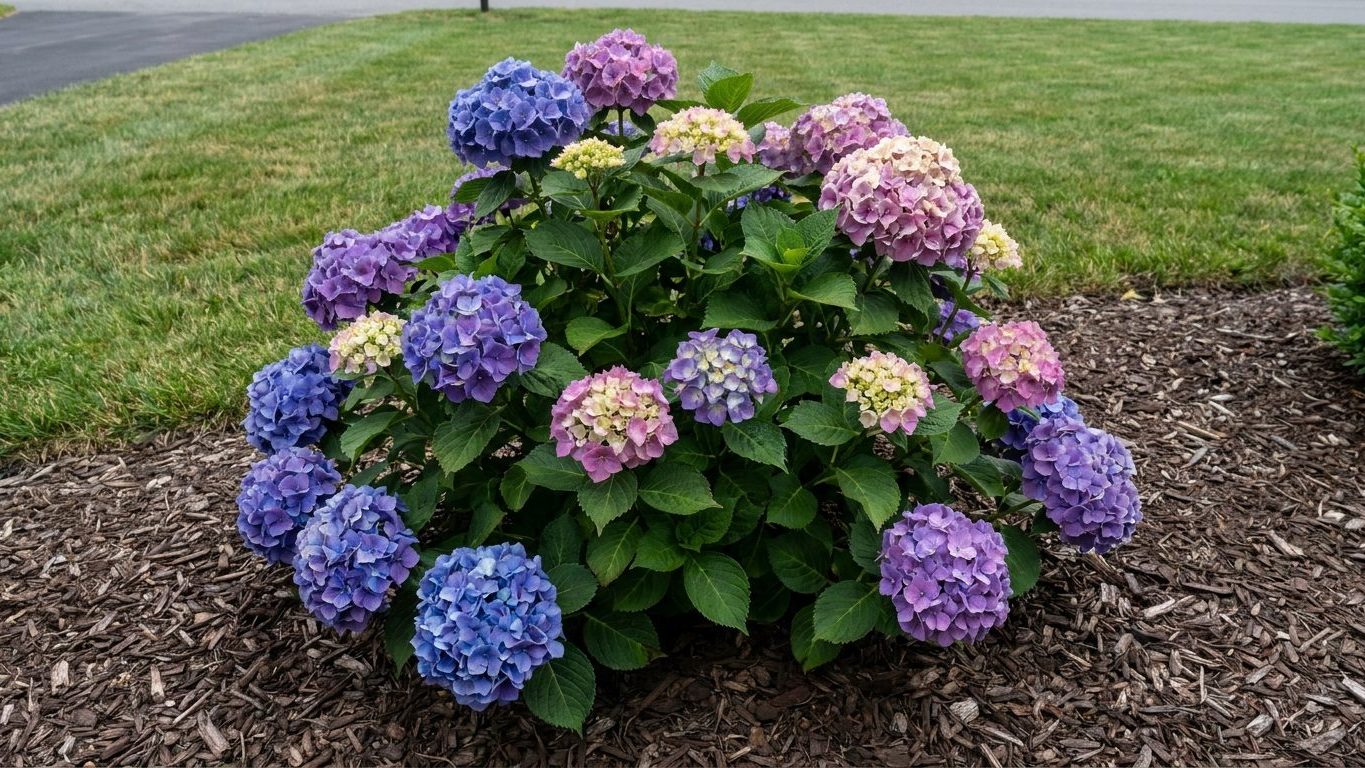
Yes, hydrangeas grow across New York, but which kind thrives depends on where in the state you garden. Panicle and smooth varieties shrug off the coldest counties, while bigleaf and mountain types need a milder pocket to keep their flower buds alive. Planting and pruning both follow the frost calendar rather than a fixed month, and Cornell Cooperative Extension is the county-level answer when a chart falls short.
Hydrangeas Care Calendar for New York

Central Park’s last spring freeze falls between March 23 and April 3, and the first fall freeze lands November 14 to November 27, according to NOAA NCEI’s 1991-2020 Climate Normals. The USDA Plant Hardiness Zone Map spans 3b to 7b across the state, and that gap between a cold Adirondack county and a Long Island backyard changes nearly every date below.
- Dormancy: from late fall through late winter, the shrub sits still, and this is the one stretch to move a plant with roots barely disturbed.
- Planting: set new shrubs two to three weeks after the last spring freeze, once soil has warmed past that March 23 to April 3 window.
- Bud break and feeding: a light feeding follows within a month of the first leaves, timed to the same spring window.
- First bloom: color shows by early summer on wood that made it through winter cover.
- Deadheading and watering: through summer heat, deep watering matters more than any calendar date.
- Mulching for winter: pile mulch two to three weeks before the first fall freeze, which lands November 14 to November 27 in the city.
- Bud protection: wrap or bank soil around tender stems once that fall freeze window has passed.
None of these dates move for a gardener two zones colder upstate, so treat the city figures as a starting line, not the finish.
New York — the year and the numbers
- State
- New York
- USDA zones
- 3b-7b
- Last spring frost
- March 23 to April 3
- First fall frost
- November 14 to November 27
- Annual rain
- 50 in
- Lawn zone
- cool-season
- Source
- NOAA NCEI U.S. Climate Normals 1991-2020, 32F freeze probabilities · New York City
Best Hydrangeas for New York
The USDA Plant Hardiness Zone Map puts New York at 3b to 7b, and that range decides more about which hydrangea survives than any pruning trick. A shrub rated for the warmer end sails through a Long Island winter and dies back hard near the Adirondacks.
Panicle and smooth hydrangeas take the state’s cold in stride because they bloom on new wood. Bigleaf and mountain types need the milder end of that range, since their old-wood buds are the ones most likely to freeze out overnight.
| Kind | Verdict here | Why |
|---|---|---|
| Panicle | Reliable statewide | Blooms on new wood, tough enough for the zone 3b end of the range |
| Smooth | Reliable statewide | Same new-wood habit, one of the hardier choices in the coldest counties |
| Bigleaf | Best in the milder south | Sets buds on old wood that freezes out well before the zone 7b end of the range |
| Mountain | Milder pockets only | Shares bigleaf’s old-wood bud habit and the same cold limits |
| Oakleaf | Borderline upstate | Leans toward the warmer end of the state’s zone range, stems can die back further north |
Climbing hydrangea and a few other less common types have their own page, since their zone needs and bloom timing differ enough to warrant a longer look.
When to Plant, Prune and Feed Hydrangeas in New York
NOAA NCEI’s Climate Normals put the city’s last spring freeze at March 23 to April 3, and the first fall freeze at November 14 to November 27. Both frame the three windows below.
Planting and mulching sit at opposite ends of the frost calendar, while pruning depends on which wood the shrub blooms on, old or new.
| Task | Window here | Counted from |
|---|---|---|
| Planting | Two to three weeks after the last freeze | March 23 to April 3 last freeze |
| Pruning old-wood types | Right after bloom fades, midsummer | Counted from bloom, not frost |
| Pruning new-wood types | Late winter to early spring, before growth starts | Counted back from the last freeze |
| Feeding | At bud break, then again by early summer | Counted from the spring freeze window |
| Mulching for winter | Two to three weeks before the first fall freeze | November 14 to November 27 first freeze |
Skip the mulching window and a mild December can undo months of growth in the coldest counties.
Hydrangeas Problems in New York and What Causes Them
No flowers on a healthy shrub

The usual cause is pruning old-wood types at the wrong point in the year, or a hard freeze that killed buds already set. Check which wood the plant blooms on before cutting anything back.
Leaf edges browned by midsummer
Afternoon sun and dry soil scorch leaves fast once heat sets in. A layer of mulch and deep, regular watering through summer usually stops the damage from spreading.
Buds killed by a late spring freeze
A cold snap after the last freeze window still catches old-wood buds off guard, especially at the colder end of the state’s 3b to 7b range. A sheltered planting spot helps more than any wrap.
New York North to South: How the Dates Shift
Frost dates and hardiness both drift as you move away from the coast and up in elevation, and none of the shift is uniform across the state.
- Long Island and the city (Nassau, Suffolk, the five boroughs): sits at the mild end of the state’s zone range, and both frost dates run latest to arrive and earliest to leave.
- Hudson Valley (Dutchess, Ulster, Orange): a middle ground, cold enough some winters to push old-wood buds past what they can survive.
- Adirondacks and North Country (Essex, Franklin, St. Lawrence): the coldest corner of the 3b to 7b range, where spring freeze lingers weeks past the city’s window.
- Western New York and the Lake Erie shore (Erie, Chautauqua, Niagara): lake effect softens the coldest nights but piles on snow load that can snap unprotected stems.
The state page’s frost-date lookup narrows this down to a county, which matters more here than almost anywhere else.
New York Extension Offices and County Contacts
New York’s 3b to 7b range is a starting point, not a verdict for one yard. Cornell Cooperative Extension, the state’s land-grant service, keeps county-level answers close to home.
- Your state page: the frost dates and the pruning window where you live.
- Which ones hold up here: a deeper look at variety choices by region.
- What goes wrong here: pests and disorders specific to New York’s climate.
Check the county office’s calendar before the next freeze window closes.
Common questions
Can hydrangeas survive New York winters?
Most can, but the type matters. Panicle and smooth hydrangeas handle the coldest counties without much trouble, while bigleaf and mountain types do best south of the Adirondacks, closer to the warmer end of the state’s 3b to 7b range.
When should I prune hydrangeas in New York?
It depends on the wood. Old-wood bloomers like bigleaf get pruned right after their flowers fade in midsummer, while new-wood types like panicle and smooth are cut back in late winter, before growth starts again.
What’s the best hydrangea for cold New York winters?
Panicle and smooth hydrangeas are the safer bet statewide, since both bloom on new wood each year and don’t depend on buds surviving a hard freeze. Bigleaf types are riskier the further north or upstate you garden.