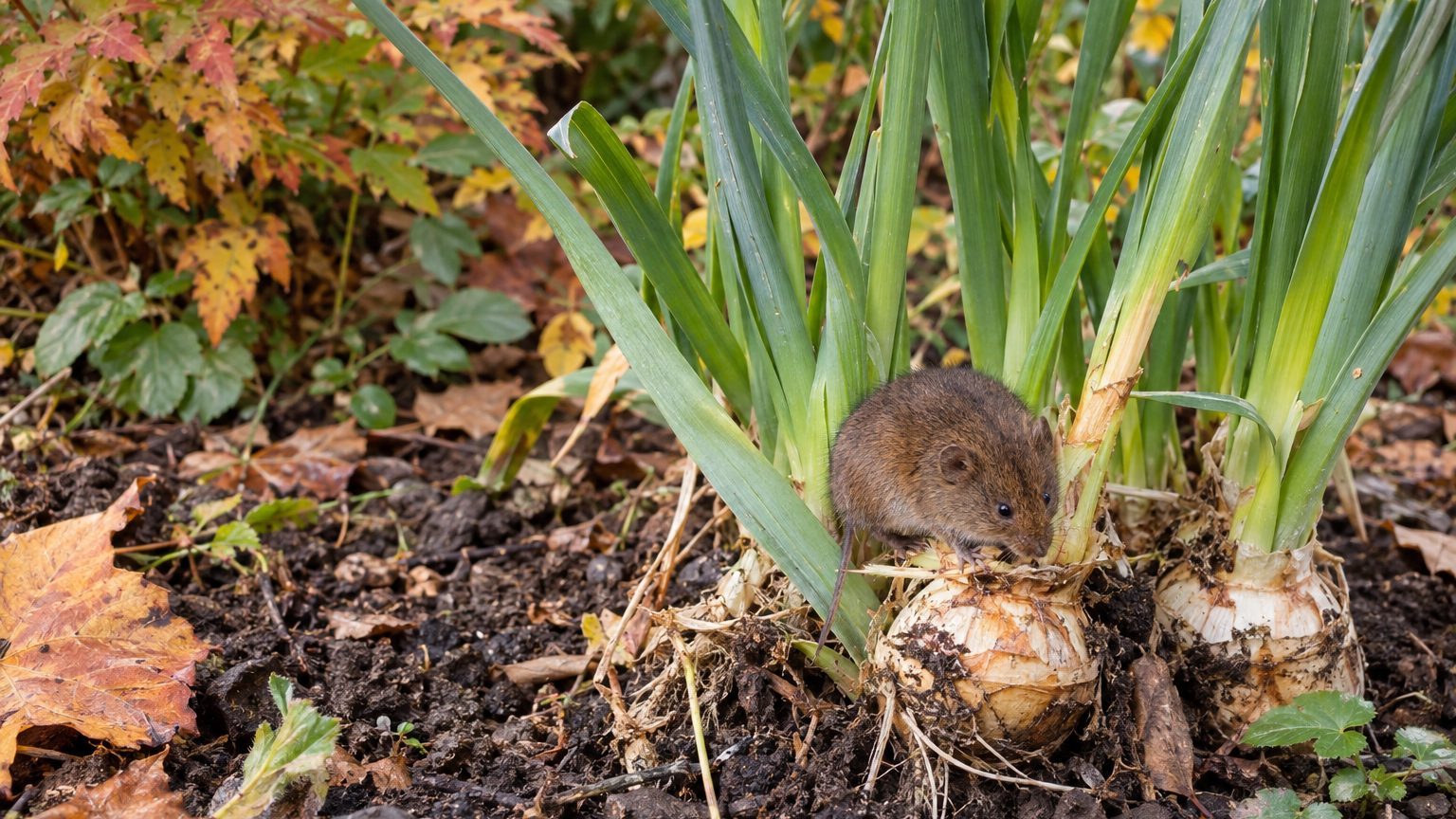
Bulbs that never came up, with little trails and holes in the soil where they were planted, usually point to voles working underground. These small rodents go after tulips and crocuses especially. Spotting the signs early, then cutting off their cover and their access, is what protects next year’s planting.
Voles: What You See

Most vole signs show up in the soil and on the bulbs themselves.
- Little trails or mounds in the soil, with small holes here and there, mark where voles come and go.
- Bulbs that fail to sprout or vanish completely can reveal feeding that happened out of sight underground.
- Melting snow can reveal a criss-cross network of runways in the lawn, which is how Pennsylvania homeowners often discover meadow voles.
- Voles are smaller than moles, about the size of a mouse.
- Pine voles are reddish brown and 2-4 inches long, and their damage stays underground with no surface runways.
- In Nebraska, individual tooth marks may be about 1/16-inch wide. They may be approximately ⅜-inch long.
Any of these near a bed of tulips or crocuses is a good reason to look closer.
From the almanac
Bulbs in your state
The dates on this page depend on where you live. Your state's page carries its frost dates, its USDA zones and the year laid out month by month.
Northeast
Southeast
- Alabama
- Arkansas
- Delaware
- Florida
- Georgia
- Kentucky
- Louisiana
- Maryland
- Mississippi
- North Carolina
- South Carolina
- Tennessee
- Virginia
- West Virginia
Midwest
Southwest
West
Pacific Northwest
Canada
Voles or Something Else?
Tunnels in a bed are not proof of voles. Moles leave similar trails and mounds, and the two animals often get blamed for each other’s work.
The bulbs tell the story. A mole is a meat-eater, so chewed or missing bulbs and roots point to a plant eater.
| Looks like | How to tell them apart |
|---|---|
| Moles: tunnels and mounds running through the bed | Moles eat meat, so bulbs eaten or gone from the tunnel route mean voles. A vole is also smaller than a mole, about the size of a mouse. |
Both can be present at once. Voles are opportunists and travel through tunnels that moles dug earlier, which gives them a ready path to flower bulbs and other roots.
What Causes Voles, and Where It Is Worst
Voles settle where the ground is moist and cool and where cover hides them. Garden beds with thick mulch, tall grass, brush piles and fallen debris give them exactly that. They tunnel under mulch to feed on roots and stems, and they will eat just about any kind of plant.
They stay active all year. In North Carolina, feeding can become particularly destructive in fall and winter, when voles burrow beneath the soil to stay warm. In Pennsylvania, voles store seeds, tubers, bulbs and rhizomes in late summer and fall, so a bed of bulbs makes a handy pantry.
Numbers can jump fast. Prairie and meadow voles normally have 5 to 10 litters per year, and populations are often cyclic, climbing from 10 to 250 voles per acre. In Nebraska, breeding runs through most of the year with peaks in spring and fall. Dense cover and mulch make a yard more appealing to voles.
How to Treat Voles
Treatment starts with finding where they work, then removing what shelters them and protecting what is left.
- Look over the beds for fresh trails, mounds and small holes, so that you know which plantings are being visited.
- Pull mulch back from bulb beds and clear fallen debris, so that the tunnels lose their cover.
- Replant lost tulips and crocuses inside cages or planting-hole liners of hardware cloth with openings of 1/4 inch or less, so that voles cannot squeeze through and the roots can still grow out.
- Set wire cylinders 18 to 24 inches high into the ground around young tree trunks, so that meadow voles cannot girdle the bark.
Leaves on surviving bulbs stay until they turn yellow.
How to Prevent Voles Coming Back
Voles return to yards that stay comfortable for them, so prevention follows the seasons.
- Clear brush piles and cut down tall grass and dense vegetation near the beds to remove shelter.
- Use mulch only where it is really needed and keep beds clear of fallen leaves and debris.
- Keep grass well mowed beside gardens and around the base of trees to reduce cover.
- In Pennsylvania, look for runways after the snow melts; they show where meadow voles traveled under the snow.
- Keep cover from building up again along bed edges and fences.
Daffodils and alliums are generally more resistant to vole damage because of their unappealing taste.
Where This Comes From
Voles favor cool, moist beds that provide dense cover and easy access to roots and bulbs.
Common Questions
Do Voles Eat Daffodils?
Daffodils are generally more resistant because voles find them unappealing, and the same goes for alliums. Daffodils are also poisonous to rodents and deer, so they make a safe choice in beds where voles are a worry.
When Is Vole Damage to Trees Worst?
In Nebraska, voles usually damage woody plants from late fall through early spring. In Pennsylvania, bark damage is generally most severe in winter, when other food sources are limited.
Do Voles Eat Seeds and Young Plants Too?
They do. Voles clip off young plants and dig up seeds, and they can damage or eat garden plants and vegetables as well as flower bulbs. They also gnaw the roots of trees and shrubs.