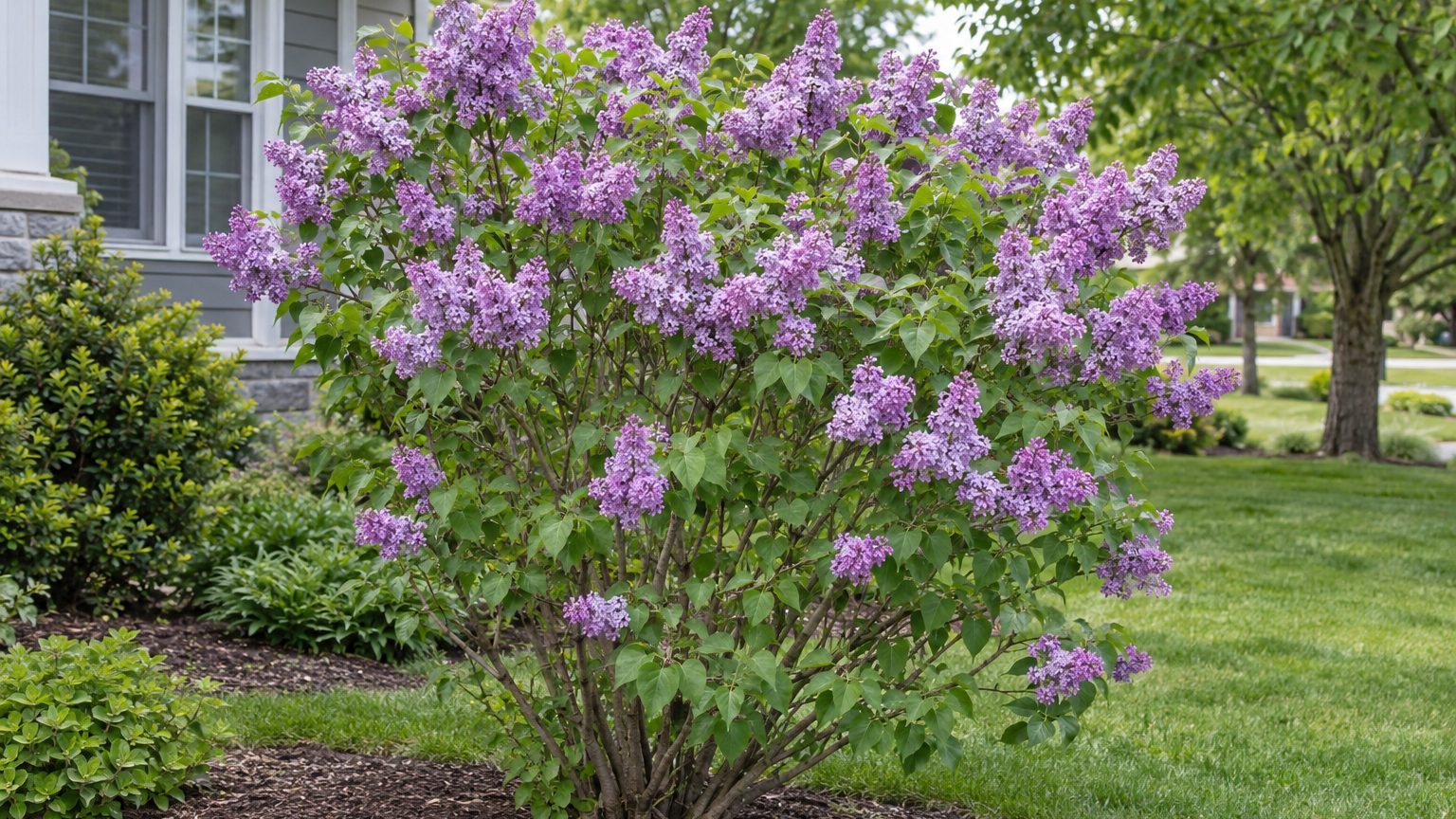
Persian lilac is the one that fills a back corner with pale violet flowers in spring while staying smaller than the old-fashioned common lilac. It is a graceful, arching shrub that tolerates summer heat better than most lilacs, which opens the door in places where other lilacs sulk.
What Is the Persian Lilac?
Persian lilac (Syringa persica) is a deciduous shrub or small tree in the olive family, native across a broad region from Afghanistan to northern China. Its form is upright or globose, with slightly arching branches that give it a loose, fountain-like look.
The flowers open in spring as 2-3″ panicles on the previous season’s growth. Colors run pink, purple/lavender and white, and the fragrance draws butterflies.
What sets it apart is size and heat tolerance. It is smaller and more heat tolerant than common lilac (S. vulgaris), and it shrugs off deer and urban conditions.
From the almanac
Lilacs in your state
The dates on this page depend on where you live. Your state's page carries its frost dates, its USDA zones and the year laid out month by month.
Northeast
Southeast
- Alabama
- Arkansas
- Delaware
- Florida
- Georgia
- Kentucky
- Louisiana
- Maryland
- Mississippi
- North Carolina
- South Carolina
- Tennessee
- Virginia
- West Virginia
Midwest
Southwest
West
Pacific Northwest
Canada
Where Does the Persian Lilac Grow Best?
Persian lilac is hardy in USDA zones 4a, 4b, 5a, 5b, 6a, 6b, 7a, 7b, so it covers a wide band across the country. Its tolerance of heat gives it an edge over common lilac toward the warm end of that band, though soggy soil and stagnant air cause trouble anywhere.
- Upper Midwest and Northern Plains: In this region, compare your site with the plant’s listed hardiness zones and choose well-drained soil.
- Mid-Atlantic and the Ohio Valley: Good air circulation and well-drained soil matter in this region.
- Upper South: Its heat tolerance can help in warm areas, but it still needs good drainage and air circulation. Avoid soggy, wet soil and keep good air circulation around the shrub.
- Gulf Coast and Deep South: Compare your location with the plant’s listed hardiness zones before planting.
The state selector just below this section leads to the page for your own state, where the local timing for your yard is laid out.
How to Care for the Persian Lilac Through the Year
Bloom Season

Spring is the show. Flowers form on the previous season’s growth, so everything you see opening was set the year before.
Plant Persian lilac in full sun and well-drained soil.
Pruning After Flowering
Prune right after the flowers fade to preserve growth that can carry future blooms. Cutting in fall, winter or early spring removes the buds that would have opened.
Aim to keep the center open so air flows through the branches. Persian lilac is very susceptible to powdery mildew, so keep the center open and air flowing.
Summer
Persian lilac is low maintenance and handles heat well, so summer asks for little. Water during dry spells so the soil stays moist, but never let it sit soggy, because it cannot tolerate soggy, wet conditions.
Fall
The shrub performs best in organically rich, moist, neutral to slightly alkaline soil with good drainage.
Winter
In zones 4a through 7b, the plant is built for winter cold, and the buds for next spring are already formed. Leave the branches alone. Resist the urge to trim, since each cut now removes flowers.
Persian Lilac Diseases and Weak Points
Persian lilac is very susceptible to powdery mildew. Prune to keep the center open and air flowing.
Its strengths are the ones you notice at the garden center. It stands up to deer, heat and the stresses of city yards.
| Threat | How Persian handles it | What helps |
|---|---|---|
| Powdery mildew | Very susceptible | Prune to keep the center open |
| Deer | Resistant | Resistant |
| Heat | Tolerant, more than common lilac | Full sun, good drainage |
| Urban conditions | Tolerant | Good air circulation |
Soggy soil is the other weak point. Persian lilac cannot tolerate soggy, wet conditions, so choose well-drained soil.
Is the Persian Lilac Right for Your Yard?
It suits a sunny spot with room to spread, since the shrub grows 4-8 feet tall and 5-10 feet wide. It rewards a gardener who wants fragrance without much fuss, and it fits poorly where soil stays wet or space is tight.
- Choose it for a sunny border, a loose screen or a corner that needs spring fragrance.
- Skip it for shady lots, soggy low spots or small beds where a 5-10 foot spread would crowd out neighbors.
- Open your state’s page from the selector above to see the timing that fits your yard before you buy.
Common Questions
Does Persian Lilac Bloom as Heavily as Common Lilac?
It carries a mass of flowers in season in 2-3″ panicles.
Can You Grow Persian Lilac in a Hot Climate?
It copes with heat better than common lilac, so it is a reasonable try in warm areas up through zone 7b. Compare your location with the plant’s listed hardiness zones before planting.
Why Is My Persian Lilac Covered in White Powder?
Persian lilac is very susceptible to powdery mildew. Thin the center of the shrub right after bloom so air can move through.