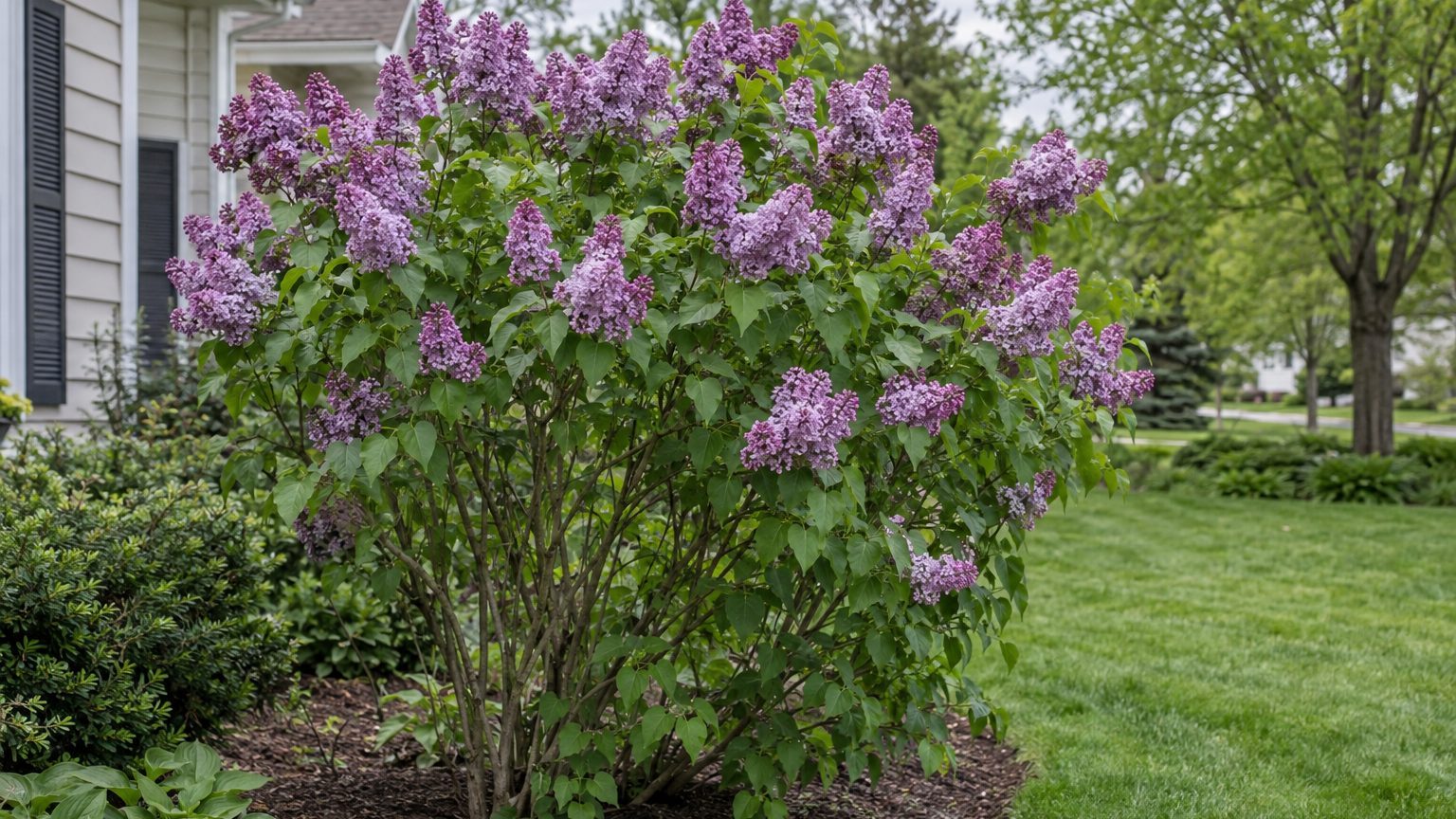
A lilac in full bloom, with its scent drifting across the front yard in late spring, makes many homeowners want one shaped like a small tree. A few true tree lilacs exist, and common lilacs can be trained toward that look. Size, sun, soil and pruning decide how well a lilac tree does in your yard.
Which Lilacs Grow as Trees?
Only a few lilacs form a tree on their own, and the Japanese tree lilac (Syringa reticulata) is the usual choice. Its height depends on where it grows. In Nebraska it reaches 25 feet, while in California it can become a small tree of 30 feet.
The Pekin lilac is the other true tree form. In Montana it grows to a 15- to 25-foot tree, grows more vigorously than the Japanese tree lilac and has peeling bark that holds interest after the flowers are gone.
Common lilacs are large shrubs, but you can train one to a single trunk. In Florida, a lilac trunk is often trained fairly straight to 10 feet before it branches into a stiff, upright, rounded head.
From the almanac
Lilacs in your state
The dates on this page depend on where you live. Your state's page carries its frost dates, its USDA zones and the year laid out month by month.
Northeast
Southeast
- Alabama
- Arkansas
- Delaware
- Florida
- Georgia
- Kentucky
- Louisiana
- Maryland
- Mississippi
- North Carolina
- South Carolina
- Tennessee
- Virginia
- West Virginia
Midwest
Southwest
West
Pacific Northwest
Canada
How Do You Care for a Lilac Tree?
Lilac tree care comes down to light, soil, a clean trunk and steady pruning, done in the order below.
- Choose a spot with plenty of direct sun, so that flower buds set for the following spring. In Wisconsin, lilacs need at least 6 hours of direct sunlight a day to set flower buds for the following spring.
- Plant in loam, silt loam or silty clay loam, so that roots find the soil texture these lilacs favor. Late lilac does best on those soils where annual precipitation falls in a moderate range, neither very dry nor very wet.
- Stake and train one straight trunk while the plant is young, so that the rounded head forms high enough to walk under. Florida growers aim for a clear trunk up to 10 feet.
- Pull or cut suckers at the base as they appear, so that the plant’s energy goes into the trunk and the head instead of a thicket of shoots.
- Prune right after the flowers fade, so that you do not remove next year’s buds. For a trained shrub lilac in Iowa, remove the oldest, largest branches to within 6 to 8 inches of the base.
- Keep the head open and balanced by removing crossing and crowded branches, so that light and air reach the center and the shape stays tidy.
Renewal is a slow habit, not a yearly chore. In Iowa, the oldest wood comes out every 3 to 5 years, which keeps new stems coming and the plant from getting overgrown. A common lilac you want to keep compact does well pruned between 6 and 8 feet tall in Utah.
How Do Tree Lilacs Differ from Shrub Types?
The types are not interchangeable. Some need room overhead and some stay low, and one blooms well after the rest. Matching the type to the space saves years of hard pruning.
| What changes | Why it matters |
|---|---|
| Japanese tree lilac reaches 15-20 feet tall and 15 feet wide in Nebraska | Plan for a small tree with a wide crown, not a hedge plant |
| Pekin lilac grows as a 15- to 25-foot tree in Montana, with peeling bark | Faster growth than Japanese tree lilac and bark that gives interest outside bloom season |
| Common lilac is an upright shrub, 8-15 feet tall and 6-15 feet wide in Nebraska | Takes training to a single trunk and responds well to pruning |
| Miss Kim grows 8 or 9 feet tall in Alaska and is slow growing | Grouped with the dwarf lilacs, so it suits tighter spaces |
| Preston lilac, mostly late blooming, flowers 2 weeks or more after common lilacs in Oregon | Stretches the lilac season after the common types have finished |
For a true tree shape with little pruning, start with a Japanese tree lilac or a Pekin lilac. For a smaller yard, a slow-growing type like Miss Kim keeps the lilac look without the height.
Mistakes to Avoid with Tree Lilacs
Planting in Too Much Shade

Lilacs can tolerate moderate shade. But a lilac planted in deep shade grows leaves and skips flowers, because the buds need strong light to form. Move the plant, or cut back nearby growth, until it gets stronger light.
Letting It Outgrow Its Spot

A common lilac left alone can top 15-20 feet in Nebraska, and at that size it may have overgrown its location. Pruning is far easier on a young plant than on a giant. Pick a type that suits the space, then prune after bloom when it needs shaping.
Cutting Back Too Hard
Lilac wood needs 3 or more years of age before it blooms, so cutting everything at once can mean a bloomless spring. The gentler route is to take the oldest stems out gradually. In Nebraska, young plants may lose only 2 or 3 stems at a time, which keeps flowers coming on the older wood that remains.
When Should You Prune a Lilac Tree?
The sign is the flowers. Once the last clusters brown on the branches, the plant has finished its show and you can prune. Waiting longer risks cutting off buds for next spring.
- State lilac pages give the pruning months for that state, so open yours when the blooms start to fade.
- Each state page also notes how local climate shifts bloom, so you can match your pruning to your own yard.
Common Questions
How Tall Does a Common Lilac Get?
It depends on the place and the pruning. In Minnesota, common lilacs will eventually grow about 10-12 feet tall, and in Montana they typically stay under 10 feet. Without pruning, a common lilac can be taller than expected.
Is There a Lilac for a Small Yard?
Yes, shorter cultivars exist. In Nebraska, Miss Kim may grow to 5 to 8 feet, while the tree lilac can reach 25 feet. Because it grows slowly, it stays in scale with a small front yard.
Why Is a Lilac Tree Not Blooming?
Look at the light and at the stems. A plant surrounded by taller trees, with plenty of leaves but few buds, usually needs more sun. A young plant whose stems are all new may simply need more time, since flowers come on older wood.