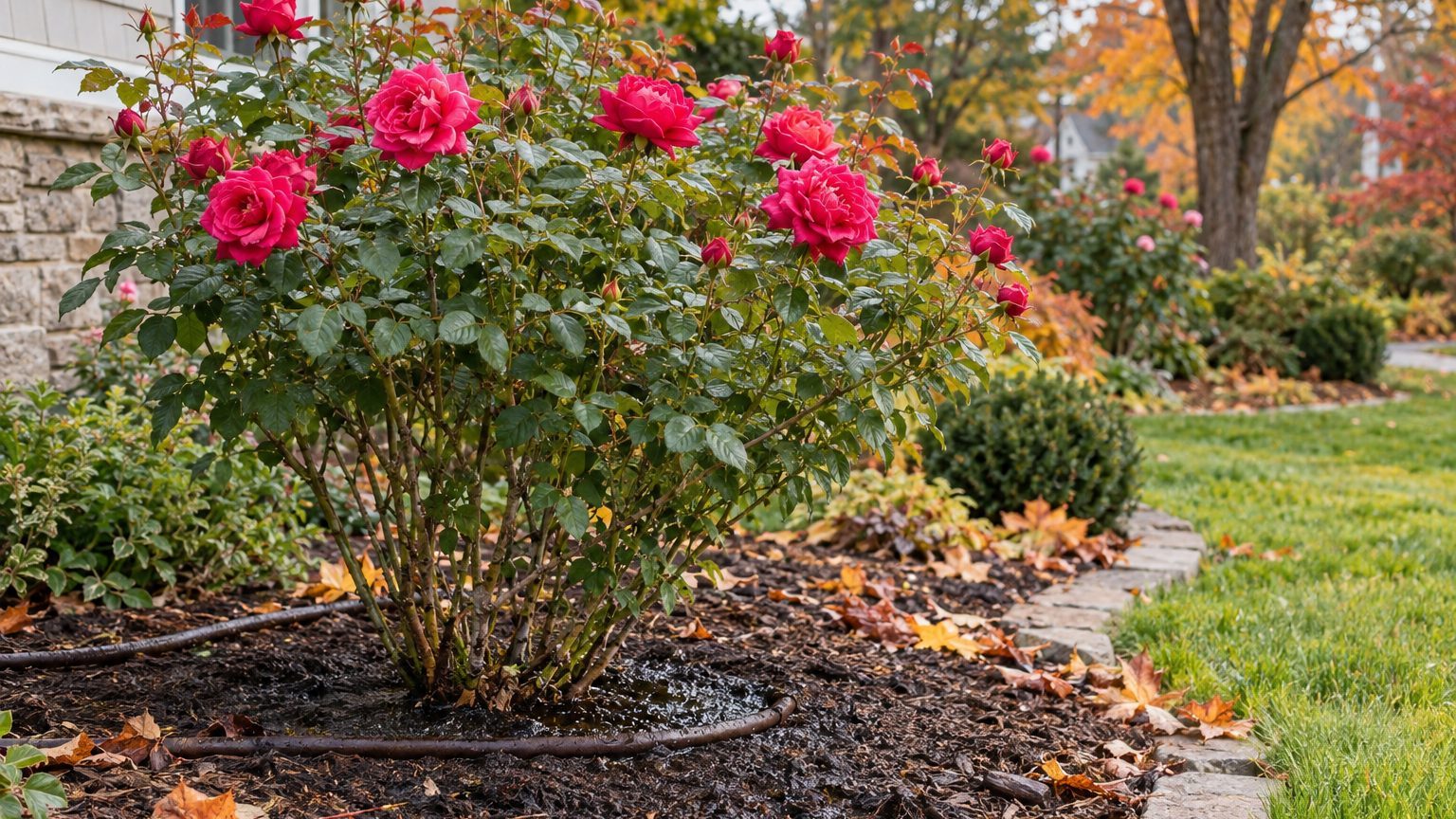
A quick pass with the sprinkler makes a rose bed look watered, but the soil under the surface can stay bone dry. Roses drink deeply and in quantity, and the roots do their work where you cannot see them. Watering roses well comes down to how far the water travels and how long the soil gets to dry before the next soak.
How Much Water Do Roses Need?
Roses need a generous, deep soak rather than frequent light sprinkles. In Ohio, roses enjoy about 1-2” of water per week.
Soil texture, summer heat, wind, rainfall and the age of the plant all push the amount up or down. A rose in full leaf and bloom uses far more than one resting in winter, and a sandy bed empties faster than a clay one.
The state selector just below this section leads to the page for your state, where the local timing is laid out.
From the almanac
Roses in your state
The dates on this page depend on where you live. Your state's page carries its frost dates, its USDA zones and the year laid out month by month.
Northeast
Southeast
- Alabama
- Arkansas
- Delaware
- Florida
- Georgia
- Kentucky
- Louisiana
- Maryland
- Mississippi
- North Carolina
- South Carolina
- Tennessee
- Virginia
- West Virginia
Midwest
Southwest
West
Pacific Northwest
Canada
How to Water Roses

The gestures below follow the order you would naturally do them in, from checking the weather to letting the soil dry down a little.
- Check the rainfall first, so that you do not add water the sky already supplied. In Maryland, the advice is to water roses when less than 1” of rain falls in a week.
- Press a finger into the soil before you reach for the hose, so that you water because the rose is dry and not because the calendar says so. In Kentucky, gardeners add water when the upper 1 to 2 inches of soil is dry, while in Florida the cue is a dry top inch over soil that still holds some moisture lower down.
- Lay a drip line or soaker hose along the base of the plant, so that water goes straight to the roots and the leaves stay dry. In Georgia, the aim is moisture that penetrates 5 to 6 inches.
- Let the water run long enough to travel down, so that the roots follow it and anchor deeper. In Arizona, water should reach 1½ to 2 feet into the soil.
- Spread mulch over the root zone, so that the soil holds its moisture between soakings. In Florida, deep watering encourages root development, while mulch helps conserve soil moisture.
- Let the soil dry down a little before the next soak, so that roots get air as well as water. In California, roses do best when 50% of the available water is used up between irrigations.
A long screwdriver or a narrow trowel makes a handy gauge. Push it in after watering and feel where the soil turns from damp to dry. That tells you more about your bed than any schedule.
Watering Needs by Rose Type
Watering needs vary more with a rose’s age and growing season than with its class. Hybrid teas, climbers, old garden roses and rugosas are not given their own watering rules, so the differences that show up are about how established the plant is and whether it is growing.
| Rose Type | What changes | Why it matters |
|---|---|---|
| Shrub roses | In Montana, a deep soak to about 10 inches once each week, not sprinklers | Big plants need a large amount of water that sprinklers rarely deliver |
| Newly planted roses | In Oregon, careful monitoring for 2–3 weeks | Young roots have not spread, so the soil around them dries out fast |
| Dormant roses | In Nebraska, watering drops to once a month | With growth stopped, the plant uses far less, but the roots still should not sit dry |
Winter watering follows the weather more than the calendar. In Oregon, the guidance is to water every 4 to 6 weeks when there is no snow cover and the ground is not frozen. Where growing season soaks run at a steady rhythm, as in Nebraska while plants are still growing, the winter ease-off is a clear change of pace.
Rose Watering Mistakes to Avoid
Treating Every Soil the Same
Soil texture sets how long a soak lasts. In New Mexico, sandy soils must be irrigated every 4 to 10 days during the growing season because they do not hold moisture long. Loam holds more, and may need irrigating every 8 to 15 days.
A rose on a sandy bed that gets a loam schedule wilts between waterings. Test the bed you actually have, and shorten the gap if the soil dries out too quickly.
Watering Only the Surface

A short sprinkle wets the top and stops. In Kansas, the soil should be moist at least 8 inches below the surface after watering, and shallow watering teaches roots to stay near the top, where heat and drought reach them first.
Dig a small test hole a little while after you water. If the damp layer is thin, run the water longer, slowly, and let it sink in rather than run off.
Soaking Until Soggy

Deep does not mean drowned. In Washington, keep the soil moist, not wet, to a depth of 8–12 inches. Constantly saturated soil pushes out the air roots need, and the plant struggles even though the bed looks generous.
In Washington, gardeners irrigate as needed when the top 2 inches of soil become dry. Wait for that sign, then give a full soak rather than frequent light watering.
How Often to Water Roses in Your State
The rose gives the signal. Local weather, soil moisture, and active growth determine how often a rose needs water.
- The page for your state gives the months when watering starts, runs at full pace and tapers, so check it as the buds begin to swell.
- Return to the same page as the leaves drop, to see how winter watering fits your local weather.
Common Questions
How Much Water Do Roses Need in Clay Soil?
Clay holds water longest but takes it slowly. In New Mexico, an inch of water wets clay only 4 to 5 inches deep, so deep soaks need patience and a slow trickle rather than a fast flood.
How Long Should You Run the Hose or Drip Line on Roses?
In Oregon, a rule of thumb is 30 minutes each time. That is paired with a schedule of 2 to 4 times a week, so adjust it to your soil and weather, since sandy beds drink faster than loam or clay.
How Dry Can the Soil Get Between Waterings?
In California, roses do best when 50% of the available water has been used up before the next irrigation. In practice that means the soil is drying down but has not gone dusty, and a finger pushed in still finds moisture below the surface.