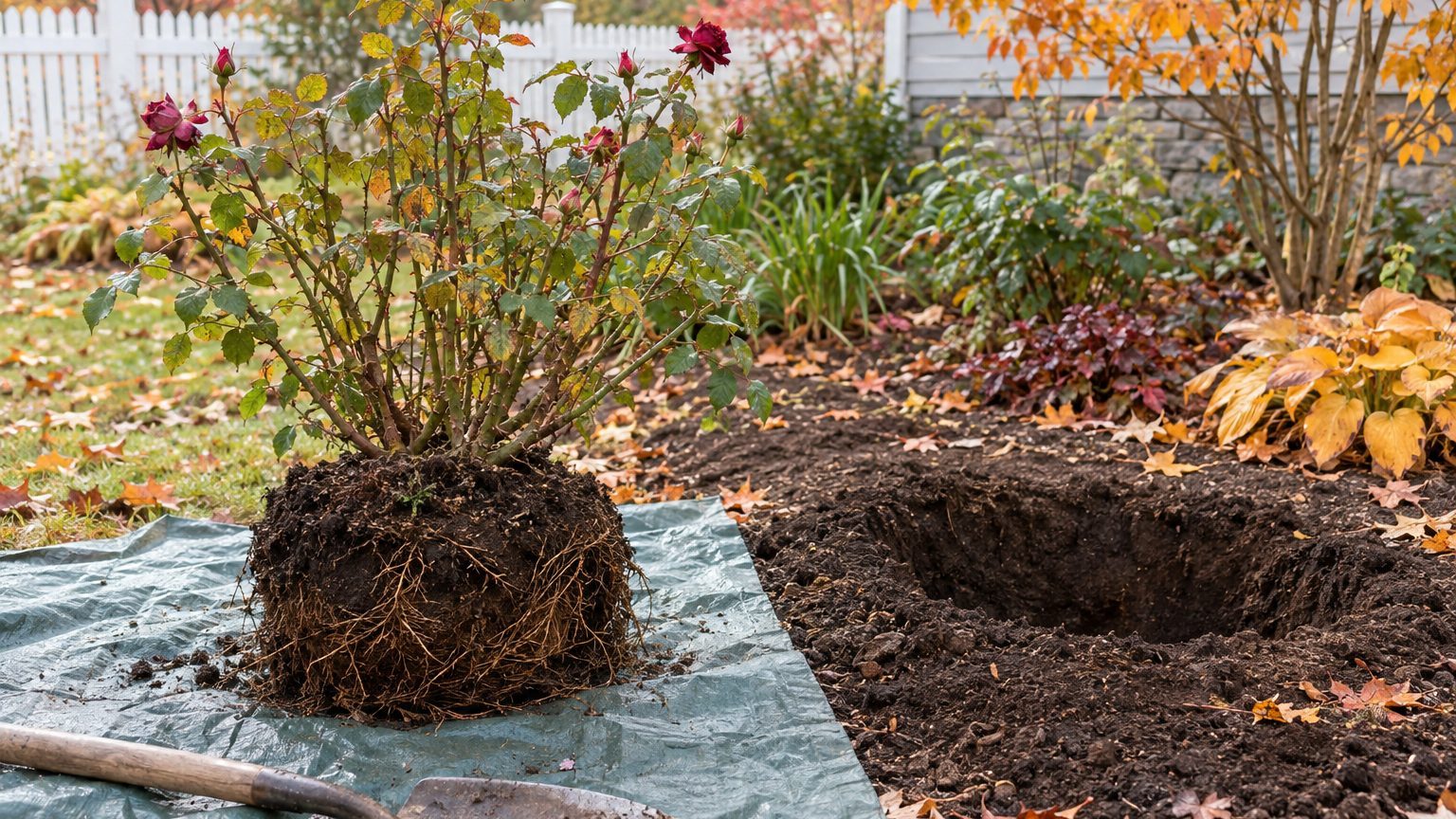
A rose that has outgrown its corner starts leaning toward the light, and its canes crowd the path or the foundation. Moving it solves the problem if the timing and the digging are right.
When Can You Move a Rose Bush?
Move a rose while it is dormant, which means after growth has stopped in fall or before the buds open in spring. Climate decides which end of that stretch suits your yard, and the bloom habit of the rose changes how much pruning goes with the move.
In Arkansas, the dormant months between November and February suit moving plants. In Iowa, early spring, before the plant begins to leaf out, is the time to transplant. Ground that can still be worked matters as much as the date.
A rose already in leaf can still be moved when there is no choice, as New Mexico guidance allows for plants whose buds have started to grow. The page for your state gives the months.
From the almanac
When to plant roses, state by state
The months each state's extension calendar marks for this, kept inside that state's own frost-free season. Open your state for the frost dates, the USDA zone and the rest of the year.
Northeast
- ConnecticutMar–AprUSDA 6a-7b
- MaineApr–MayUSDA 3b-6a
- MassachusettsMar–AprUSDA 5a-7b
- New HampshireApr–MayUSDA 3b-6a
- New JerseyMar–AprUSDA 6a-7b
- New YorkMar–AprUSDA 3b-7b
- PennsylvaniaMar–AprUSDA 5a-7b
- Rhode IslandMar–AprUSDA 6a-7b
- VermontApr–MayUSDA 3b-5b
Southeast
- AlabamaFeb–MarUSDA 7a-9a
- ArkansasFeb–MarUSDA 6b-8a
- DelawareMar–AprUSDA 7a-8a
- FloridaDec–JanUSDA 8b-11b
- GeorgiaFeb–MarUSDA 6a-9b
- KentuckyMar–AprUSDA 6a-7a
- LouisianaFeb–MarUSDA 8a-10a
- MarylandMar–AprUSDA 5b-8a
- MississippiFeb–MarUSDA 7b-9a
- North CarolinaFeb–MarUSDA 5b-8b
- South CarolinaFeb–MarUSDA 7a-9a
- TennesseeMar–AprUSDA 5b-8a
- VirginiaMar–AprUSDA 5a-8b
- West VirginiaMar–AprUSDA 5a-7a
Midwest
- IllinoisMar–AprUSDA 5a-7b
- IndianaMar–AprUSDA 5b-7a
- IowaMar–AprUSDA 4b-6a
- KansasMar–AprUSDA 5b-7a
- MichiganMar–AprUSDA 4a-6b
- MinnesotaApr–MayUSDA 3a-5a
- MissouriMar–AprUSDA 5b-7b
- NebraskaMar–AprUSDA 4a-5b
- North DakotaApr–MayUSDA 3a-4b
- OhioMar–AprUSDA 5b-6b
- South DakotaApr–MayUSDA 3b-5b
- WisconsinApr–MayUSDA 3b-6a
Southwest
- ArizonaJan–FebUSDA 4b-10b
- New MexicoFeb–MarUSDA 4b-9a
- OklahomaFeb–MarUSDA 6a-8a
- TexasJan–FebUSDA 6a-10a
West
- AlaskaJunUSDA 1a-8a
- CaliforniaFeb–MarUSDA 5a-11a
- ColoradoApr–MayUSDA 3b-7b
- HawaiiAll yearUSDA 9a-13a
- IdahoApr–MayUSDA 3b-7b
- MontanaApr–MayUSDA 3a-6a
- NevadaJan–FebUSDA 4a-10a
- UtahApr–MayUSDA 4a-9a
- WyomingApr–MayUSDA 3a-6a
Pacific Northwest
Canada
- AlbertaApr–MayZone 4a
- British ColumbiaFeb–MarZone 9a
- ManitobaApr–MayZone 3b
- New BrunswickApr–MayZone 5a
- Newfoundland and LabradorApr–MayZone 6a
- Northwest TerritoriesJunZone 1b
- Nova ScotiaApr–MayZone 6b
- NunavutJunZone 0a
- OntarioMar–AprZone 7a
- Prince Edward IslandApr–MayZone 5b
- QuebecApr–MayZone 5b
- SaskatchewanApr–MayZone 3a
- YukonJunZone 1b
Sources: state frost facts and Iowa State University Extension ; Oregon State University Extension · Oregon State University Extension · University of Georgia CAES ; Clemson Cooperative Extension, HGIC · Clemson Cooperative Extension, HGIC ; University of Arkansas Extension. A state with no marked month is not shown.
How to Transplant a Rose Bush

Moving a dormant rose comes down to digging a generous root ball and getting it back into the ground quickly, so the order of the work matters.
- In Alabama, dig the new hole first, 6 inches deeper than the depth at which the rose will sit, so the roots spend as little time as possible out of the ground.
- In Illinois, cut the roots in a circle about 12 inches from the base once growth has stopped and while the soil can still be worked, so the feeder roots are severed cleanly rather than torn.
- In Iowa, dig a trench with a spade around the plant to a depth of 8 to 12 inches, then undercut the ball so it lifts as a single block of soil and roots.
- Size the root ball generously, 15 to 30 inches across in Iowa depending on the plant, and keep it from falling apart, because the soil protects the fine roots that take up water.
- In New Mexico, remove any container or burlap and twine, then set the plant in the new hole with the graft union 1 or 2 inches below the soil surface.
- In Kentucky, fill the hole to within 1 to 1½ inches of the original soil surface, then firm the soil gently so the rose stays upright and no air pockets remain around the roots.
Mulch and regular watering help keep a newly moved rose from drying out. In Florida, the advice is to irrigate frequently for 6 to 8 weeks while the plant establishes. Cooler regions with a longer dormant season often give roots more time to settle before growth restarts.
Transplanting by Rose Type
How a rose arrives in the ground changes the details more than its label does. A dormant bare-root plant, a balled or container plant and an established bush dug from your own border each ask for slightly different handling.
The differences show up in the timing, the wrapping and the size of the root ball.
| Rose Type | What changes | Why it matters |
|---|---|---|
| Bare-root rose | Planted in early spring before new growth begins in Washington, and kept near 40°F in Iowa if planting is delayed | Dormant roots can settle in before leaves ask for water |
| Balled or container rose | Container or burlap and twine removed, graft union 1 or 2 inches below the surface in New Mexico | Roots must reach the surrounding soil, and the union stays covered |
| Established bush from your border | Root ball 15 to 30 inches across in Iowa, depending on the plant | A larger, intact ball brings more roots along |
Hybrid teas, shrub roses, climbers, old garden roses and rugosas all follow this same dormant-season routine, and bloom habit decides the pruning. Pruning still depends on when you move them. Leave a once-blooming rose uncut in early spring and check with your local extension office about pruning.
Rose Transplanting Mistakes to Avoid
Digging Too Small a Root Ball

A trimmed-down ball crumbles as it leaves the ground, and the fine roots that drink for the plant stay behind. Aim for a ball as large as you can manage, at a minimum of 15 inches across in Iowa, and move it intact on a tarp or in a wheelbarrow.
Planting at the Wrong Depth

A rose set too high leaves the graft union exposed, and one set too deep sits low in the soil with its stems buried. Check the depth before backfilling by laying a spade handle across the hole. In New Mexico, the graft union goes 1 or 2 inches below the surface.
Letting the New Spot Dry Out
A moved rose has lost part of its root system, so even moist-looking soil can fall short of what the canes need. Water regularly and keep mulch around the plant. In Florida, the advice is frequent irrigation for 6 to 8 weeks, and a rose moved after its buds have started to grow needs that attention even more.
When to Move Roses in Your State
The plant gives the signal. Follow the timing on your state page, and choose a day when the ground is workable. In Iowa, dig in early spring before the rose begins to leaf out.
- The page for your state gives the months for your climate, so check it before you mark a day on the calendar.
- If your soil is frozen or soggy, hold off, because roots tear and the ball breaks apart in ground that cannot be worked.
- If the buds have already opened into leaves and the move cannot wait, give the rose extra attention after transplanting.
Common Questions
Should You Prune a Rose Before Moving It?
Pruning is not required before the dig. In Arkansas, the advice for a fall move is to skip pruning if possible. Once-blooming roses can wait until after they flower.
What If You Cannot Replant a Rose Right Away?
Keep the plant in a cool spot that does not freeze. In Iowa, around 40°F in a refrigerator, unheated garage or root cellar is the suggested range for dormant bare-root roses that have to wait.
How Wide Should the New Planting Hole Be?
In Alabama, the advice is a hole twice the diameter of the root ball. A hole wider than the ball gives the roots loose soil to push into as the rose settles in its new place.