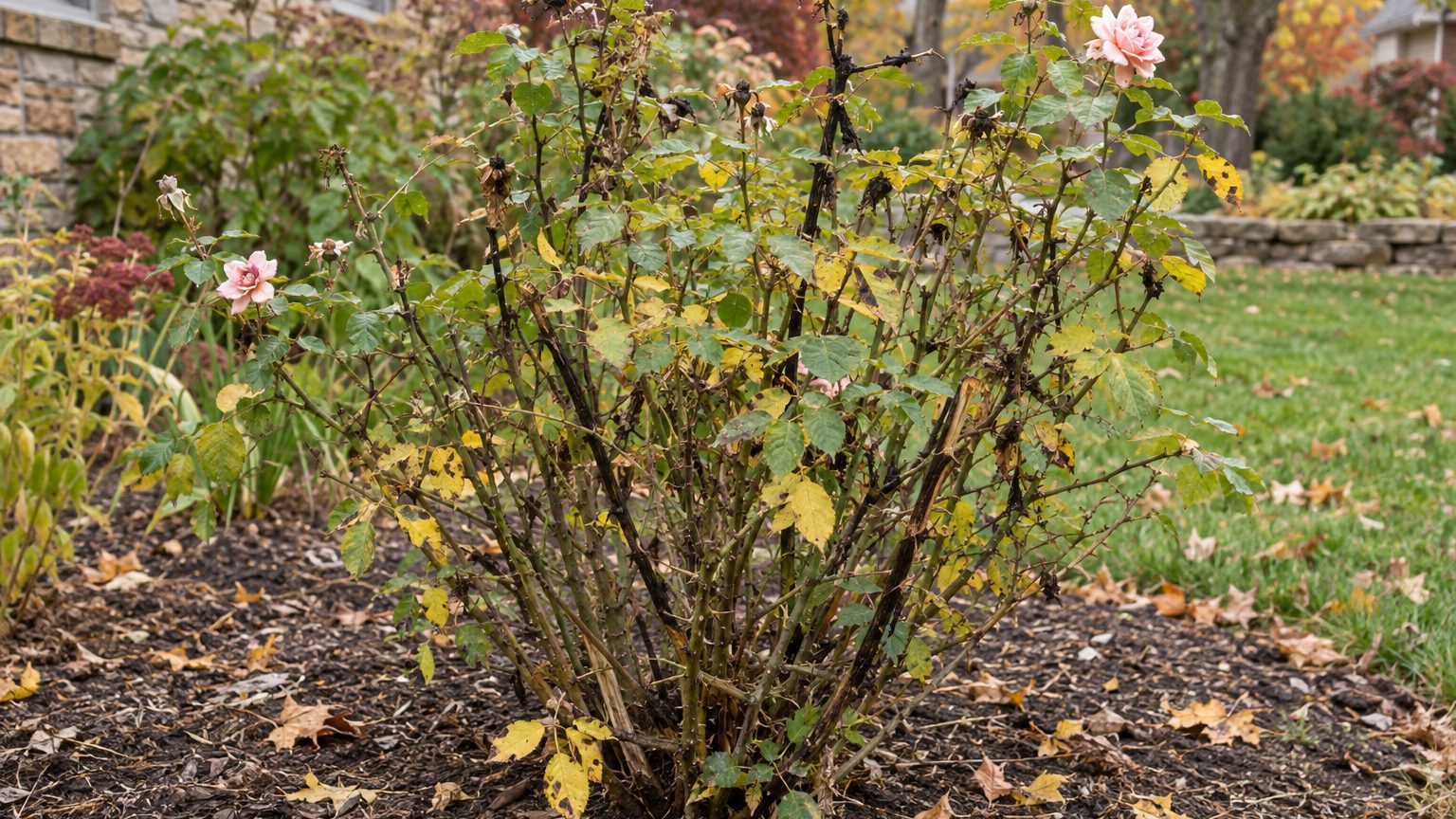
Yellow leaves, black canes and buds that never open can show up on any rose in any yard, and the cause is rarely the first one you suspect. Most rose problems trace back to soil, winter damage, disease or a care habit that is easy to change. Sorting out which one you face starts with what you see on the plant.
Why Are Your Roses Struggling?
Roses struggle for the same few reasons across the country: stress from soil that does not suit them, winter damage to the canes, a disease working through the plant, or care that is off in timing. What varies is how much each one matters for your plant.
Whether a rose repeats or blooms once changes how a problem looks. Repeat bloomers set flowers on new wood, so a setback often shows up as a slow season. Once-bloomers carry flowers on last year’s wood, so winter damage can mean no flowers at all. Climate shifts the odds from there.
The state selector just below this section leads to the page for your state.
From the almanac
Roses in your state
The dates on this page depend on where you live. Your state's page carries its frost dates, its USDA zones and the year laid out month by month.
Northeast
Southeast
- Alabama
- Arkansas
- Delaware
- Florida
- Georgia
- Kentucky
- Louisiana
- Maryland
- Mississippi
- North Carolina
- South Carolina
- Tennessee
- Virginia
- West Virginia
Midwest
Southwest
West
Pacific Northwest
Canada
How to Diagnose a Rose Problem

Work from what you can see to what is likely behind it, and compare the visible clues before you settle on a cause.
- Look at where the yellow shows up and what the soil is like, because leaves turning yellowish-white can mean the plant cannot reach iron when the soil is strongly alkaline. In Montana, soil near pH 8.0 causes this yellowing, so a soil test comes before any treatment.
- Cut into a dark or shriveled cane and look at the center, since a live cane is white and plump while a dead one is brown and withered. Keep cutting back until you reach white, so the dead wood stops dragging down the rest of the plant.
- Check the canes for sunken, damaged patches when leaves drop early, because in Illinois a fungal disease can strip bushes almost bare by early fall and leave dieback and cankers behind. Bare stems alone do not identify the cause, so look for cankers and other clues before drawing a conclusion.
- Watch the buds and the new growth together. Flowers that fail to form properly or drop early, paired with odd reddish growth, point toward rose rosette disease, as described in Maryland. Many cultivars normally have reddish new leaves, so look for other symptoms before drawing a conclusion.
- Keep checking over the season rather than judging once, because a diseased plant may show only a few symptoms early on. In Kentucky, symptoms of rose rosette typically appear 1 to 6 months after infection, which means a clean-looking rose is not yet cleared.
If the signs line up with rosette or with a virus, take a cane and a leaf cluster to your county extension office for confirmation before pulling the plant. A wrong guess costs you a healthy rose or leaves a sick one beside its neighbors.
Rose Problems by Symptom
Few flowers is the symptom that most depends on the type of rose, because the wood that carries the bloom differs. Repeat bloomers may flower again on new wood after pruning, but their recovery depends on the plant’s condition. Once-bloomers can lose the whole show.
Dead canes and dieback also play out differently depending on how the plant grows and how cold the winter was.
| Rose Type | What changes | Why it matters |
|---|---|---|
| Repeat-blooming roses | Flowers form on new wood | Cutting out dead canes still leaves room for new flowers |
| Once-blooming roses | Flowers form on last year’s wood | Early spring pruning or winter dieback removes the season’s flowers, so prune after bloom |
| Shrub and carpet roses | Cold winters kill wood, as in Ohio | Dead wood has to come out before the plant can refill |
Hybrid teas, climbers, old garden roses and rugosas follow the same checks. What matters for each is whether it repeats or blooms once, so find that out before you prune away a year of flowers.
Rose Care Mistakes That Cause Problems
Sweating Roots in Plastic Bags

Bare-root roses are often kept moist before planting, a step called sweating. In Illinois, the advice is to skip plastic bags for it. Trapped moisture with no air can rot canes and roots before the plant ever reaches the soil. Use a damp, breathable medium instead.
Giving Up Too Soon
A new rose that looks bare after planting is not necessarily dying. In Alaska, it often takes 6-8 weeks to tell whether a bush will make it. Pulling it early throws away a plant that may only be settling in. Keep the root zone moist and wait.
Spraying in Hot Afternoons
Disease and insect sprays applied in strong heat can burn leaves. In Kansas, when temperatures reach the 90’s, spraying is delayed until the weather moderates or done in the early morning. Cooler hours let the leaves dry and spare them stress on top of what the heat already does.
Rose Problems in Your State
Rose problems are handled when the plant tells you it is time, not by the calendar alone. For repeat bloomers, swelling buds and the end of hard freezes help set the pruning window; once-bloomers wait until after flowering, and dormant canes are otherwise best left mostly alone.
- Your state’s page gives the months for pruning, planting and protection in your climate, so check it before you cut.
- Go back to it when new growth starts, since the signs on the plant and the months for your state work together.
Common Questions
Can a Rose Look Healthy and Still Be Sick?
Yes. In Florida, plants infected with rose mosaic virus may look quite healthy for much of the year. Long-term weakness and visible symptoms can eventually make infected stock unmarketable.
Does a Weakened Rose Bounce Back?
Not always fully. In North Carolina, the advice is that a weakened rose might never reach its potential, will have more trouble fending off disease and pests, and may suffer tissue damage in warmer temperatures. Healthy growing conditions matter more than a late rescue.
How Hard Should You Cut Back Winter-Damaged Roses?
Cut to live wood. In Ohio, shrub and carpet roses trimmed in early April showed a lot of dead wood after a cold winter, and some had to come back to about six inches. Prune once-blooming roses after they flower, not in spring.