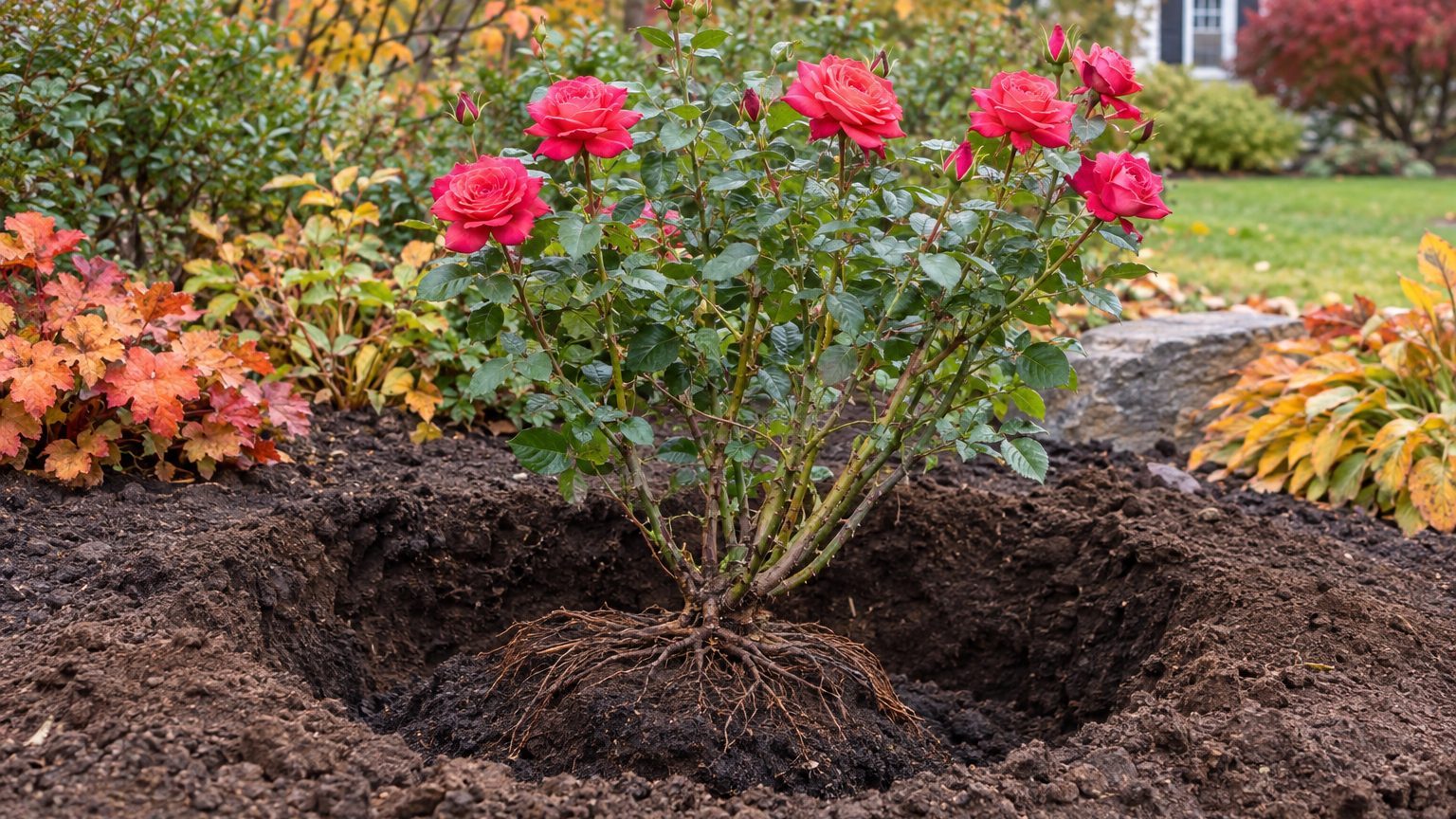
Bare-root roses show up in garden centers as bundles of bare canes in late winter, while potted roses already carry leaves and buds by spring. When to plant roses depends on which of those you bring home and on how hard your winters hit. Dormant plants go in while cold still holds. Container plants wait for settled weather.
When Is the Best Time to Plant Roses?
Across the country, bare-root roses go into the ground while they are still dormant, from late winter to early spring, as soon as the soil can be worked. Container roses have more leeway and can be planted once the worst of the cold has passed.
Several factors move that window earlier or later:
- Whether the plant is bare-root or potted
- Whether the plant is dormant or actively growing
- How cold and how long winter runs where you live
Mild-winter places plant early. In Georgia, roses are set out in February. In Kansas, container roses wait until after May 1. Use your state’s rose page to find the planting window for your climate.
From the almanac
When to plant roses, state by state
The months each state's extension calendar marks for this, kept inside that state's own frost-free season. Open your state for the frost dates, the USDA zone and the rest of the year.
Northeast
- ConnecticutMar–AprUSDA 6a-7b
- MaineApr–MayUSDA 3b-6a
- MassachusettsMar–AprUSDA 5a-7b
- New HampshireApr–MayUSDA 3b-6a
- New JerseyMar–AprUSDA 6a-7b
- New YorkMar–AprUSDA 3b-7b
- PennsylvaniaMar–AprUSDA 5a-7b
- Rhode IslandMar–AprUSDA 6a-7b
- VermontApr–MayUSDA 3b-5b
Southeast
- AlabamaFeb–MarUSDA 7a-9a
- ArkansasFeb–MarUSDA 6b-8a
- DelawareMar–AprUSDA 7a-8a
- FloridaDec–JanUSDA 8b-11b
- GeorgiaFeb–MarUSDA 6a-9b
- KentuckyMar–AprUSDA 6a-7a
- LouisianaFeb–MarUSDA 8a-10a
- MarylandMar–AprUSDA 5b-8a
- MississippiFeb–MarUSDA 7b-9a
- North CarolinaFeb–MarUSDA 5b-8b
- South CarolinaFeb–MarUSDA 7a-9a
- TennesseeMar–AprUSDA 5b-8a
- VirginiaMar–AprUSDA 5a-8b
- West VirginiaMar–AprUSDA 5a-7a
Midwest
- IllinoisMar–AprUSDA 5a-7b
- IndianaMar–AprUSDA 5b-7a
- IowaMar–AprUSDA 4b-6a
- KansasMar–AprUSDA 5b-7a
- MichiganMar–AprUSDA 4a-6b
- MinnesotaApr–MayUSDA 3a-5a
- MissouriMar–AprUSDA 5b-7b
- NebraskaMar–AprUSDA 4a-5b
- North DakotaApr–MayUSDA 3a-4b
- OhioMar–AprUSDA 5b-6b
- South DakotaApr–MayUSDA 3b-5b
- WisconsinApr–MayUSDA 3b-6a
Southwest
- ArizonaJan–FebUSDA 4b-10b
- New MexicoFeb–MarUSDA 4b-9a
- OklahomaFeb–MarUSDA 6a-8a
- TexasJan–FebUSDA 6a-10a
West
- AlaskaJunUSDA 1a-8a
- CaliforniaFeb–MarUSDA 5a-11a
- ColoradoApr–MayUSDA 3b-7b
- HawaiiAll yearUSDA 9a-13a
- IdahoApr–MayUSDA 3b-7b
- MontanaApr–MayUSDA 3a-6a
- NevadaJan–FebUSDA 4a-10a
- UtahApr–MayUSDA 4a-9a
- WyomingApr–MayUSDA 3a-6a
Pacific Northwest
Canada
- AlbertaApr–MayZone 4a
- British ColumbiaFeb–MarZone 9a
- ManitobaApr–MayZone 3b
- New BrunswickApr–MayZone 5a
- Newfoundland and LabradorApr–MayZone 6a
- Northwest TerritoriesJunZone 1b
- Nova ScotiaApr–MayZone 6b
- NunavutJunZone 0a
- OntarioMar–AprZone 7a
- Prince Edward IslandApr–MayZone 5b
- QuebecApr–MayZone 5b
- SaskatchewanApr–MayZone 3a
- YukonJunZone 1b
Sources: state frost facts and Iowa State University Extension ; Oregon State University Extension · Oregon State University Extension · University of Georgia CAES ; Clemson Cooperative Extension, HGIC · Clemson Cooperative Extension, HGIC ; University of Arkansas Extension. A state with no marked month is not shown.
How to Plant a Rose Bush

The order of the work matters more than speed, because each step protects the roots or the graft before the next one covers them.
- Choose a spot with plenty of sun and room to spread, so the leaves dry quickly and the plant has air around it. In Arizona, at least 6 hours of sunlight a day is the guide.
- Soak bare-root roses in a bucket of water before planting, so the dry canes and roots take up moisture before they go into the soil.
- Dig a hole wide enough for the roots to spread without bending, so they grow outward instead of circling. In Washington, a hole 24 inches wide is generally adequate, and it should be no deeper than the distance from the bud union to the base of the roots.
- Build a small mound of soil in the hole and drape the roots over it, so they fan out evenly and the plant sits at the depth you want. In Kansas, the roots are spread over a mound with the bud union 1 to 2 inches below soil level.
- Trim the canes back to an outward-facing bud eye, so new growth heads away from the center and the plant stays open to air. In Arizona, canes are trimmed to 8 to 10 inches.
- Backfill, firm the soil gently and water well, so no air pockets are left around the roots.
Depth of the graft depends on winter. In Georgia, the graft union sits 1 inch above the soil. In Iowa, the knob belongs 2 to 4 inches below the surface to protect it from the cold. In the colder parts of Washington, in zones 7 and below, the graft goes 1 to 2 inches below the soil. Container roses follow the same steps, with the root ball loosened a little and the planting date set by your last frost. In Kansas, that means after May 1.
Planting Time by Rose Type
Roses that repeat their bloom flower on new wood, and roses that bloom once flower on last year’s wood. Bloom habit affects pruning, but it does not set the planting date.
Spacing and hole size still vary by rose type.
| Rose Type | What changes | Why it matters |
|---|---|---|
| Hybrid teas, floribundas, grandifloras | Spaced 2.5 to 3 feet apart in Oregon | Air moves between plants and leaves dry faster |
| Climbers | Tops cut back to 12 to 15 inches in Alabama | A smaller top is easier for new roots to support |
| Miniatures | Spaced about 12 inches apart in Florida | Compact plants need less room |
| Modern roses | Set 12 to 18 inches from a wall in Arizona | The gap keeps air circulating behind the plant |
| Shrub roses | Hole at least 12 inches deep in Montana | The roots need space to spread without bending |
For old garden roses and rugosas, use the planting window recommended for your climate and root condition. Check how each one blooms before you cut it back. Prune a once-blooming rose just after flowering, not in spring, so you do not remove the wood that carries its flowers.
Rose Planting Mistakes to Avoid
Setting the Graft Too Shallow

A graft left near the surface in a cold climate is exposed to freeze damage. In Kansas, the graft sits 2 to 4 inches below the top of the hole for that reason. Set the depth for your winters, not for the plant tag, and mound soil over the union if the ground freezes hard.
Crowding the Plants

Roses packed tightly trap damp air around the leaves and compete for light. In Illinois, a general rule of thumb is about 24 inches apart, or about two-thirds of the expected height. Measure the spacing from the mature size on the tag, not from the small plant in your hands.
Digging Too Deep
A hole dug deeper than the roots need lets loose soil settle, and the plant sinks below the depth you set. In Washington, the hole should be no deeper than the distance from the bud union to the base of the roots. Dig to that depth, then firm the bottom before setting the plant.
When to Plant Roses in Your State
Let the plant tell you. Bare-root roses go in while they are dormant, before the buds swell. Container roses go in once frost has passed and the soil has warmed enough to work.
- Your state’s page gives the months for bare-root roses, so check it before the plants arrive.
- The same page gives the container window, so you know when potted roses can safely go out.
- Once you have the months, dig the hole on a workable day and have it ready before the roses are unwrapped.
Common Questions
Can You Plant a Rose in Summer?
A container rose can go in after spring, since it arrives with roots in soil. Plant it with the same care, water it regularly and watch it closely in hot spells, because a young root system dries out fast. Bare-root roses do not suit summer planting, because they are sold dormant.
How Much Sun Does a Rose Need?
In Arizona, the guide is at least 6 hours of sunlight a day. Morning sun is helpful because it dries the leaves early, and a spot with open air around it suits the plant better than a corner walled in on every side.
What If Bare-Root Roses Arrive Before the Ground Is Ready?
Keep the roots from drying out and the plants in a cool, sheltered place until the soil can be worked. If planting is delayed for long, a temporary trench of moist soil holds the roots until you can set the roses in their permanent spot.