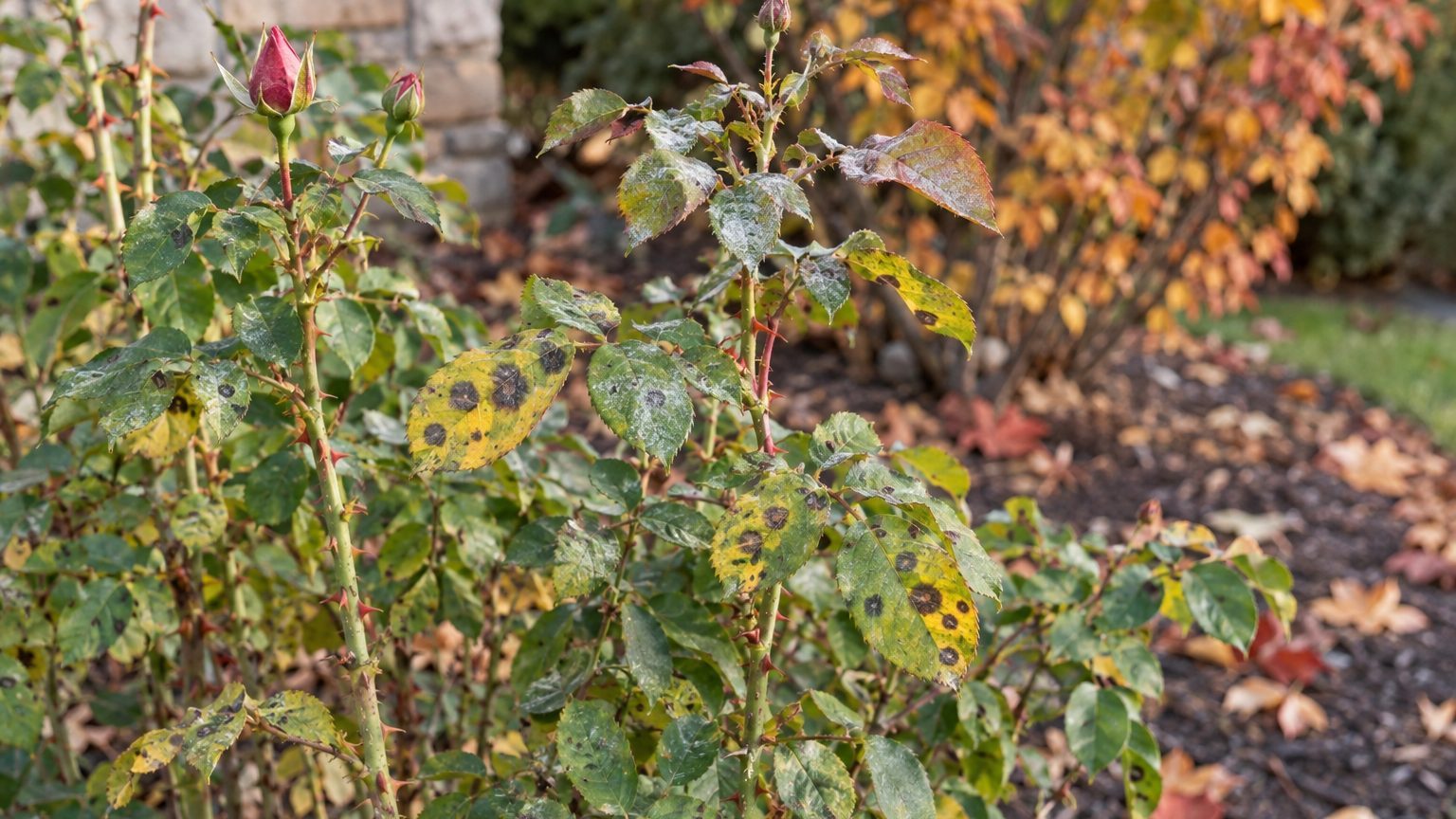
Dark spots on the lower leaves, a pale film on new shoots, a rose that drops foliage while the plants beside it stay green: these turn up in rose beds every growing season. Most trace back to a few fungal diseases, and they spread when the weather turns mild and damp. Knowing which is which, and when to act, keeps the plant blooming.
How Do You Recognize a Rose Disease?
Look at the leaves first, because the pattern of the damage tells you more than any single spot. Black spot leaves dark patches, powdery mildew coats young growth in white, and rust shows orange pustules under the leaves. How often each appears depends on climate, rose type, and whether the plant keeps making new growth.
Black spot has a recognizable pattern. In Maine, the spots can reach 1/2 inch across and typically have fringed borders. A fringed edge on a dark spot, together with yellowing leaves that drop early, points to black spot rather than a plain leaf burn.
Weather decides how fast it moves. In Florida, 64°F is the optimal temperature for black spot, so mild, damp stretches are when to inspect closely. The state selector just below this section leads to the page for your state.
From the almanac
Roses in your state
The dates on this page depend on where you live. Your state's page carries its frost dates, its USDA zones and the year laid out month by month.
Northeast
Southeast
- Alabama
- Arkansas
- Delaware
- Florida
- Georgia
- Kentucky
- Louisiana
- Maryland
- Mississippi
- North Carolina
- South Carolina
- Tennessee
- Virginia
- West Virginia
Midwest
Southwest
West
Pacific Northwest
Canada
How to Treat Rose Diseases

Disease control on roses starts with cleanup and runs through timed sprays, and each gesture protects the next.
- Remove all debris from the previous season before you uncover roses in spring, as Kansas growers are advised, so that spores on old leaves and canes are not waiting beside the new growth.
- In Illinois, one way to disinfect pruner blades is to dip them in a 10 percent bleach-and-water solution for 60 seconds.
- In Kansas, start spraying a fungicide once spring growth begins so new leaves are protected as they open. In Kansas, the spray is repeated every 7-14 days, depending on how severe the infection is and how well the treatment works.
- Choose a fungicide that will not burn foliage when hot weather arrives, so the leaves are not damaged while you protect them. In Kansas, that switch comes when daily temperatures routinely exceed 85 F.
- In California, skip oil sprays on water-stressed plants or within two weeks of a sulfur spray; water a stressed rose before considering an oil treatment.
Label directions set the final word on rates and intervals, and they can differ from the ranges above. Repeat applications are routine, not a sign that the first spray failed.
Rose Diseases by Symptom
Symptoms sort the diseases better than the calendar does. Fringed dark spots on leaves suggest black spot, white powder on new shoots suggests powdery mildew, and orange pustules underneath suggest rust. Confirm the pattern by checking where on the plant it started.
| Disease | What changes | Why it matters |
|---|---|---|
| Black spot | Dark spots with fringed borders appear on leaves | Yellowing leaves may drop early |
| Powdery mildew | White powder coats new shoots | Mild weather and changing humidity can favor it |
Check the pattern on leaves, stems, and new growth before cutting out diseased wood. Cleanup and spray timing matter regardless of rose type.
Rose Disease Mistakes to Avoid
Waiting for Spots Before Spraying

In Florida, symptoms begin to appear three to 16 days after infection, so the first spots mean the fungus is already inside the leaf. In California, fungicides generally prevent infections rather than clear them, which makes timing critical.
In Kansas, begin protection when spring growth starts and repeat it regularly.
Covering Roses Too Early

In Illinois, the advice is not to cover roses too early in the fall. Wrapping canes while the plant is still growing and the weather is mild holds them in the damp, mild conditions fungi favor.
Wait until the rose is dormant, then cover it.
Replanting in the Same Soil
In New Mexico, soil where diseased plants grew should be left idle for at least 3 years before replanting. A new rose set into that soil meets the same problem from the first leaf.
Plant the replacement in a different bed, or leave the old spot empty and clear.
Rose Diseases in Your State
The sign to act is on the plant, not the date. In Kansas, spring growth signals cleanup and protective spraying; in Illinois, avoid covering roses too early in fall.
- Each state’s page carries its own months for spring cleanup and the first sprays, so check it when buds begin to swell.
- It also gives the months for covering roses, so check it once growth has stopped for the season.
Common Questions
What Does Rose Rosette Look Like?
In Texas, typical signs include abnormal reddening of leaves and stems, unusual rubbery thorns, deformed leaves, and witches’ broom, where multiple stems grow out of one node and bunch together. Fungal spots sit on the leaf surface, while rosette changes the shape of the stems and thorns.
Does Hot Weather Stop Powdery Mildew?
In Alabama, frequent rains and temperatures above 80 degrees inhibit it. In South Carolina, it can occur almost anytime in the growing season when temperatures are mild (70 to 80 °F) and the humidity is high at night and low during the day.
What Weather Brings Downy Mildew and Cercospora Leaf Spot?
In Tennessee, downy mildew develops best in cool temperatures from 40 F to 74 F. It also needs high humidity, above 85 percent. Cercospora leaf spot commonly occurs in hot, humid weather above 85 F.